

(Canberra, agencies) The Iran war and unilateralism have weakened US military and diplomatic power, according to a new report. The US lead over China in its influence on international affairs has fallen to its lowest level since 2018.
The latest Asia Power Index, released by Australian think tank the Lowy Institute on Sunday (22 November), shows that the US still leads China in “comprehensive power”, with a score of 78.9 against China’s 73.6. But the gap has narrowed to 5.3 points, the smallest US advantage since the report was first published in 2018.
The Lowy Institute defines “comprehensive power” as the capacity of a state to shape its external environment and influence the behaviour of other countries and entities. It is a weighted average across eight measures of power, including economic and military capabilities and cultural influence.
China is now well ahead of the US in its diplomatic and economic relationships, while the US lead in military capability in Asia has been slashed due to the impact of the war on weapons stockpiles and the shift in the focus of US forces to the Middle East. By contrast, China’s continued military modernisation has boosted its “comprehensive power”.
Report authors Hunter Marston and Jack Sato described the US military advantage over China in Asia as “at its narrowest on record”. They wrote: “Its maritime warfare capabilities continue to expand, particularly in sea control and sea denial, while it maintains a sizeable lead over the US in ground-based missiles and ground forces.”
US diplomatic influence at record low
The report noted that the US and China are evenly matched in economic power, but US diplomatic influence has suffered its largest decline on record. This is linked to Washington’s decisions to launch an offensive against Iran and impose additional tariffs, as well as its hostility towards international organisations such as the UN.
The US and Israel launched military operations against Iran in late February, driving up global oil prices. Mounting discontent in the US turned into a “blue wave” that swept through the midterm elections in early November, dealing President Donald Trump’s Republican Party a crushing defeat.
Ceasefire talks between the US and Iran have made slow progress, with both sides still vying for control of the Strait of Hormuz, a key oil shipping route.
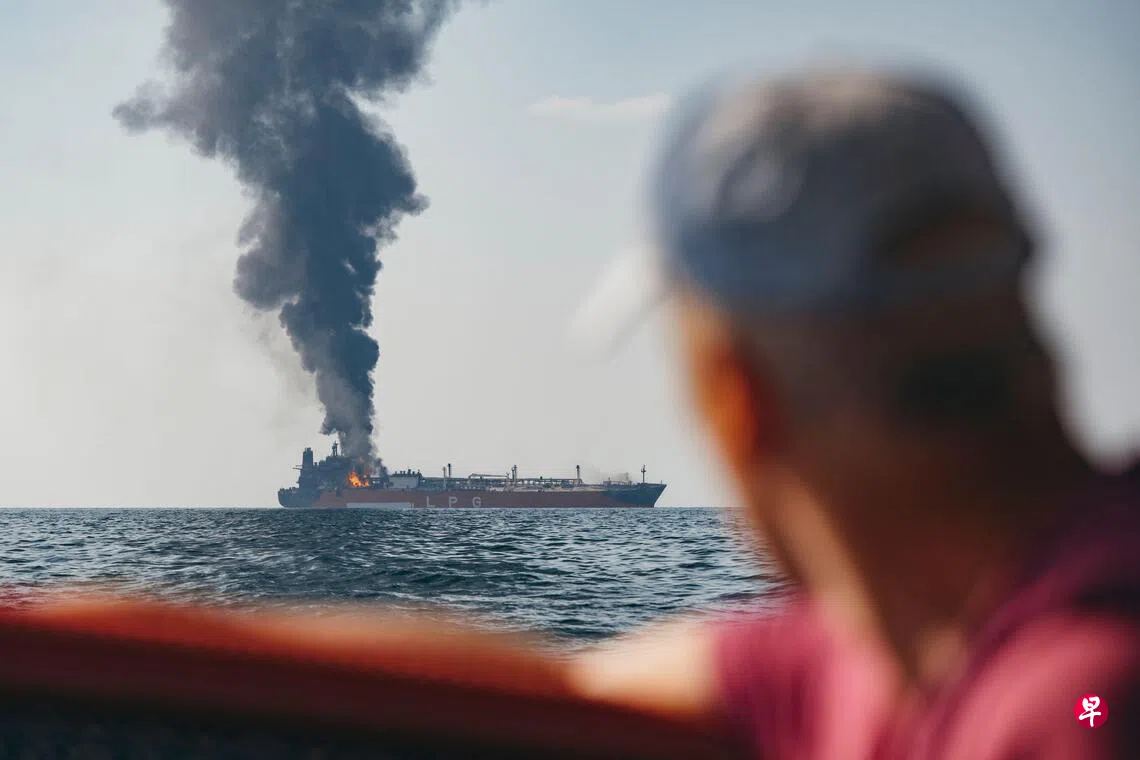
Attacks on ships in the Strait of Hormuz have increased recently. Data from the United Kingdom Maritime Trade Operations Centre (UKMTO), which is part of the Royal Navy, showed that more than 30 attacks on vessels in the strait were reported in October, the highest number since the US-Iran conflict began.
Separately, CNN’s analysis of the centre’s data showed that at least 22 attacks had been reported in November as of last Sunday (22 November), across the Strait of Hormuz, the Persian Gulf and the Gulf of Oman.
Although oil-producing countries in the Persian Gulf have found ways to get ships through the Strait of Hormuz, commercial shipping traffic remains low, well below the 2025 baseline.
Iran reportedly plans tanker convoy to break blockade; Trump threatens to resume war next year
“Markets appear to be increasingly assuming that a return to full-scale war is unlikely and that oil supplies will gradually recover,” said Hamidreza Azizi, a senior Iran analyst at the International Crisis Group (ICG) think tank. “But that assumption could change quickly if Iran decides to intensify the confrontation.”
Iran reportedly plans to assemble 14 oil tankers in an attempt to break the US blockade. Maritime security experts warn that the move could trigger a dangerous confrontation.
Donald Trump has warned Iran that if it dares to challenge American forces deployed across the Gulf, “they’ll all be at the bottom of the sea like the rest of the navy”. Trump also told Fox News that he might resume the war against Iran next year if negotiations failed to produce a diplomatic solution.
