

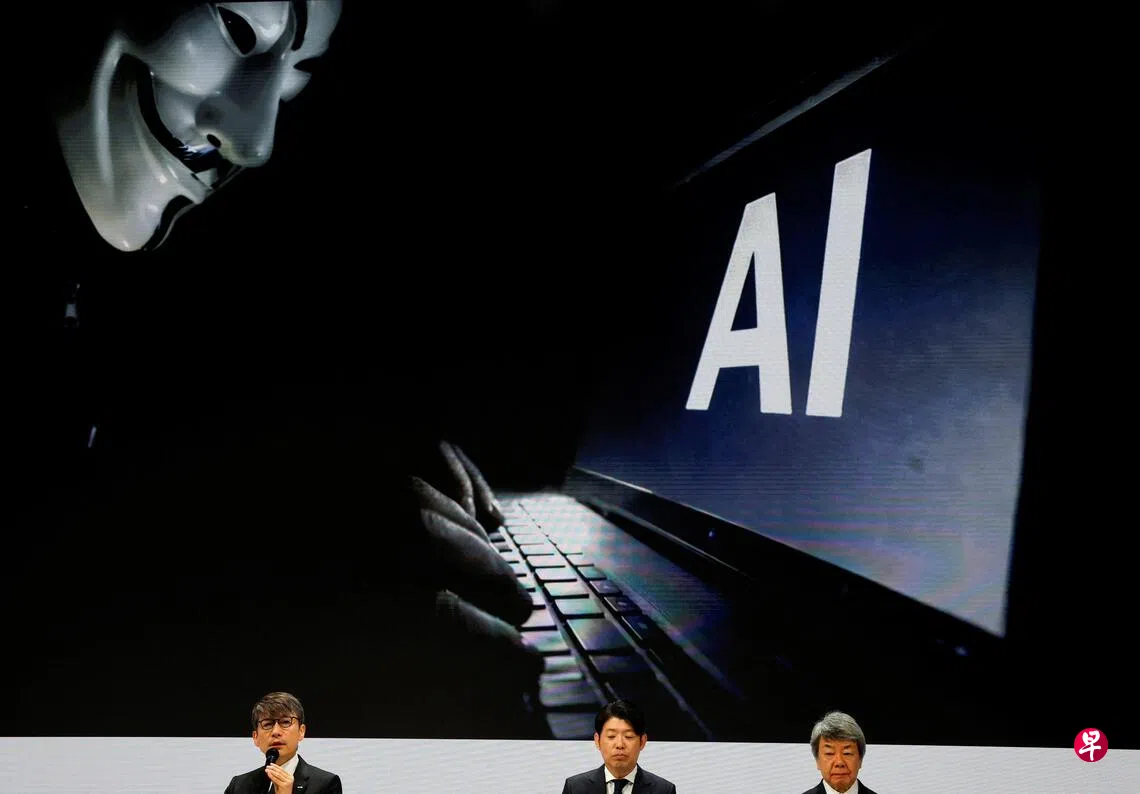
The Japanese government will invest 10 billion yen (S$81 million) in a central anti-hacking team to tackle increasingly rampant cyberattacks.
The government believes that rapid advances in artificial intelligence (AI) are also rapidly changing the nature of cyberattacks. It says defences must be strengthened accordingly to protect critical infrastructure, including financial institutions, and prevent social and economic activity from being paralysed.
Japanese Prime Minister Sanae Takaichi convened a ministerial meeting on cybersecurity on Friday (6 November), instructing the Minister in charge of Cybersecurity, Minister for Digital Transformation Toshiharu Furukawa, to revise the Cyber Response Capabilities Strengthening Act and bolster cybersecurity measures.
Takaichi stressed at the meeting that government and private-sector resources must be brought together to strengthen Japan’s overall capacity to respond to cyber threats. She said, “At this very moment, cases of unauthorised access and data breaches are occurring, causing a major impact on daily lives of the people and corporate activities. Let us increase the response capability across Japan by devoting all government resources.”
The meeting decided that the Ministry of Economy, Trade and Industry would bring together leading cybersecurity specialists this month to form a government cybersecurity team. Drawing an analogy with the Hollywood film Top Gun, participants described the team as an elite force to safeguard Japan’s cybersecurity.
The team will use AI to counter hackers and detect weaknesses in network systems. It will also work with technology companies and developers of advanced AI in friendly countries to ensure Japan’s security expertise remains up to date.
Other measures proposed at the meeting include using AI to develop basic countermeasures, strengthening intelligence-gathering and investigative capabilities, responding strategically to attacks, and providing greater support to victims to limit further damage.
Several prominent Japanese companies were hit by hackers in succession in October. About 6.6 million personal information records were leaked from car park operator Times Group, while Burger King suffered a leak of about 11.18 million records. GMO Internet Group confirmed on 24 October that hackers had demanded a ransom of US$1 million (S$1.28 million) and that customer data had been leaked. The company has sought help from the Japanese authorities.
After analysing the attacks on these companies, the authorities concluded that there were gaps in the safeguards provided by the cybersecurity firms they had engaged. The authorities also issued a new security alert based on the methods used in the recent series of attacks, urging companies that handle personal information to take the necessary protective measures.
Meanwhile, the government hopes to implement legislation on “active cyber defence” as soon as possible, allowing the police and Self-Defense Forces to help combat hackers and strengthen cybersecurity.
Citing senior Japanese officials, Asahi Shimbun reported that a major vulnerability was discovered on 21 October in PHP, a programming language widely used worldwide. This led the Takaichi government to conclude that cybersecurity was facing a major crisis. Two days later, the Liberal Democratic Party submitted a proposal describing the situation as “the eve of a cyber crisis”.
Japanese politicians also regard the succession of cybersecurity incidents as a major national security issue. Democratic Party For the People leader Yuichiro Tamaki believes these incidents should not be seen merely as security vulnerabilities arising from advances in AI. Instead, they should be addressed from a national security perspective, with the country placed on a quasi-war footing. He noted that cyberattacks on civilian organisations had also occurred before Russia’s invasion of Ukraine.
