

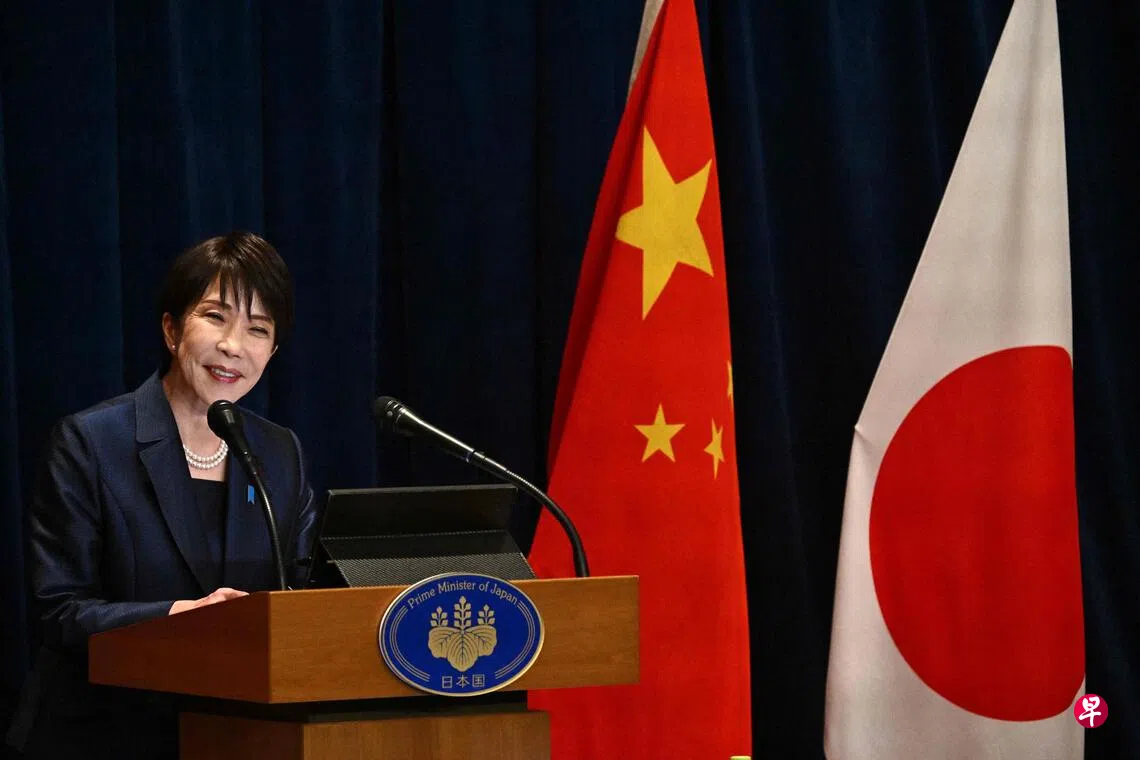
Japanese Prime Minister Sanae Takaichi concluded a four-day visit to Asia on Thursday (19 November), after attending an ASEAN leaders’ meeting in Manila, the Philippines, and the Asia-Pacific Economic Cooperation (APEC) meeting in Shenzhen, China. But it was the meeting of the US, Chinese and Russian leaders in Shenzhen that caused Japan the greatest concern during her trip.
Analysts say a scenario Japan has been at pains to avoid is emerging: China and Russia, which seek to change the status quo through force, are drawing closer to US President Donald J. Trump.
Immediately after returning to Japan on Thursday evening, Takaichi spoke to Trump by telephone for about 20 minutes.
Takaichi said Trump had given her a “detailed account”, including of his bilateral meeting with Chinese President Xi Jinping. She also stressed to reporters that the Japan-US alliance remained solid.
A key diplomatic achievement of Takaichi’s trip was the resumption, after a two-year hiatus, of the Quadrilateral Security Dialogue (Quad) leaders’ meeting involving the US, Japan, Australia and India, held in the Philippines.
At a press conference, Takaichi stressed that Japan was working closely with its allies and like-minded countries to uphold and strengthen a free and open international order. She said this demonstrated robust Japanese diplomacy and had delivered tangible results.
A Japanese diplomat said Japan hoped the meeting would send a signal to the international community that “the US has not embraced great-power politics”. It also sought to highlight the values underpinning Japan’s diplomatic push for a “free and open Indo-Pacific” based on the rule of law.
The Asahi Shimbun (《朝日新闻》), meanwhile, said that the first-ever meeting of the US, Chinese and Russian leaders posed a stern test of Takaichi’s diplomatic skills, amid the crisis arising from major powers’ tendency to pursue “great-power politics” through military and economic might.
The newspaper observed that, during APEC, Takaichi made efforts to engage the Chinese and Russian leaders, with whom relations have cooled.
Some commentators in Japan felt that China had treated Takaichi coolly. They pointed to the unusually large gaps between the steps of the aircraft boarding stairs provided on her arrival at the airport, and a more low-key welcome than those accorded to other countries.
For the group photograph, Takaichi was placed second from the right in the back row, noticeably far from Xi and Trump. Japan’s official position, however, was that these arrangements did not constitute a “diplomatic snub”.
Chief Cabinet Secretary Minoru Kihara said on Friday that Xi had welcomed Takaichi and shaken her hand. The reception provided by the host was consistent with past practice and no different from that accorded to other economies, he said.
