

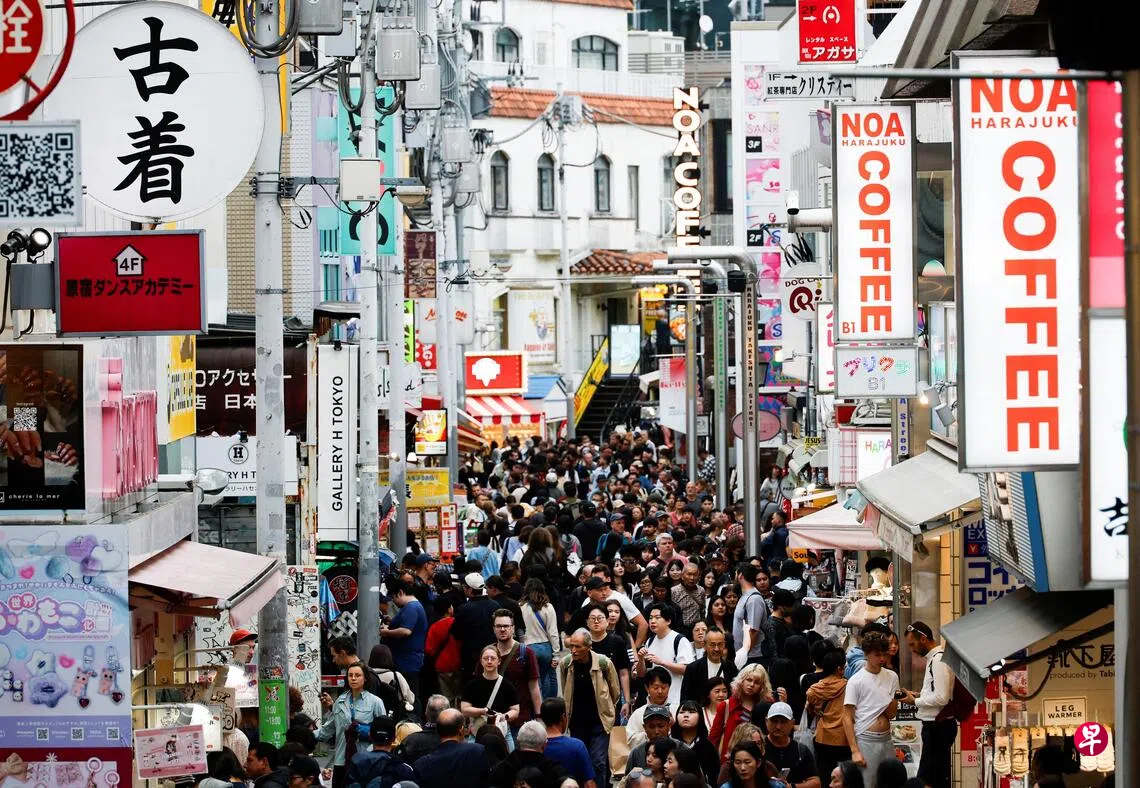
Japan’s new immigration policy makes Japanese-language proficiency one of its assessment criteria, prompting foreigners hoping to settle in the country to rush to register for the officially administered Japanese-Language Proficiency Test (JLPT). Japanese media investigations show that, with limited places available, the sudden surge in demand has shut out many international students who urgently need the certificate to find work.
Established in 1984, the JLPT was initially aimed primarily at international students. As more foreigners move to Japan to settle and work, candidate numbers have risen sharply in recent years. According to the JLPT website, the total reached 1,645,713 in 2025 — 2.5 times the figure a decade earlier.
The test is held twice a year, in July and December, and has five levels, with N1 being the most difficult. Reports say advance news that Japan would draw up new permanent residence application guidelines in October, requiring Japanese proficiency “equivalent to N2 to N3”, triggered a rush when registration for the December test opened in August. The registration period, originally scheduled to last two weeks, closed after just four days because all places had been taken. Many who failed to secure a place complained that this was unfair.
Many Japanese companies require applicants to have at least N2 proficiency. With test places snapped up, a number of international students approaching graduation and looking for work missed the chance to sit the exam.
One Vietnamese student said she attended Japanese classes during the day and spent at least two hours revising after finishing her part-time job at night to prepare for the test. Unable to register, she said anxiously: “If I cannot get the certificate, I will not be able to switch from a student visa to a work visa, and I will not be able to stay in Japan.”
Another student, from Myanmar, also urgently needs the certificate because the company she is joining offers a monthly pay rise of 10,000 yen to those who obtain N1 or N2 certification. She said: “If I cannot register this year, I will have to wait until next year. By then, I will have to prepare for the exam while working, and I am afraid I will not be able to cope.”
Faced with a severe population ageing problem, Japan relies heavily on foreign workers in sectors such as manufacturing, services and care. But the yen’s depreciation since late 2021 has made the country less attractive to foreign workers. Tighter policies on foreigners since Prime Minister TAKAICHI Sanae took office have further compounded its difficulties in attracting talent.
The government had already sparked discontent by sharply raising the permanent residence application fee from 10,000 yen (about S$81) to 200,000 yen. It has now added requirements such as Japanese-language certification. Together with already cumbersome visa procedures, including those for the Certificate of Eligibility, these mean foreigners often take several months to get from application to starting work — a major disadvantage for Japan in the competition for international talent.
Vietnamese nationals make up the largest share of foreigners living in Japan on work visas such as those under the Technical Intern Training and Specified Skilled Worker programmes. However, figures from Japan’s Immigration Services Agency in June this year put the number of Vietnamese workers in the country at about 177,000, down by more than 20,000 from a year earlier. As Japan tightens its immigration policy, Vietnamese workers have increasingly turned to destinations such as Taiwan, where procedures are simpler.
