

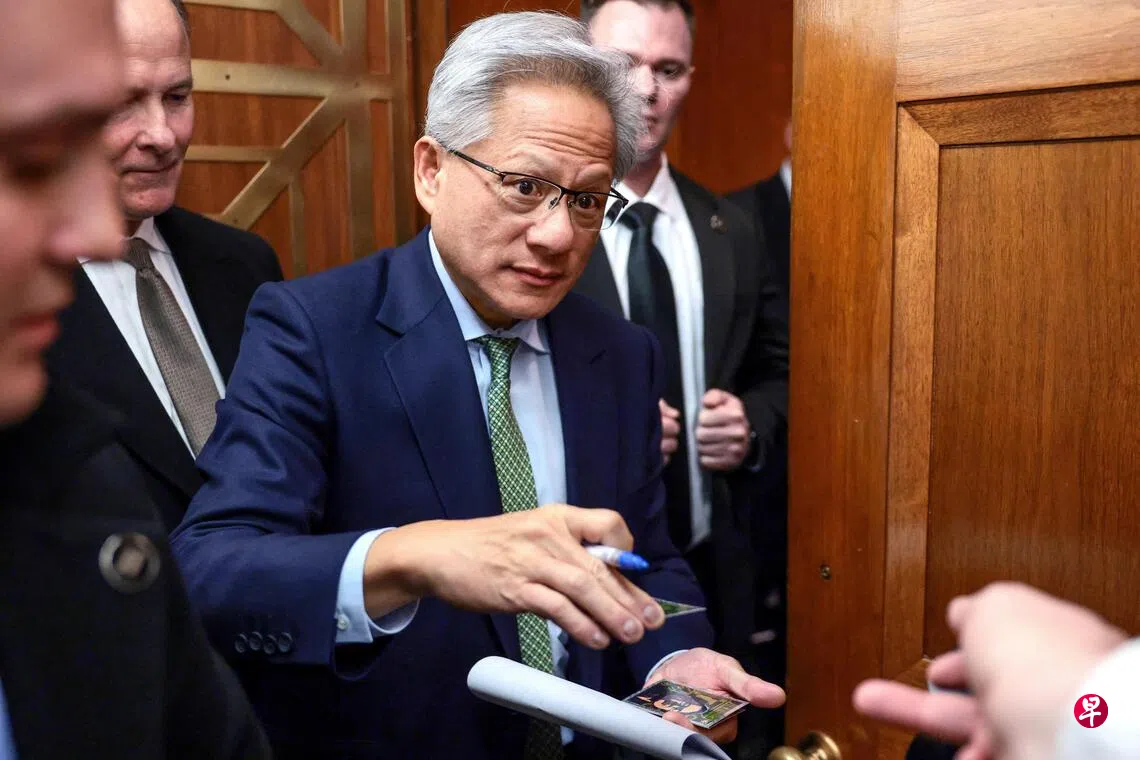
(Washington, agencies) Nvidia chief executive Jensen Huang, who has been reinstated, will face questioning in the US House of Representatives and Senate next week over advanced chip flows to China, national security risks and the circumstances of his return.
Huang will face a closed-door, transcribed interview on 1 December with the House Foreign Affairs Committee, Intelligence Committee and Select Committee on China. Nvidia general counsel Tim Teter will also be questioned the following day.
On 3 December, Huang will testify at a public hearing of the Senate Banking Committee on US export controls. The hearing will be streamed online.
Lawmakers’ main concerns include whether Nvidia’s advanced chips have reached China in breach of export controls; whether Huang’s relationship with Huang Le, a former Chaosu International executive suspected of involvement in Chinese intelligence activities, poses a national security risk; and why Nvidia’s board reinstated Huang before an independent investigation had concluded.
The Republican chairmen of the three House committees stressed that Huang’s reinstatement had not dispelled national security concerns and that Congress still needed to establish what had happened.
Elizabeth Warren, the top Democrat on the Senate Banking Committee, called on the Donald J. Trump administration to explain which senior officials had advised Nvidia’s board and what advice they had given. She also urged swift passage of a bipartisan export control bill.
Republican Senator John Kennedy predicted that Huang might invoke the Fifth Amendment to the US Constitution and decline to answer questions that could expose him to criminal prosecution. Huang has not indicated that he will do so.
Although congressional questioning can neither directly remove Huang nor determine whether the law has been broken, the key is whether lawmakers can use testimony and related documents to establish where the chips went, whether the company complied with regulations and how the government became involved in his reinstatement, helping to clarify each party’s responsibility.
