

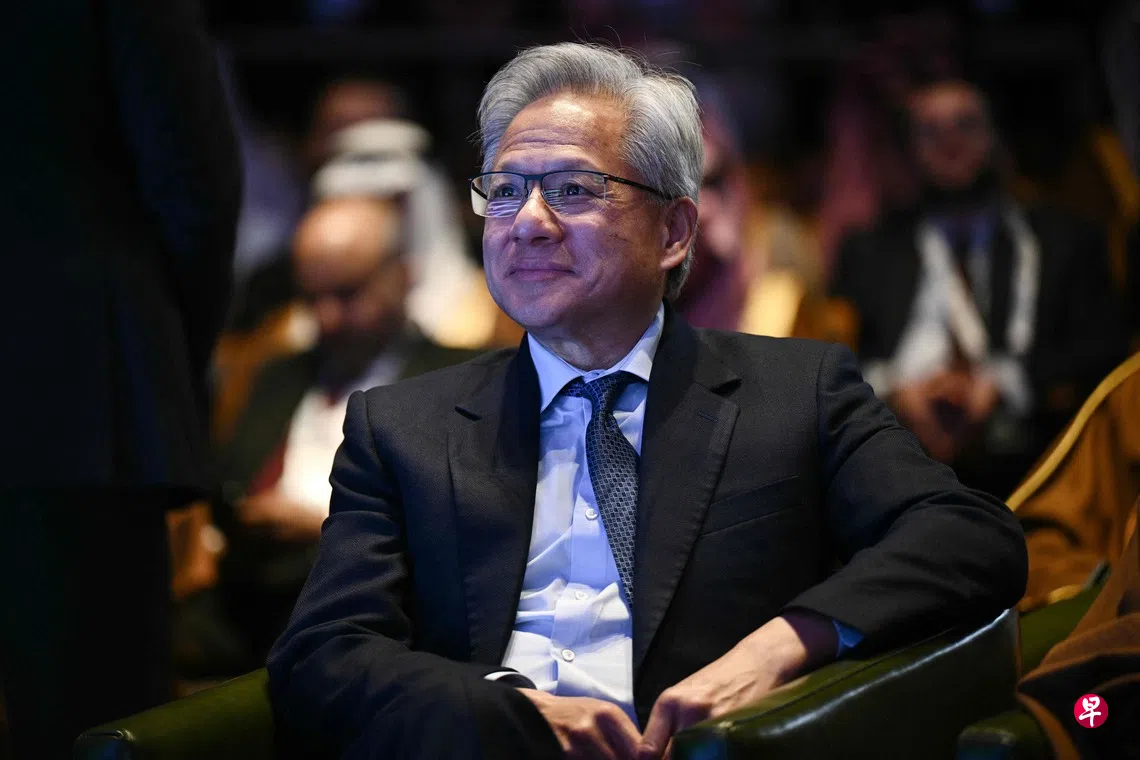
Nvidia chief executive Jensen Huang has actively lobbied the US government to support the development of open-weight artificial intelligence (AI) models. The debate over open-weight AI is now intensifying in Washington amid turmoil in Nvidia’s leadership.
Reuters reported that Nvidia’s board announced on Monday (23 November) that it was reinstating Huang as chief executive. Huang had earlier resigned over an extramarital affair scandal, which was rumoured to involve a woman suspected of spying for the Chinese government.
Before the scandal broke, Huang had urged the US Congress and the administration of Donald J. Trump to support US companies developing open-weight AI models. He argued that the US should avoid imposing restrictions on such technology prematurely. The Trump administration also supports open-weight AI, seeing it as a cheaper option for start-ups that would otherwise have to rely entirely on closed models from companies such as OpenAI and Anthropic.
People familiar with the matter said Trump and JD Vance had personally intervened in the Nvidia board’s decision, partly because they viewed Huang as a strong advocate for open-weight AI in the US. The White House did not respond to questions about the connection between Huang and open-weight AI policy.
Open-weight models make their core technology publicly available, allowing users to download, modify and adapt them to their needs. Closed models, by contrast, are controlled by their developers, and users must pay to access them. Wider adoption of open-weight models also helps increase demand for Nvidia’s chips and computing equipment.
However, companies such as Anthropic are concerned that powerful open-weight models could be used for dangerous activities, including developing biological weapons. Anthropic chief executive Dario Amodei warned that open-weight models could enable users to draw on publicly available information to develop tools for spreading infectious diseases.
Meanwhile, models developed by DeepSeek and Alibaba have attracted interest from US business users thanks to their lower prices and strong performance.
The Trump administration told major AI developers this summer that it would not conduct voluntary safety testing of open-weight models. The US government is also considering requiring companies to disclose their use of Chinese AI models. Last week, two Republican members of the House of Representatives went further, urging the government to ban federal agencies and contractors from using Chinese open-weight models and to provide US developers with more computing resources to expand the country’s open-weight AI industry.
