

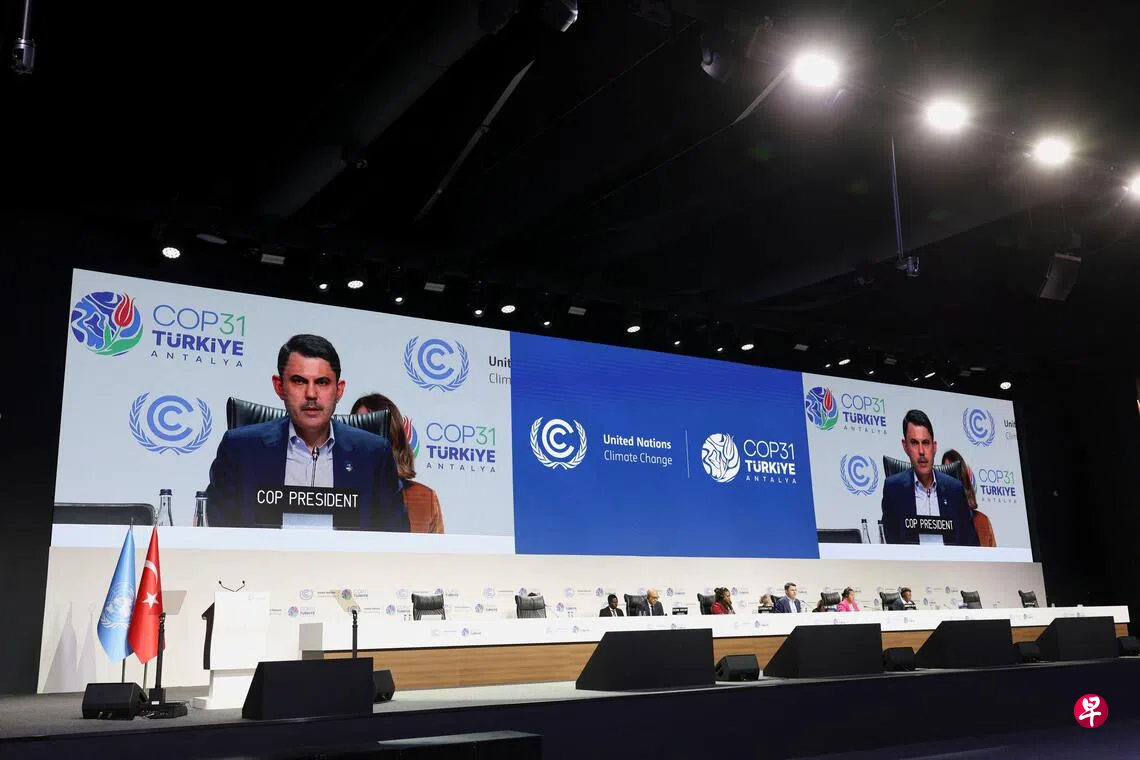
The COP31 presidency put forward a last-minute draft deal on Sunday (22 November), but the text made no mention of fossil fuels.
The proposal requires unanimous approval from nearly 200 countries at the closing session, AFP reported. But after two weeks of arduous negotiations, the parties were still struggling to bridge their differences.
The EU and other countries have been pushing for strong language in the deal explicitly calling for a transition away from fossil fuels, but oil-rich Saudi Arabia has opposed this.
An EU official told AFP that the latest proposal was a “step backwards” and warned that COP31 was “very likely” to end without a deal. “I am more pessimistic today than I was yesterday.”
A German official said: “The situation is very difficult at the moment, and the outcome remains uncertain. Oil-producing countries are putting up fierce resistance.”
A draft deal released earlier this week called for an accelerated phase-out of fossil fuels, but a second, streamlined draft released on Thursday (19 November) removed all references to coal, oil and natural gas.
The latest text refers to the 2023 global agreement, which called for moving the world away from its reliance on fossil fuels, but still does not explicitly name fossil fuels.
The latest proposal also retains provisions for expanding the use of carbon capture and storage technology. The technology is backed by the fossil fuel industry, but critics say it is costly and has limited effectiveness in reducing greenhouse gas emissions.
Antigua and Barbuda’s Environment Minister Michael Joseph told AFP: “We are very disappointed with the content of this text.”
“I cannot honestly say that I can accept the adoption of this text in its current form.” He added that the draft said “almost nothing” about fossil fuels.
