

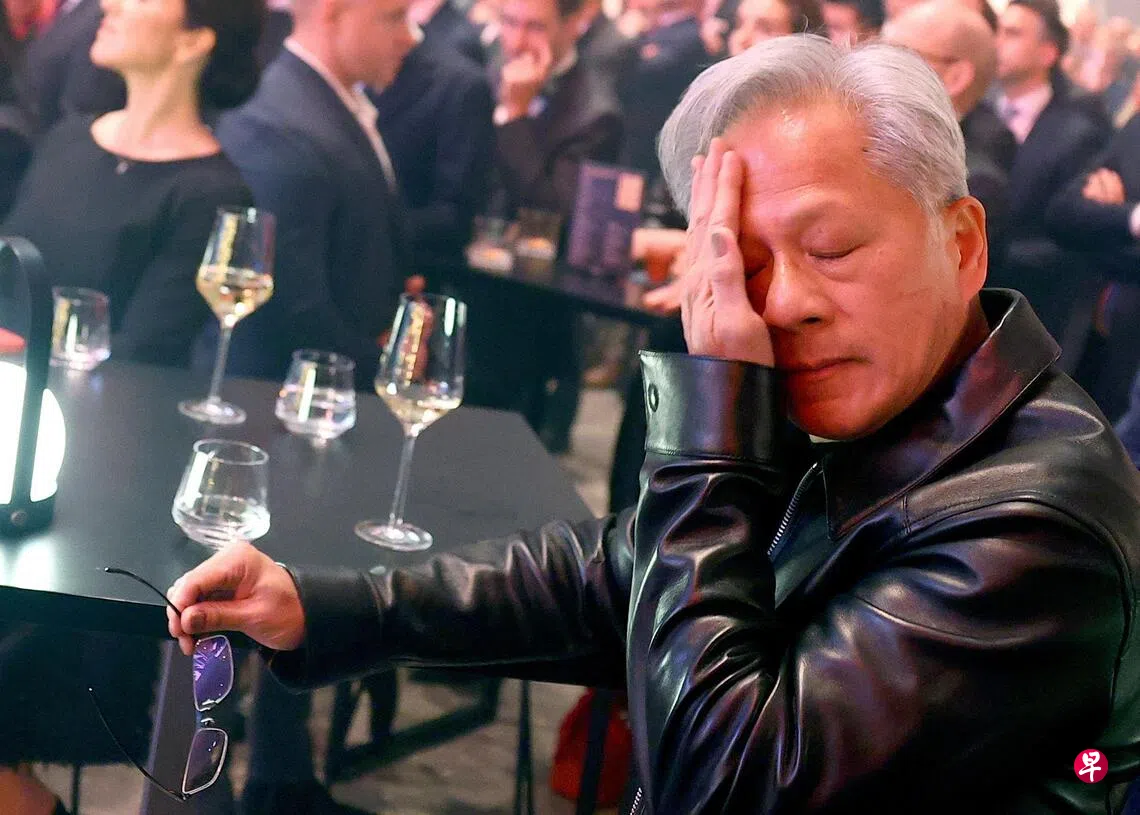
Nvidia’s board is preparing to oust chief executive Jensen Huang following revelations of two alleged extramarital affairs, one involving a suspected Chinese spy, The Wall Street Journal reported, citing people familiar with the matter.
The report said Nvidia’s board was expected to meet as early as Wednesday (11 November) to discuss and decide whether Huang should remain in his role.
Earlier on the day The Wall Street Journal published its report, The New York Times first revealed that Huang had been involved in an inappropriate extramarital relationship with a company executive who reported directly to him. Citing five former Nvidia employees, The New York Times identified the executive as Kimberly Powell, the company’s vice-president of healthcare.
Days before the reports emerged, Huang had publicly admitted to being unfaithful to his wife. Nvidia’s board had also launched an internal investigation, focusing on whether he had become a target of foreign intelligence operations.
Nvidia did not immediately respond to requests for comment on the series of media revelations. Reuters was also unable to independently verify the reports.
The succession of scandals and national security concerns has severely shaken market confidence. Nvidia shares plunged about 8% in US after-hours trading following the reports. Market data showed that more than US$300 billion (about S$385 billion) had been wiped off Nvidia’s market capitalisation since reports emerged of Huang’s affair with Alice Huang.
Analysts noted that Nvidia, a key driver of the global artificial intelligence (AI) boom, currently has a market capitalisation of about US$4 trillion. Its dominance in high-performance AI chips not only provides critical computing power for cutting-edge applications such as OpenAI’s ChatGPT, but also places it at the forefront of the contest between China and the US for AI supremacy. If Huang is ultimately forced to leave, his departure would inevitably leave a major leadership vacuum at the technology giant and could have far-reaching repercussions for the global AI industry.
