

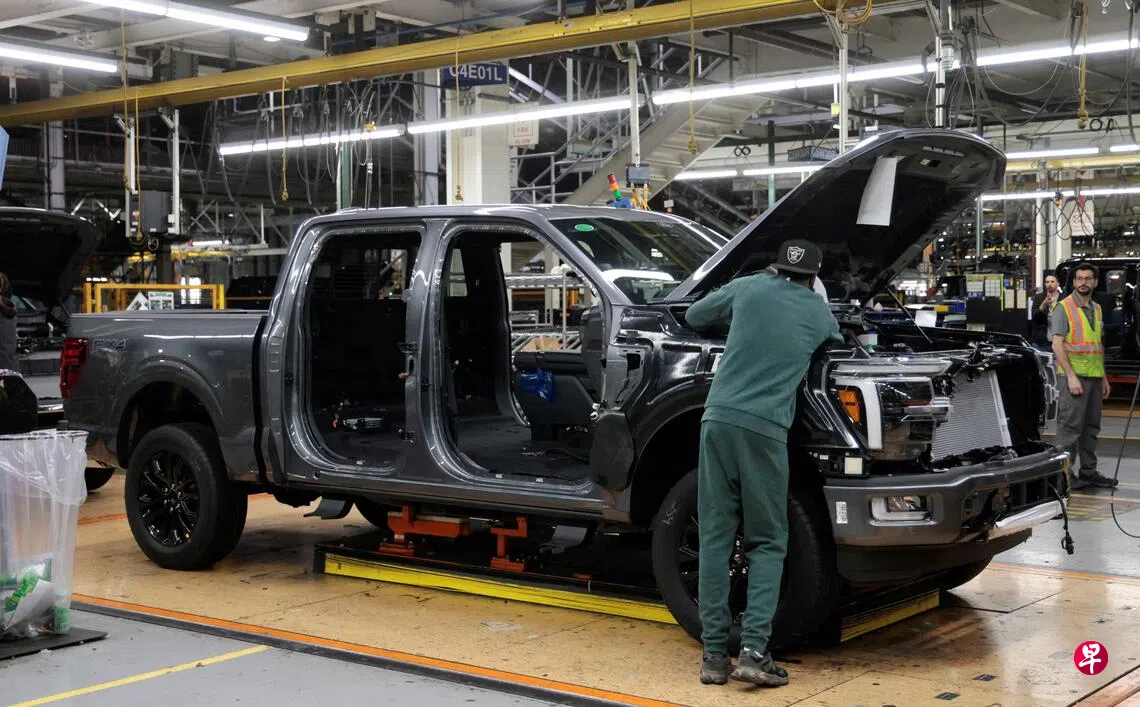
(Washington, agencies) As the US brings drone production back home, the Pentagon is reportedly in talks with domestic carmakers, hoping to tap their vast production lines and supply chains to mass-produce military drone components and address capacity shortages. But the industry’s response has been mixed amid concerns over thin margins and potential reputational damage.
The Wall Street Journal reported on Tuesday (24 November), citing people familiar with the matter, that US Department of Defense leaders have spent months trying to enlist carmakers in military production. They are now particularly keen for them to help ease shortages of unmanned systems, including reconnaissance and strike drones.
The Pentagon plans to buy millions of drones over the next few years, with the military drone market estimated to be worth US$20 billion to US$30 billion (about S$25.8 billion to S$38.8 billion) a year.
However, with China having dominated the global drone industry for more than a decade, most US drone companies are small and lack sufficient manufacturing experience or capacity.
People familiar with the matter said the Department of Defense has met executives from General Motors, Ford, Canadian auto parts giant Magna International and other manufacturers outside the automotive industry. Under potential agreements, the carmakers would supply drone companies with components such as actuators, engines, sensors and lidar.
However, the talks remain at an early stage and no agreements have been finalised, the people said.
Among the carmakers, General Motors is the most interested in participating in military projects, the people said. The company also said in a statement that it has demonstrated a commitment to helping reinforce the US defense-industrial base.
A Ford spokesperson said on Tuesday that the discussions with the Pentagon were focused on supplying highly capable military vehicles and working with a third party to build advanced satellites. Ford has traditionally steered clear of weapons manufacturing, preferring to supply vehicles and equipment more closely aligned with its existing commercial vehicle range.
Reuters quoted a Pentagon official on Wednesday (25 November) as saying that the Department of Defense was actively working with domestic manufacturers, suppliers and emerging technology companies “to build a resilient, high-capacity industrial base that accelerates the production, deployment, and long-term sustainment of next-generation unmanned and autonomous systems”.
US carmakers’ involvement in military manufacturing dates back to the Second World War. Even so, working with the government and joining the military supply chain remain challenging for them today.
For example, the small expendable drones that have proved highly effective in the Russia-Ukraine war are a low-margin business, and carmakers would be likely to lose money if they became involved. They are also concerned that defence work does not fit their core businesses and that being associated with weapons production could damage their reputations.
Carmakers are also concerned about fluctuating demand from the Department of Defense and uncertainty over congressional approval of annual funding. Since the US midterm elections, the potential political risks of signing contracts with the Donald J. Trump administration have also grown as Democrats step up scrutiny of dealings between Pentagon officials and private companies.
To address companies’ concerns, Secretary of War Pete Hegseth established a combatant command led by a four-star general this autumn to advance drone manufacturing. The command aims to consolidate drone production and development across the military services, offering larger contracts to improve the prospects of profitability and attract companies.
People familiar with the matter also said the Department of Defense was prepared to provide substantial funding to participating carmakers.
