

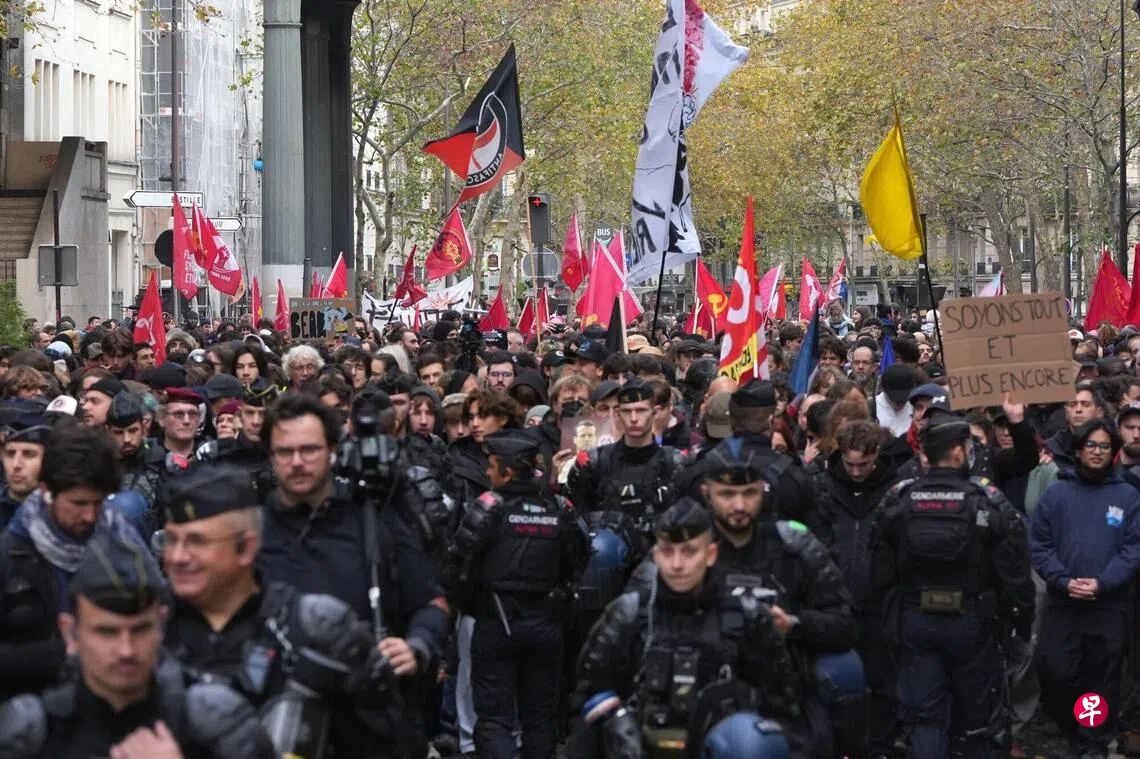
Protesters across Europe are set to stage coordinated demonstrations on Friday (20 November), turning weeks of scattered protests into joint action across borders to put pressure on governments over soaring living costs, increased military spending and social injustice.
The action, jointly organised by trade unions and rights groups in countries including France, the UK, Belgium, Spain, Italy, Portugal and Greece, is expected to continue through the weekend.
Although the protests have had different triggers in each country, the turnout of hundreds of thousands of people reflects shared anxieties across Europe over high housing costs, deteriorating conditions in education, stagnant wages and governments’ continued increases in military spending. The wave of protests comes as the Russia-Ukraine war approaches its fifth year and countries including Spain, France, Italy and Greece prepare for crucial elections.
Young people are the driving force behind this round of protests. An alliance of more than 50 student and youth groups has called on young people in over 25 countries to take to the streets under the slogan “Fight for our future, not their wars”, demanding a fundamental overhaul of the current system.
In Germany, concerns that the government may reinstate conscription have drawn many young people into the protests. The youth organisation “Gen Z Gets It Done” expects 15,000 people to rally in Berlin alone.
In France, the “yellow vest” movement has also joined the organisers. The demonstrations coincide with the eighth anniversary of the movement’s emergence. Students have been blockading secondary schools since mid-September to demand better learning conditions, in protests that have since grown into a nationwide campaign against soaring prices and police violence.
The Italian General Confederation of Labour has also called a nationwide strike for Friday, with transport, schools and hospitals expected to face disruption.
