

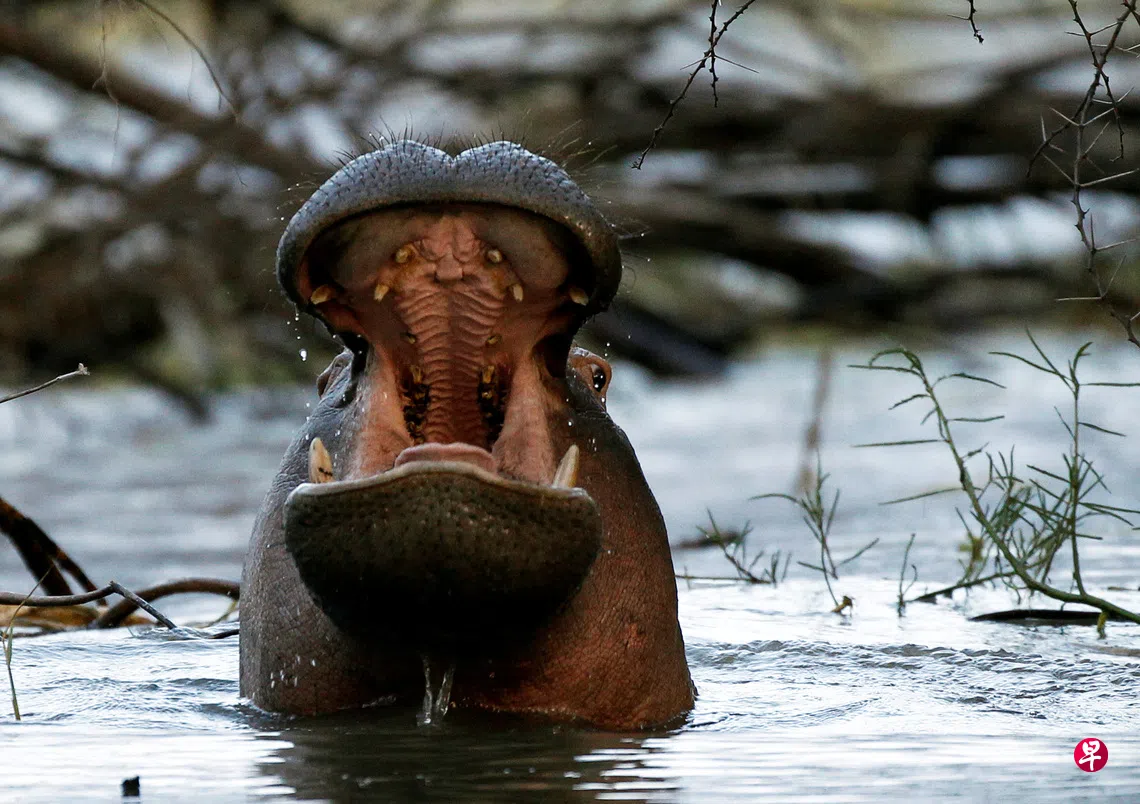
Seven hippos were found dead at Kenya's Lake Naivasha between October and November this year. Some are suspected to have died from digestive tract blockages after accidentally swallowing fishing nets while foraging at night.
The Kenya Wildlife Service said on Friday (20 November) that the dead hippos included at least one young female found with a large mass of tangled fishing nets blocking her digestive system.
Kenya Wildlife Service official Duncan Juma told Reuters that local fishermen often leave their nets in the lake overnight to catch fish. Hippos foraging at night may be unable to distinguish the nets from vegetation and accidentally swallow them.
However, post-mortem examinations suggest the seven hippos may not all have died from the same cause.
A post-mortem examination of another, older female suggested that some hippos may have died after severe stomach bloating compressed their lungs, causing breathing difficulties.
The Kenya Wildlife Service said vets found maize stalks in the hippos' stomachs, which may have led to overeating and excessive fermentation, causing a large build-up of gas.
The authorities also released photographs of the post-mortem examinations, including one showing a vet holding tangled fishing nets removed from a hippo.
The Kenya Wildlife Service urged fishermen, local communities and relevant organisations to adopt responsible fishing practices, particularly the proper use and disposal of nets and other fishing gear, to avoid endangering wildlife.
Kenya has seen other cases in recent years of wildlife suspected to have died after exposure to substances linked to human activity. In August this year, the authorities said at least 18 elephants may have died from cyanide poisoning after eating tomatoes contaminated with pesticides. The tomatoes came from farmland around the Amboseli ecosystem.
