

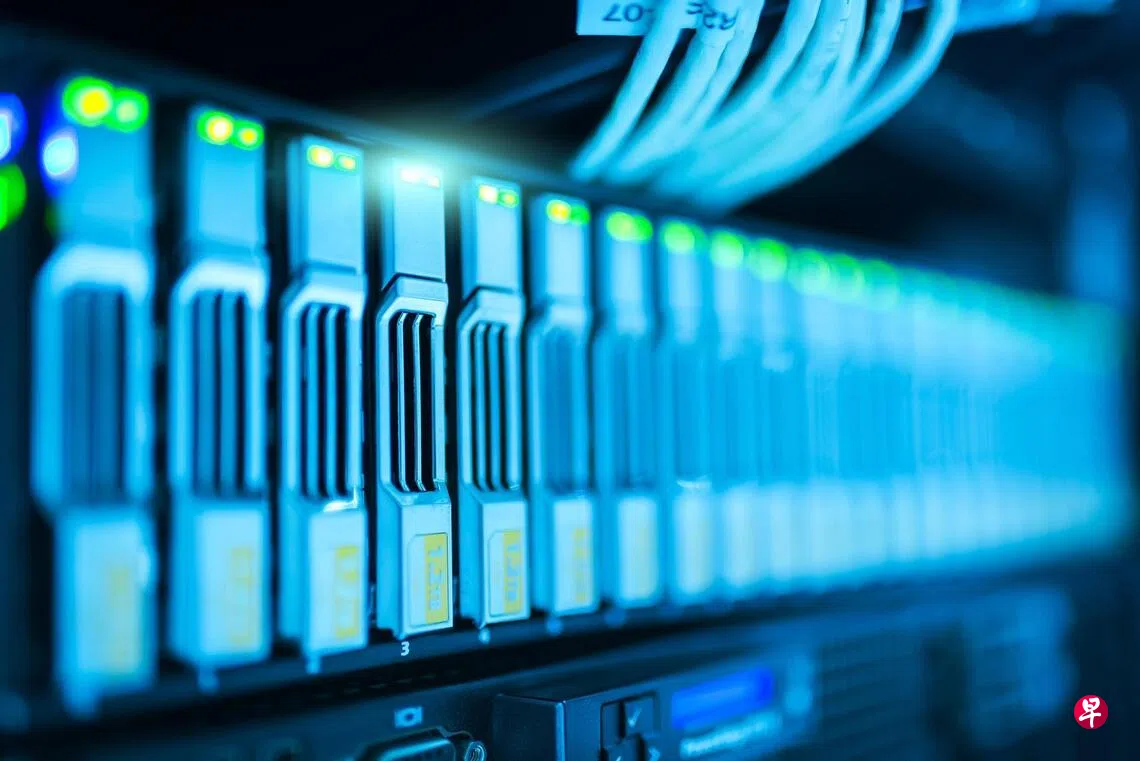
As competition between China and the US in cutting-edge technology intensifies, artificial intelligence (AI) data centres are emerging as a new strategic resource, following semiconductors. The US recently tightened export controls on advanced AI chips, seeking to block Chinese companies from indirectly accessing computing power through overseas data centres.
South Korean media analysis suggests that Southeast Asian countries such as Singapore could be among the first affected. South Korea, meanwhile, could become a new base for global technology giants investing in AI data centres, thanks to its relatively favourable regulatory environment and industrial foundations.
New rules introduced by the US Commerce Department’s Bureau of Industry and Security (BIS) took effect on 19 November, extending export controls beyond physical chips to the computing power they provide.
Under the rules, prior US government approval is required to provide computing resources with a total processing performance (TPP) exceeding 12 million to companies headquartered in China and other countries subject to controls.
The US also requires prior licence applications for exports of advanced chips to Singapore, Malaysia, Indonesia, Thailand and Brazil. Analysts believe Southeast Asia’s data centre industry, which previously met substantial Chinese demand for AI computing power, will face tighter scrutiny. Global technology giants may adjust their investment plans as a result.
South Korea, by contrast, is not on the list of countries subject to the additional licensing requirements. Its advanced semiconductor technology and well-developed industrial base could also make it a more attractive investment destination for US technology companies.
South Korean companies have already stepped up their plans. The country currently has 117 data centres. Among the projects attracting attention is a 100-megawatt (MW) AI data centre that SK Group is building in Ulsan in partnership with US company Amazon Web Services (AWS).
With a total investment of 7 trillion won (about S$6.7 billion), it is South Korea’s largest single data centre investment project and is expected to begin operations in the second half of next year.
SK Telecom also plans to secure a total of 5 gigawatts (GW) of AI data centre capacity in phases from 2029 through its subsidiary SK Hyper.
US property consultancy Cushman & Wakefield estimates that a 100-megawatt AI data centre can generate about US$344 million (about S$444 million) in annual economic output for the local economy.
Research firm Fortune Business Insights forecasts that the global AI data centre market will grow from US$17.73 billion last year to US$21.27 billion this year, reaching US$133.51 billion by 2034, with a compound annual growth rate of 25.8%.
However, South Korea still faces the challenge of low domestic production of core equipment. According to the Korea International Trade Association, domestically produced equipment accounted for just 11.1% of servers and storage equipment in the country’s data centres as of July last year.
Industry figures say South Korea should adopt a strategy of “bringing in technology first, then developing it domestically”. While attracting overseas investment, it should turn the expertise it gains in power management, cooling and operations into the capacity to export its own equipment and solutions.
South Korean newspaper Munhwa Ilbo noted that US controls on AI technology exports to China are reshaping global data centre investment. Whether South Korea can seize this opportunity to build a complete AI infrastructure industry chain will be key to its transition from a semiconductor supplier to a global hub for AI computing power.
