

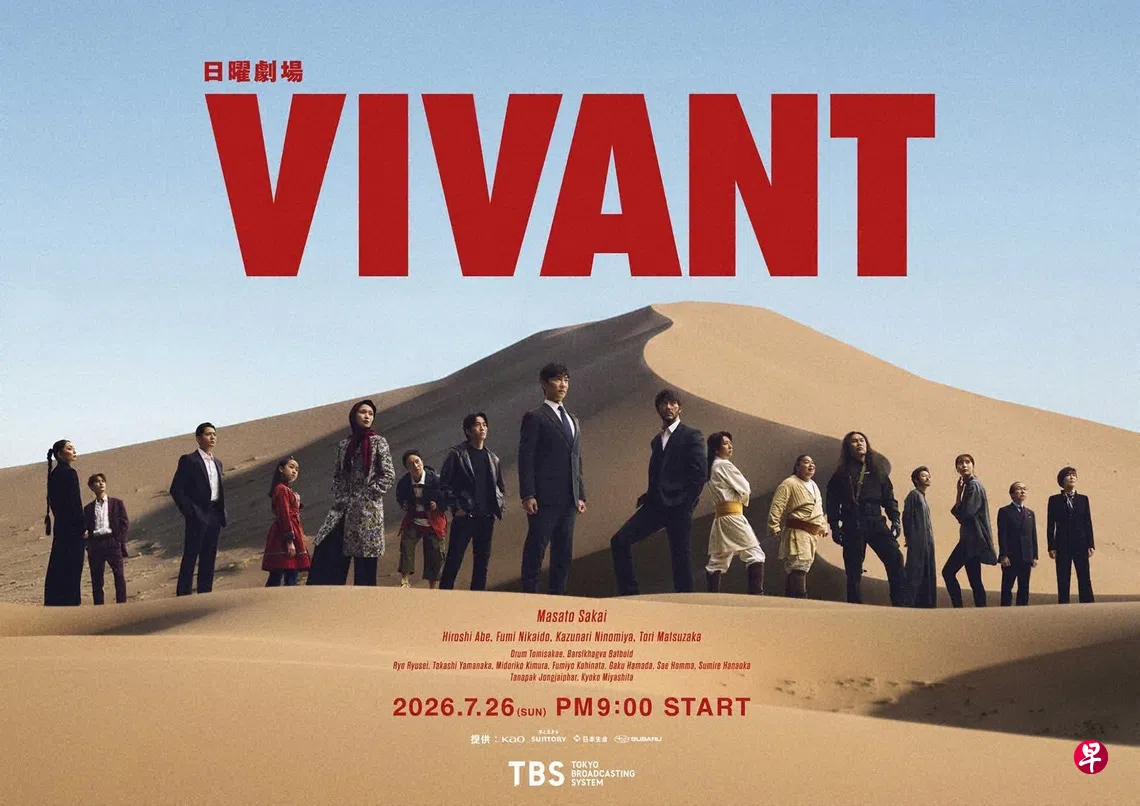
The second season of the Japanese television drama VIVANT has been a hit in recent weeks. But fictional scenes depicting a Chinese intelligence agency torturing Japanese agents, including cutting off fingers and piercing abdomens, have drawn strong protests from China.
Chinese commentators say these brutal scenes evoke “the torture inflicted by Japanese troops on Chinese resistance fighters during the Second World War”, and have accused the show of smearing China.
Chinese Ministry of Foreign Affairs spokesperson Guo Jiakun said on Thursday (29 October) that the drama “exposes the persistent presence of forces within Japan seeking to vilify and smear China and spread anti-China sentiment through cultural products. This should put the international community and discerning people in Japan on their guard”.
Despite widespread criticism in China, the spy drama has quite a following in Japanese political circles.
Speaking about the series in parliament on 14 October, Japanese Prime Minister Takaichi Sanae said, “I haven’t had time to watch it yet, but I’ve recorded it and hope to watch it all in one go over the coming New Year holiday.”
Japanese Defence Minister Koizumi Shinjiro has also publicly expressed his enthusiasm for the show. In a media interview shortly after the second season began airing, he said that although the secret Japanese intelligence organisation “Beppan” depicted in the series was fictional, he did enjoy the drama.
The first season of VIVANT aired in July 2023, centring on the entanglements between Beppan and an international terrorist organisation called Tent. Featuring a cast of veteran Japanese actors and leading stars, it was widely acclaimed.
The second season premiered in a Sunday prime-time television slot on 26 July this year, generating even more buzz than the first. However, its plot explicitly names China, prompting viewers to draw parallels with sensitive real-world tensions between China and Japan.
Some Japanese viewers believe the second season’s emphasis on violent confrontations involving China may be at the heart of Beijing’s displeasure. Other internet users have countered that China has produced many films and television shows with anti-Japanese themes.
Responding to China’s protests, Masamine Ryuho, president of TBS Television, which produces the drama, said it was an entirely fictional work of entertainment, with absolutely no intention of inciting confrontation between countries, disparaging any particular country or provoking hostility between peoples.
Reports suggest that a film version scheduled for release in December will still feature elements involving China. There are concerns that mishandling these could draw an even stronger rebuke from Beijing.
The airing of VIVANT’s second season also coincided with Japan’s formal establishment in July of a “national intelligence bureau” intended to strengthen intelligence-gathering capabilities. This has prompted some commentators to question whether the show is a government propaganda tool.
Japan’s Weekly Diamond magazine bluntly described it as a “patriotic production” packaged as entertainment, one that could subtly influence a new generation of Japanese people. It could even inspire some young viewers who struggle to distinguish fiction from reality to want to join Beppan.
Indeed, nothing in the drama has generated more discussion than the secret organisation Beppan. Although the Japanese government has repeatedly denied its existence, Japan’s Shukan Bunshun magazine previously quoted a former civil servant as saying that the organisation does exist.
According to the report, after the Second World War, Japan secretly trained a group of highly capable intelligence officers, drawing on the former Japanese military. During the Cold War, technology for gathering intelligence through reconnaissance satellites and cyberspace was still in development, making human intelligence critically important. This was where Beppan came in.
These Beppan members are said to wear no uniforms, concealing their true identities by posing as ordinary office workers.
Beyond the controversy over the plot, Sanrio, the company behind Hello Kitty, also found itself caught in the backlash after launching co-branded merchandise with the series. It swiftly ended the collaboration.
The greatest concern, however, is that the controversy adds uncertainty to already strained relations between China and Japan.
Late last year, after taking office, Takaichi crossed China’s political red line with her remark in parliament that “a Taiwan contingency is a Japan contingency”, sending bilateral relations into a deep freeze.
Takaichi is due to attend the Asia-Pacific Economic Cooperation meeting in China this month. The visit could have offered a crucial opportunity for the two countries to break the ice. Yet at this sensitive moment, a television drama has crossed another Chinese red line, this time involving history. If the controversy continues to grow, getting China-Japan relations back on track could become even harder.
