

Three French police officers who beat a black music producer during the COVID-19 pandemic have been sentenced to prison. In a rare finding in a police violence case, the court also ruled that the attack was racially motivated.
AFP reported that a French court delivered its verdict on Friday (20 November) over the incident of police violence on 21 November 2020, during the COVID-19 pandemic. The victim was black music producer Michel Zecler, now 47.
The three officers had stopped Zecler outside his recording studio in Paris, accusing him of failing to wear a mask as required. Investigators found that the officers pushed him into the entrance to his office and beat him. The entire incident was captured by an indoor surveillance camera.
The beating left Zecler with head injuries, cuts to his lips and scalp, and a completely ruptured biceps tendon. The officers later claimed that Zecler had attacked them and tried to seize one of their weapons, but surveillance footage disproved their account.
Zecler also said the officers repeatedly directed racial slurs at him during the beating.
The attack on Zecler reignited public anger over police violence in France. Victims and researchers consider violence within the French police force to be systemic, but the authorities and police unions insist that such incidents are isolated cases.
The three officers, who faced charges of assault and subsequently falsifying police reports, were each sentenced to five years in prison, with part of their sentences suspended. Aurelien Lapersonne, 29, had three years of his sentence suspended, while Philippe Tondeux, 50, had three and a half years suspended. Both will begin serving their prison terms at a later date. Pierre Plantier, 37, had four years of his sentence suspended and will be allowed to serve the remaining year outside prison while wearing an electronic tag.
Earlier on Friday, the three officers apologised to Zecler in court. Plantier broke down in tears, while Tondeux expressed remorse for damaging the police force’s image through his actions.
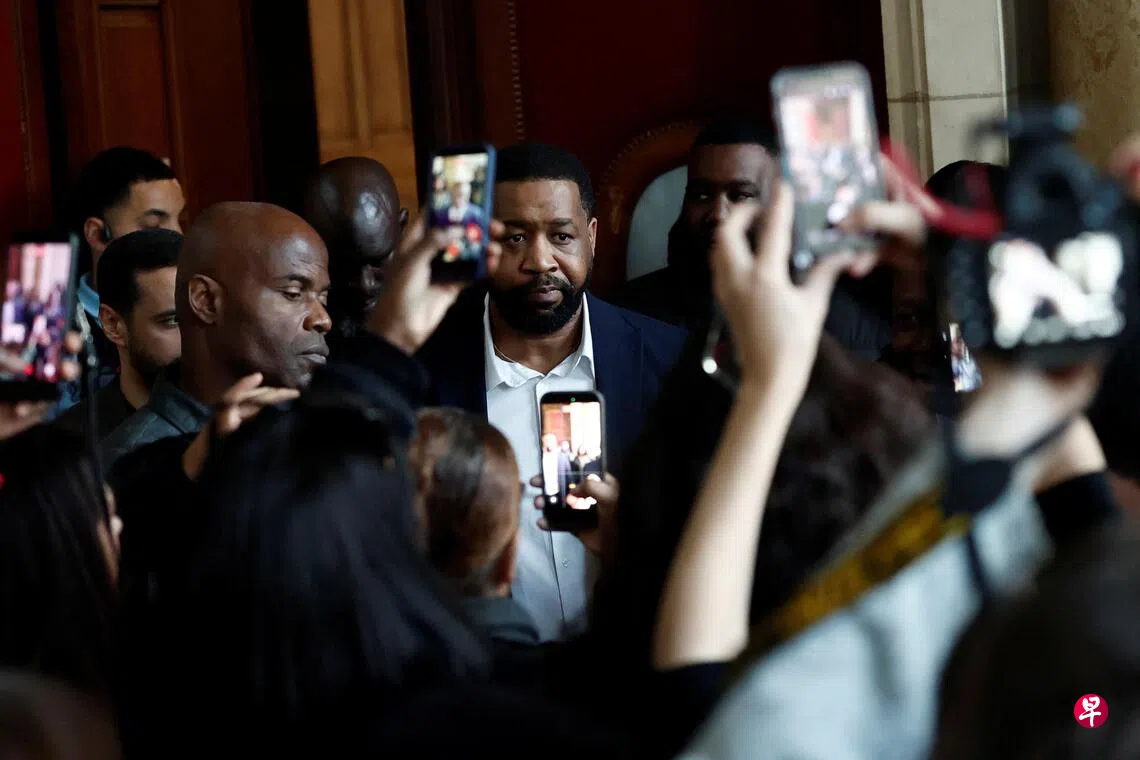
As Zecler left the courtroom, the crowd applauded him. His lawyer, Serge Money, said: “Justice has been done. It has restored a man's dignity and allowed him to begin rebuilding himself.”
Although the sentences were lighter than the four to six years in prison sought by prosecutors, the court, unlike investigators, found that racism was an aggravating factor in the attack, citing the consistency of the victim’s testimony.
The court noted that when a black officer handcuffed Zecler after the attack, Zecler told him he had been subjected to racial abuse. He repeated this account at the police station, on the way to hospital and when speaking to family and friends. The officers’ falsification of police reports also undermined the credibility of their denials that they had used racial slurs.
Convictions in police violence cases are rare in France. In 2024, three officers were given suspended sentences by a judge for causing irreversible rectal injuries to a young black man, Theo Luhaka, during a stop-and-check operation in 2017.
A report released last year by France’s human rights ombudsman, based on a survey of more than 5,000 people, found that young men “perceived as Arab, black or of North African origin” were four times as likely as other groups to be stopped by police. They were also 12 times as likely to face more intrusive measures, such as body searches, during those checks.
