

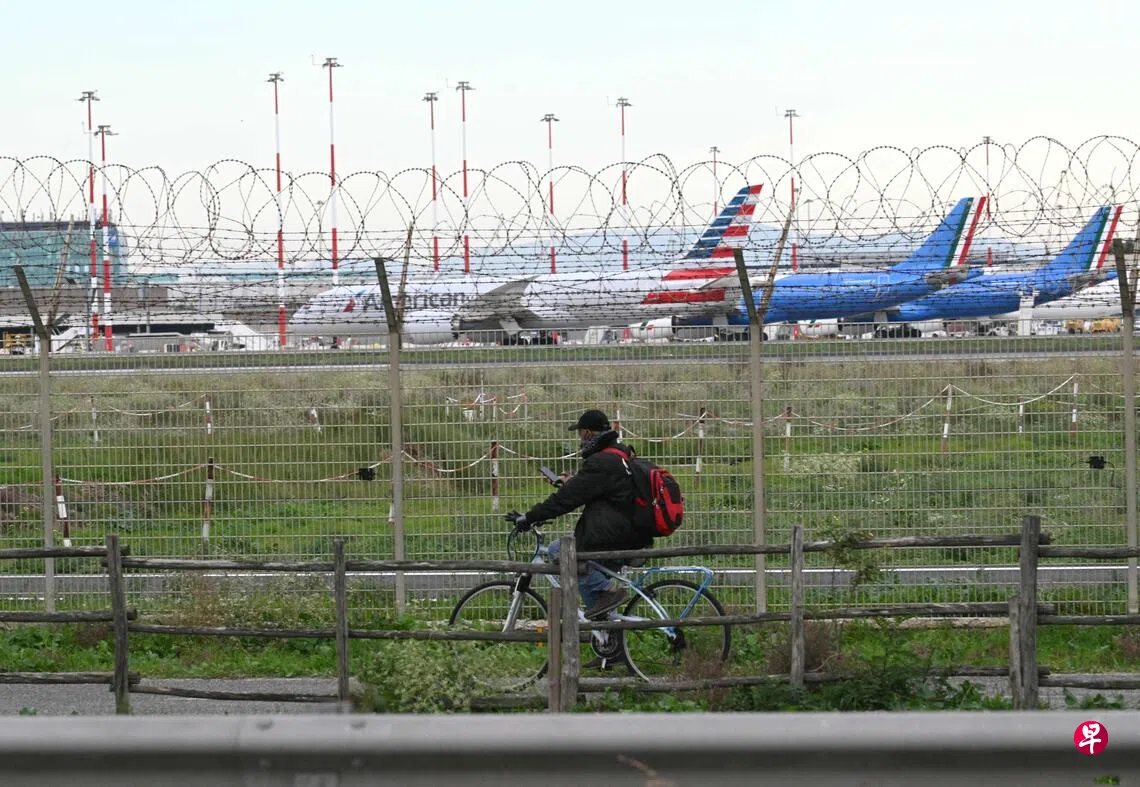
A fresh series of bomb threats hit several parts of Europe on Friday (6 November). Media organisations in Ireland, the UK and Bulgaria also received threatening emails, suggesting that the targets may be expanding beyond civil aviation.
Eleven flights to and from cities including Lisbon, Rome, Prague and Sofia were recently targeted by bomb threats. Some aircraft were forced to divert, while Hungary scrambled fighter jets to escort passenger planes. All the aircraft involved have landed. The authorities have so far found no explosive devices, and no one was injured.
This was the third wave of bomb threats against passenger aircraft in Europe in a week. The first wave on Tuesday (3 November) involved seven flights. On Thursday (5 November), another 14 flights were disrupted by false alarms, with some aircraft making unscheduled landings or even requiring fighter escorts or interception.
It remains unclear who issued the threats. Europe has already experienced a series of disruptions, including attacks on supermarket refrigeration systems and drone incursions. The latest wave of bomb threats has heightened security concerns.
Irish national broadcaster RTÉ, Bauer Media Group and Virgin Media also received bomb threats on Friday, prompting the evacuation of their offices. Some broadcasts were briefly interrupted.
The incidents come amid mounting geopolitical tensions. European Union (EU) authorities had previously warned that Russia could be stepping up “hybrid threats” in Europe. However, security experts have not ruled out copycat incidents or threats motivated by personal grievances.
Eurocontrol said on Friday that it was closely monitoring developments and working with airlines, airports, air navigation service providers and other groups across Europe to minimise disruption to air traffic.
Although all the threats have so far proved to be false alarms, Robert Jordan, a research director at the UK think tank Royal United Services Institute, said airlines must still take each threat seriously because they are ultimately responsible for their passengers’ safety.
Jordan told the BBC that there were now more ways than ever to issue threats against flights, while encrypted messaging apps made it easier for those responsible to conceal their identities.
EU Transport Commissioner Apostolos Tzitzikostas said after meeting Eurocontrol and the EU Aviation Safety Agency in Brussels that security experts would meet in the city next week to discuss measures to counter bomb threats.
Italian Prime Minister Giorgia Meloni said on Friday that the recent cyberattacks and bomb threats were worrying; while it was not yet possible to determine whether the incidents were connected, they sent the same message: Europe’s civilian infrastructure was under attack.
Ireland, meanwhile, believes this is very likely a coordinated campaign of disruption. However, there is currently no evidence identifying who is behind it, and the authorities have not attributed the threats to any organisation or country.
Spanish Foreign Minister José Manuel Albares said the succession of incidents across Europe, all following exactly the same pattern, could not be mere coincidence. They could involve “hybrid attacks” and “psychological warfare” against Europe, he said, warning that Europe must prepare for more such challenges.
