

Following a bruising midterm election, US President Donald J. Trump has acknowledged that his war against Iran contributed to Republican Party’s crushing defeat by driving up gas prices “a little bit” in the short term. However, he maintained that he would still choose to act again to ensure Iran never obtains nuclear weapons.
Persian Gulf countries are worried by the unpredictability of Trump’s next move. But some analysts say the greater danger now comes not from the US or Israel, but from Iran, which repeatedly overestimates its own strength and underestimates its enemies.
Trump made his first public appearance since the midterm results were settled on Wednesday (4 November), meeting the media at the White House ballroom renovation site. He spent more than 20 minutes discussing progress on the project, seemingly untroubled by the Republican defeat. It was only when a reporter asked whether he agreed with Vice-President JD Vance, who had blamed the defeat on the Iran war in a social media post earlier that day, that Trump acknowledged: “I think it’s largely true because it drove the gasoline up a little bit short term.”
However, Trump immediately added, “But at the same time, if I had it to do again, I’d have to do it again. Because long term, it’s the only answer. You can’t let Iran have a nuclear weapon.”
Trump praises Hegseth’s performance, rules out replacing war secretary
The fate of Secretary of War Pete Hegseth, a consistent advocate of war between the US and Iran, has become a key issue to watch following the Republican defeat. Citing sources, CNN reported that Republican lawmakers blamed Hegseth for the electoral losses. They accused him of encouraging Trump to attack Iran without drawing up a comprehensive plan, failing to map out an exit strategy for the US or prepare for the political fallout from launching the war.
Reports said the House of Representatives could hold a full vote on a motion to impeach Hegseth as early as next week, when it reconvenes.
Yet when pressed by reporters on Wednesday, Trump ruled out replacing Hegseth and insisted he had performed extremely well.
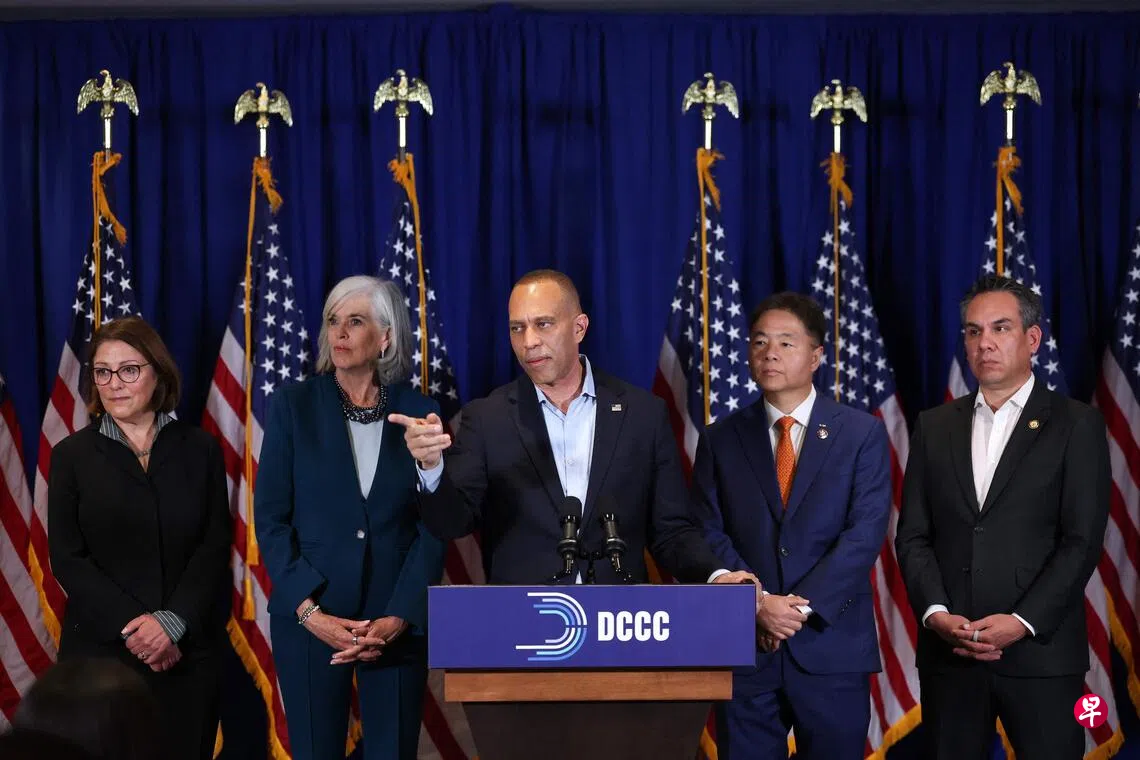
The Democrats have made clear that they want to end the US-Iran war. Senate Democratic leader Chuck Schumer reiterated on Wednesday that the war must end. House Democratic leader Hakeem Jeffries, who is expected to become House Speaker, expressed a similar position.
Iran warns war will widen if US resumes military attacks
Responding to the severe electoral setback for Trump and the Republicans, Mohsen Rezaei, secretary of Iran’s Supreme National Security Council, wrote on X on Wednesday that the Iranian people had repeatedly dealt Trump strategic defeats on the battlefield and in the Strait of Hormuz, and had now reached into Washington to inflict a political defeat. Iran’s chief negotiator and parliamentary speaker, Mohammad Bagher Ghalibaf, said American voters had used their ballots in the midterm elections to reject the war, and that Iran supported their demand.
Iran’s Supreme Leader Mojtaba Khamenei warned that the war would widen if the US resumed attacks on Tehran. US forces had just attacked Qeshm Island in southern Iran on Monday.
Iranians rallied in Tehran on Thursday, burning a large poster depicting Trump, Vance, Trump’s special envoy Steve Witkoff and Israeli Prime Minister Benjamin Netanyahu. Crowds cheered and waved red flags, chanting demands for revenge for Supreme Leader Ali Khamenei, who was assassinated by the US and Israel. Earlier, thousands of Iranians mocked Trump at an annual rally commemorating the seizure of the US embassy and the hostage crisis that followed the 1979 Islamic Revolution.
Academic: Iran now poses greater danger than US or Israel
Meanwhile, officials in the Persian Gulf region are concerned about the US midterm election results because no one can predict what Trump will do next.
Two sources said Trump, now politically weakened and facing a Congress capable of constraining his military actions, had a stronger incentive to seek a deal. They therefore believed a full-scale US attack on Iran had become less likely.
However, Abdulkhaleq Abdulla, a professor of political science at United Arab Emirates University, believes the greater danger now comes from Iran rather than the US or Israel. He said Iran’s leaders had long been arrogant, overestimating their own strength and underestimating US and Israeli military power, so a resumption of fighting could not be ruled out.
A Bloomberg analysis noted that successive US presidents had made bold foreign policy moves towards the end of their time in office, so further action by Trump are not out of the question. Speculation about his possible next steps includes not only another attack on Iran, but also a further rupture with Europe over the Russia-Ukraine conflict, or even military intervention in Cuba.
