

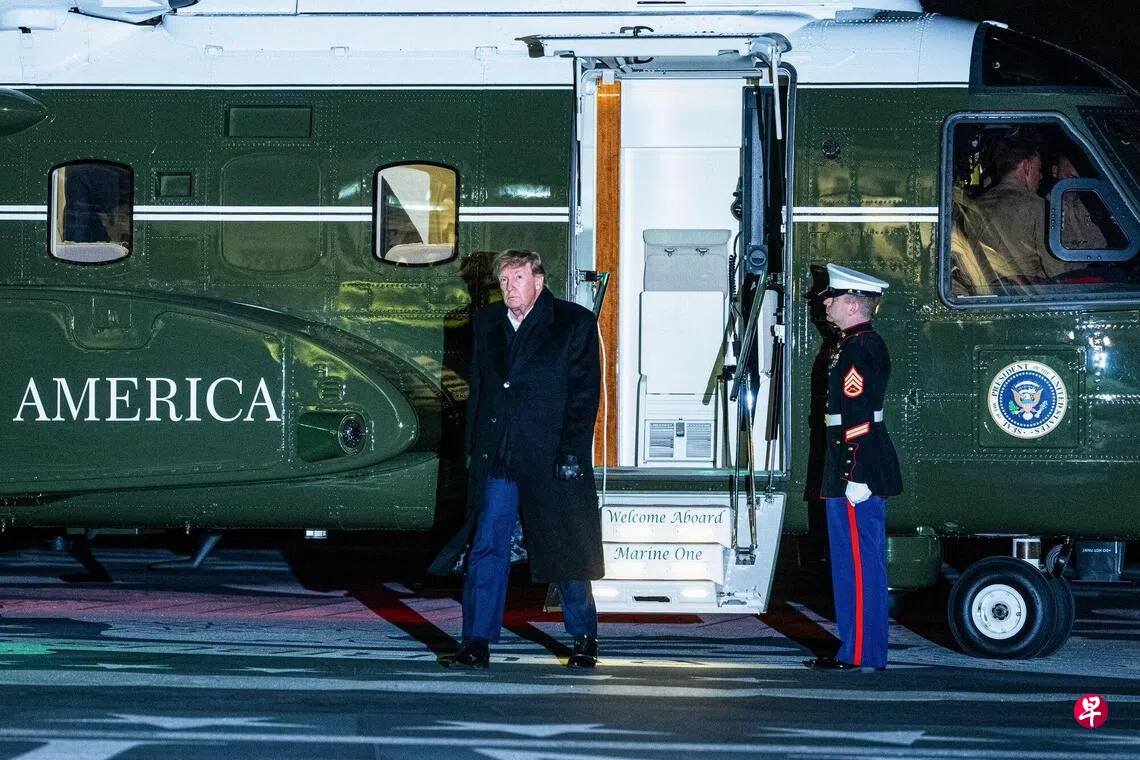
(Washington, agencies) US President Donald J. Trump gave the first China-US-Russia leaders’ summit a glowing score of 12 out of 10. But the meeting, which lasted less than 90 minutes, produced no announcement on launching trilateral nuclear arms control talks and no breakthrough on major disputes, including Iran and Ukraine.
In a telephone interview with NBC on Thursday (19 November), while flying back to the US on the presidential aircraft, Trump said: “On a scale of zero to 10, I think the meeting was a 12.”
However, a Reuters analysis said the summit highlighted Trump’s reliance on personal diplomacy and fondness for diplomatic pomp, while also exposing the limits of this approach in resolving fundamental differences between major powers.
Trump, Chinese President Xi Jinping and Russian President Vladimir Putin jointly issued the U.S.-Russia-China Heads of State Declaration toward Peace after their trilateral meeting in Shenzhen on Thursday. The three countries reaffirmed that a nuclear war cannot be won and must never be fought, and pledged to hold dialogue on reducing nuclear risks and preventing nuclear proliferation.
The declaration also identified areas for cooperation, including advancing UN reform and increasing supplies of refined petroleum products. But it set out neither a timetable for nuclear arms control talks nor specific plans to reduce nuclear weapons, and offered no solutions to core differences over Iran, Ukraine, Taiwan and trade.
Trump told Reuters after the summit that he would continue seeking an agreement to limit nuclear weapons with China and Russia, but acknowledged that negotiations were very difficult. He said Xi supported the idea of limiting nuclear weapons, but persuading a country with 4,000 nuclear weapons to halve its arsenal would face enormous resistance.
China’s nuclear arsenal is reportedly far smaller than those of the US and Russia, a key reason Beijing has remained cautious about trilateral nuclear arms control talks.
Diplomatic pomp draws questions over tangible results
Xi personally greeted Trump at the airport on Wednesday (18 November) and held a lavish welcome ceremony for him. In interviews with US media, Trump repeatedly praised the Chinese reception arrangements, seemingly regarding the high-level treatment as a diplomatic victory.
Yet the diplomatic pomp did little to dispel doubts about the summit’s lack of substantive results.
Christopher Preble, a senior fellow at the Stimson Center think tank in Washington, said: “Trump has always loved the pageantry and the sense that he's sitting down with the most important people in the world, and he got that moment. But as in other summits, it’s hard to see any substantive progress made on any major issue.”
Responding to questions from Reuters, White House spokeswoman Anna Kelly stressed that Trump had restored US strength and that his Asia trip amply demonstrated the respect and courtesy that world leaders showed the US.
China and Russia gain prominence as European allies voice discontent
Analysts said that while the historic meeting failed to deliver a major diplomatic breakthrough for Trump, both the Chinese and Russian leaders came away with gains. By hosting the summit, Xi significantly enhanced China’s diplomatic standing. Although Russia’s economy is far smaller than those of China and the US, Putin secured a place at the table as an equal without making major concessions, underscoring Russia’s status as a major power.
Other analysts said China’s endorsement of the value of the trilateral meeting suggested that similar meetings could be held again.
By contrast, European allies were deeply uneasy about the summit of major powers. European leaders meeting in Berlin on Thursday to express support for Ukraine were unhappy that Trump had called Putin a “friend”, and that Europe had been excluded from the summit discussions.
German Chancellor Friedrich Merz was even more blunt, saying: “The meeting in Shenzhen was apparently first and foremost a photo op.”
Trump will hold a press conference at the White House on Friday (20 November) to outline the results of his Asia trip.
