

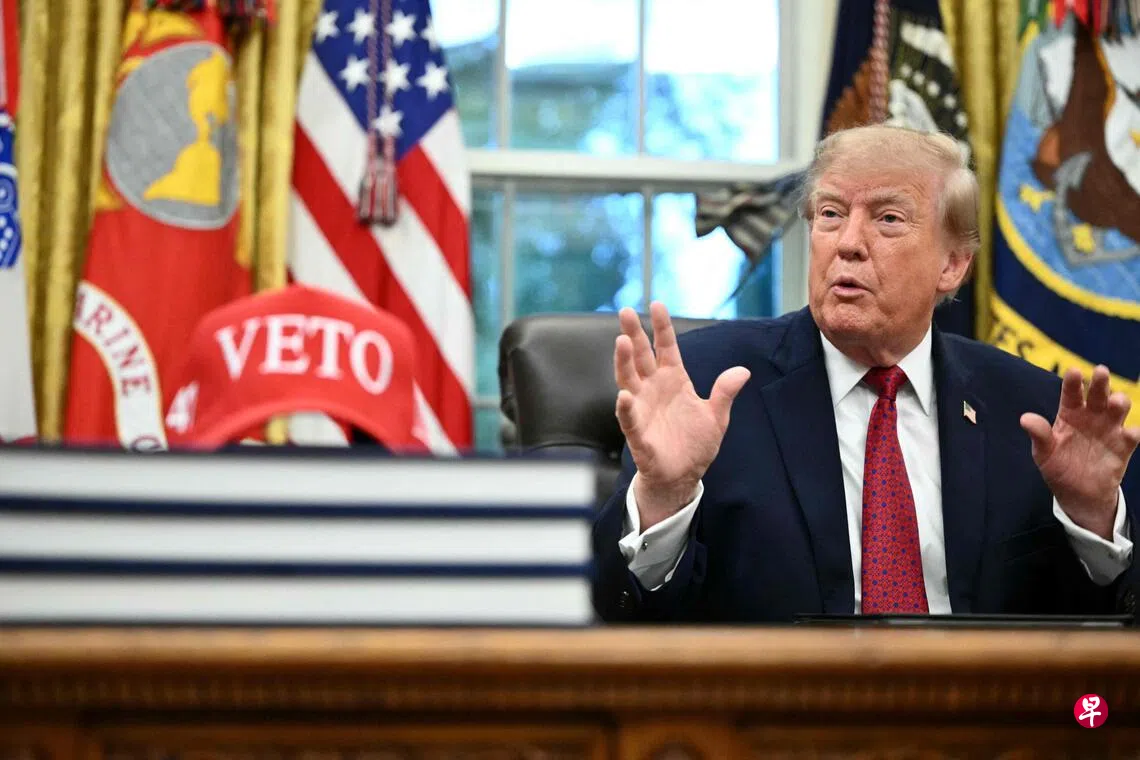
US President Donald J. Trump has reversed his earlier pledge to accept the midterm election results, instead alleging electoral fraud. But as the Democrats extend their gains, most commentators believe that even if Trump refuses to accept the results, he will be unable to cause much disruption or reverse the outcome.
Even Mississippi could now deliver an upset, with the Democrats potentially winning a Senate seat.
Speaking to reporters in the White House Oval Office on Thursday (5 November), Trump claimed that electoral fraud in the US was on a scale people could not imagine.
He also posted on his own social media platform, Truth Social, blaming that day’s sharp stock market fall on the Democrats, saying they “had a big Tuesday — So sad to see, you only have yourselves to blame!”
Trump’s open dissatisfaction with the election marked a reversal of his initial pledge to accept the midterm results. He also demanded that votes cast for two other candidates in Alaska’s Senate race be transferred to the trailing Republican incumbent, Senator Sullivan.
As one of the candidates shared Sullivan’s name, Trump accused the Democratic campaign of deliberately recruiting a candidate with the same name as Sullivan to split the vote, arguing that transferring that candidate’s votes to Sullivan would therefore be fair.
The Democrats have secured majorities in both chambers of Congress. As of Thursday, they had won at least 54 of the Senate’s 100 seats and more than 250 of the House of Representatives’ 435 seats, giving them their largest lead in nearly 20 years.
Trump has threatened to use his presidential veto to block bills proposed by the Democrats. However, Senate Democratic leader Chuck Schumer warned that if Trump repeatedly vetoes bills aimed at lowering the cost of living and ending corruption, Republicans will face an even worse outcome in the 2028 presidential election than in these midterms.
Fraud allegations spread persistently by Trump supporters over the past few months have all but disappeared since the Democratic victory, and the large-scale legal challenges that had been expected have not materialised.
Analysts said one reason was that Trump had previously pledged to accept the election results, setting the tone for his followers. The Democrats’ overwhelming victory also left such accusations with little traction.
David Becker, executive director of the non-partisan Center for Election Innovation and Research, said American voters had grown tired of baseless claims denying election results.
Pamela Smith, president of another non-partisan organisation, Verified Voting, said, “A smaller number of election skeptics ran this time than in past cycles, and there seem to be substantially less stomach for these claims among voters.”
The New York Times, citing current and former US officials, also reported that there had been little foreign interference in this election. Although some routine technical glitches and other disruptions occurred on election day, there was no indication that overseas hackers had interfered with voting or vote counting.
The report pointed out that foreign powers were more concerned about who would occupy the White House. US midterm elections were less attractive to them and harder to interfere in.
