

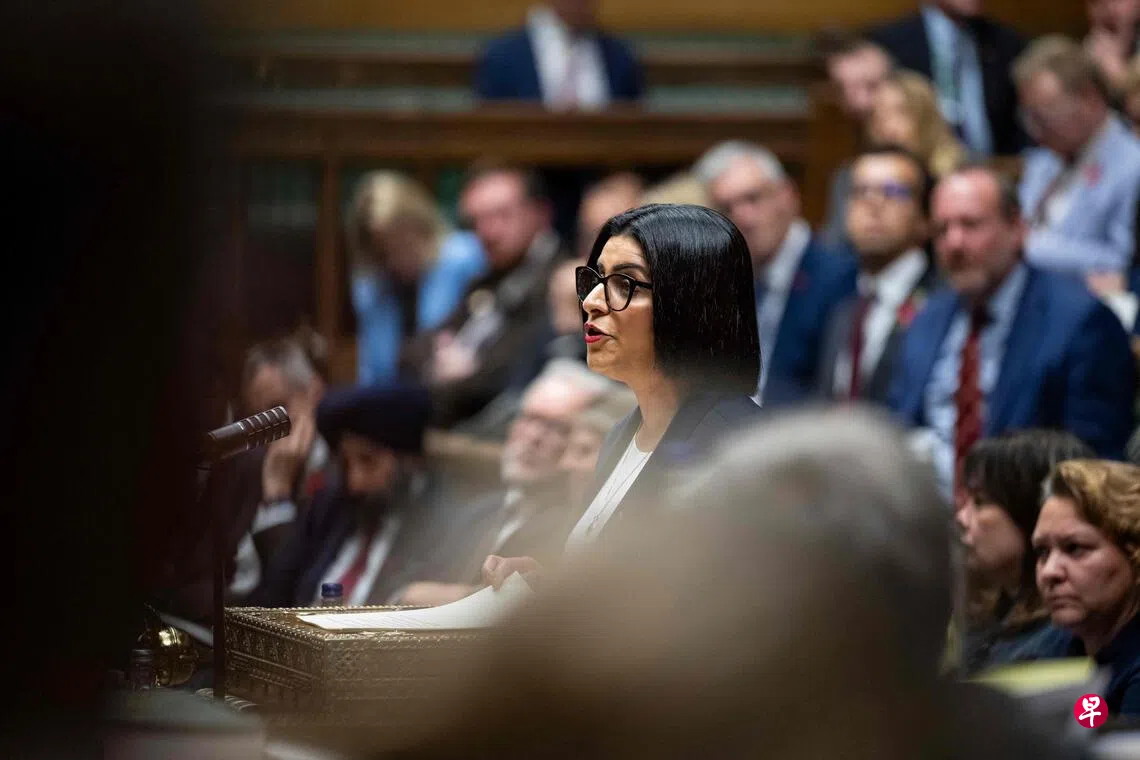
The UK Labour government’s controversial immigration reform bill has passed the House of Commons without a backbench rebellion, temporarily defusing a political crisis and offering relief to Prime Minister Andy Burnham and Home Secretary Shabana Mahmood.
Bloomberg reported that the House of Commons passed the Immigration and Asylum Bill by 290 votes to 94 on Tuesday (17 November). The bill will next go to the House of Lords for further scrutiny.
Under the reforms, the standard residence requirement for migrants applying for settled status will rise from five years to 10. High earners could qualify sooner, while refugees would face an even longer wait.
The bill had caused considerable headaches for Burnham and Mahmood, with several Labour MPs expressing concern about provisions that would raise the threshold for settlement for migrants already in the UK.
More than 100 MPs had written to Mahmood threatening to vote against the bill. With the more left-leaning Burnham also having just taken office as prime minister, Mahmood ultimately agreed to exemptions for migrants who came to the UK to do low-paid social care work, looking after older and vulnerable people.
Under the bill, these workers could face a 15-year wait. However, care workers who arrived in the UK before the reforms were first proposed in May 2025, and who earned an annual income of at least £25,000 (about S$42,500) in the 12 months before applying, would retain their five-year route to settlement.
Other lower-paid skilled workers, including chefs and engineers, would still have to wait longer to apply for settlement. The government plans to apply the new rules retrospectively, potentially forcing some people who were only weeks away from qualifying for settled status to wait several more years. This continues to trouble some MPs.
Speaking for the government before the vote, UK Minister for Border Security and Asylum Anna Turley strongly objected to the use of the term “retrospective” to describe how the reforms would apply to migrants already in the country. She said: “Settlement has always been determined at the point of application, not at entry.”
Hundreds of thousands of people have come to work in the UK since Brexit and the subsequent easing of work visa requirements. Once granted settled status, these foreign workers, whose visas were previously tied to specific jobs, would be free to move into any other sector and claim a wider range of welfare benefits.
The UK Home Office is concerned that this could add to the country’s already swelling welfare bill. The government said about 500,000 people currently in the UK would have to wait longer than originally expected to apply for settled status under the new proposals.
