

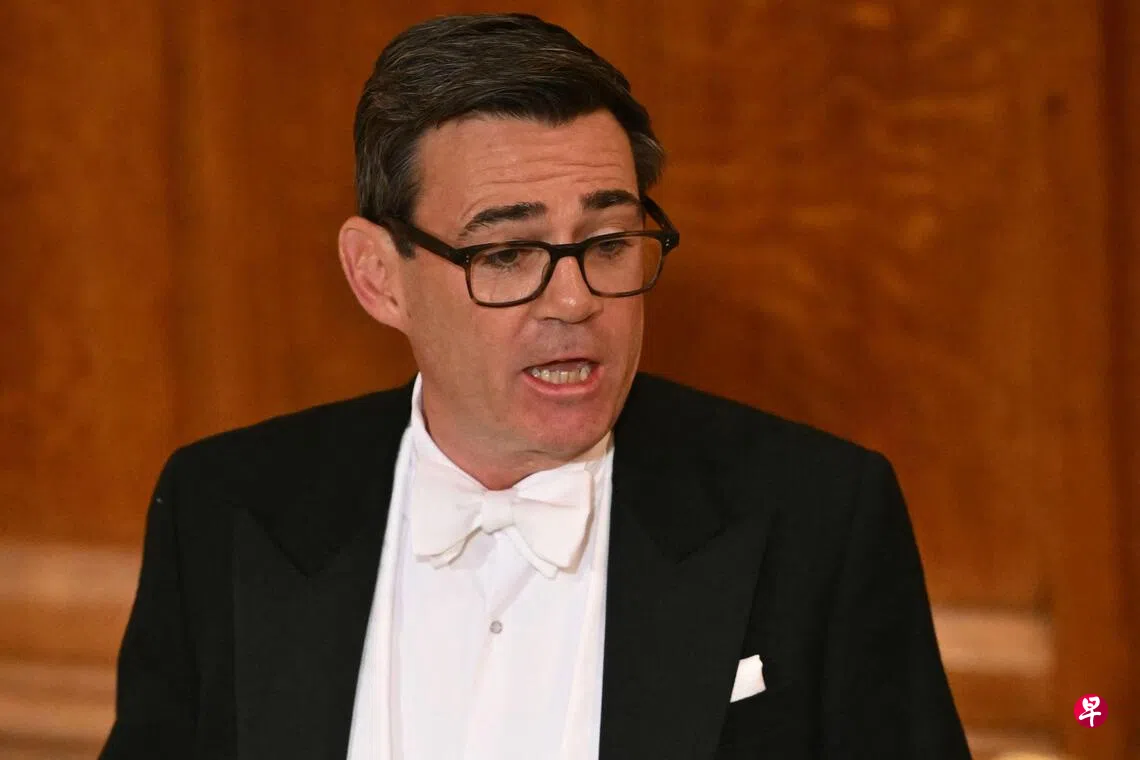
(London, agencies) UK Prime Minister Burnham said “we have lost more than we have gained” in the decade since Brexit, and that the UK must reassess its current relationship with the EU.
In a foreign policy speech in London on Monday (16 November), Burnham cited figures from Britain's Office for Budget Responsibility showing that Brexit had cost the UK economy about 4%. Other estimates put the loss at as much as 8% of gross domestic product (GDP).
He also said: “At a more fundamental level, what was broken a decade ago is still broken today.”
Burnham proposed three foreign policy resets, including a reassessment of the UK’s relationship with Europe. He said: “We have to consider whether the relationship we have now is right for this moment, for our economy, and for our security.”
Burnham said the UK would discuss options for its long-term relationship with its EU partners and submit an assessment to the next Parliament for MPs to decide. But he stressed that the discussions would take time, and that any major changes to UK-EU relations would not be implemented before the UK’s next general election, which must be held by 2029.
The UK and the EU will hold a summit in Brussels this Friday, where they are expected to finalise three agreements covering a youth exchange scheme, easing restrictions on emissions trading, and removing barriers to the cross-border movement of agricultural products and food. Burnham said he would push for legislation in Parliament next week to implement the agreements. He pledged that the UK would not rejoin the European single market or customs union, or restore freedom of movement, during the current parliamentary term.
Burnham’s remarks drew a backlash from Brexit supporters. Former premier Boris Johnson called reopening the debate “madness”, while another former prime minister, David Cameron, warned that discussions about rejoining the EU could turn into a long and painful decade of debate. Burnham’s Labour Party is also divided: one MP called for a pledge to rejoin the EU in the party’s next general election manifesto, while some MPs from pro-Brexit constituencies wanted an end to the discussion.
The UK held a referendum on EU membership in 2016, when about 52% of voters backed leaving the bloc. The UK formally left the EU in 2020.
