

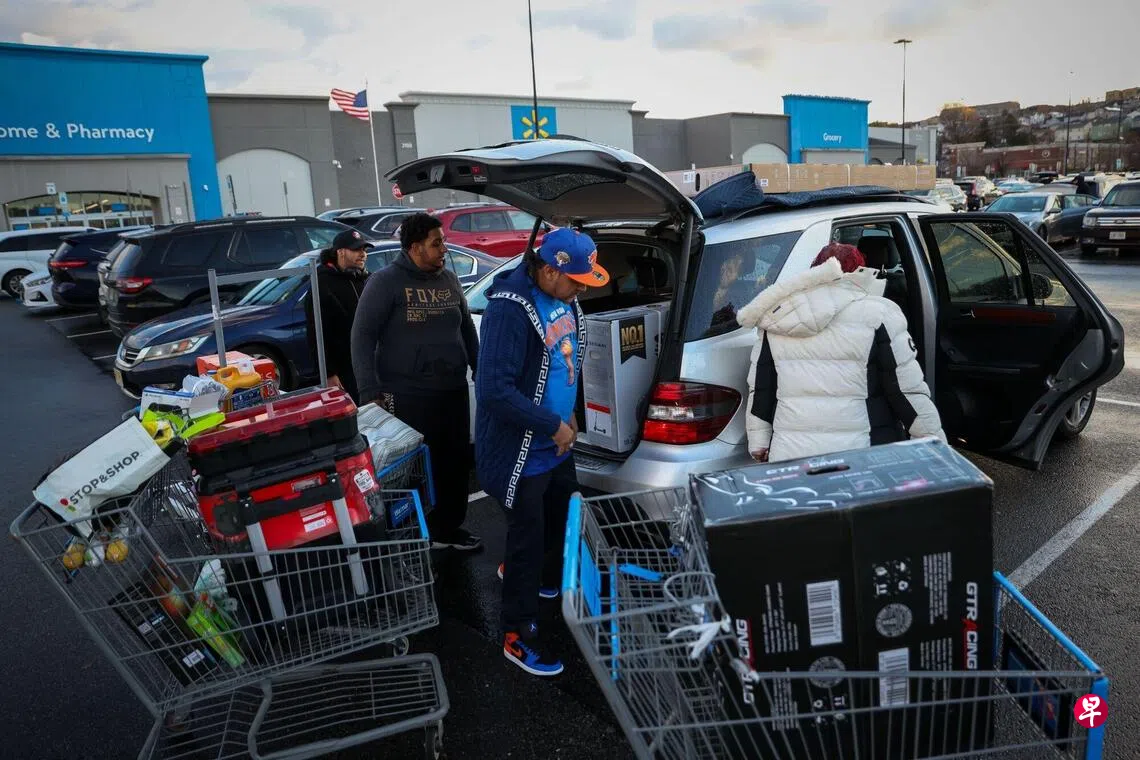
(Los Angeles/New York/Washington, agencies) High inflation, soaring living costs and stormy weather in the northeastern US have created a stark divide between online and in-store shopping on Black Friday, a highlight of the annual US shopping season. Footfall at physical shops has fallen as consumers tighten their budgets, but online spending remains strong, with sales for the day expected to exceed US$13 billion (about S$16.8 billion).
Data from market research firm Adobe Analytics showed that US Black Friday online spending had reached US$9.7 billion as of 6.30pm Eastern time on Friday (27 November), up 12.8% year on year. The final total for the day was projected to reach between US$13 billion and US$13.4 billion, exceeding an earlier forecast of US$12.9 billion. Online spending on Cyber Monday, 30 November, is expected to reach US$15.1 billion, up 6.2% year on year.
Footfall at physical shops contrasted sharply with the online shopping boom. Data from real-time foot traffic analytics firm Passby showed that visits to physical shops across the US totalled 760 million as of 6.30pm on Friday, down 2.4% year on year.
At one high-end shopping centre in Manhattan, New York, security guards even outnumbered customers. A sales assistant at Macy’s Herald Square told Bloomberg that stormy weather, which persisted until Friday morning, had dampened shoppers’ enthusiasm for heading out.
In interviews with Reuters across the US, many people said they struggled to find discounts large enough to offset the pressure of high petrol and grocery prices. Some consumers were drawn by prominent sale signs at shopping centres but left empty-handed after finding that even discounted prices were higher than in previous years.
A November survey by the National Retail Federation found that, faced with inflation and economic pressures, 82% of consumers had taken steps to rein in holiday spending this year, such as buying less expensive gifts.
Brookings Institution Senior Fellow Darrell West told Xinhua: “The overall economy continues to grow but not everyone shares in the prosperity. There is high income inequality so some are doing quite well while others have difficulty making ends meet.”
