

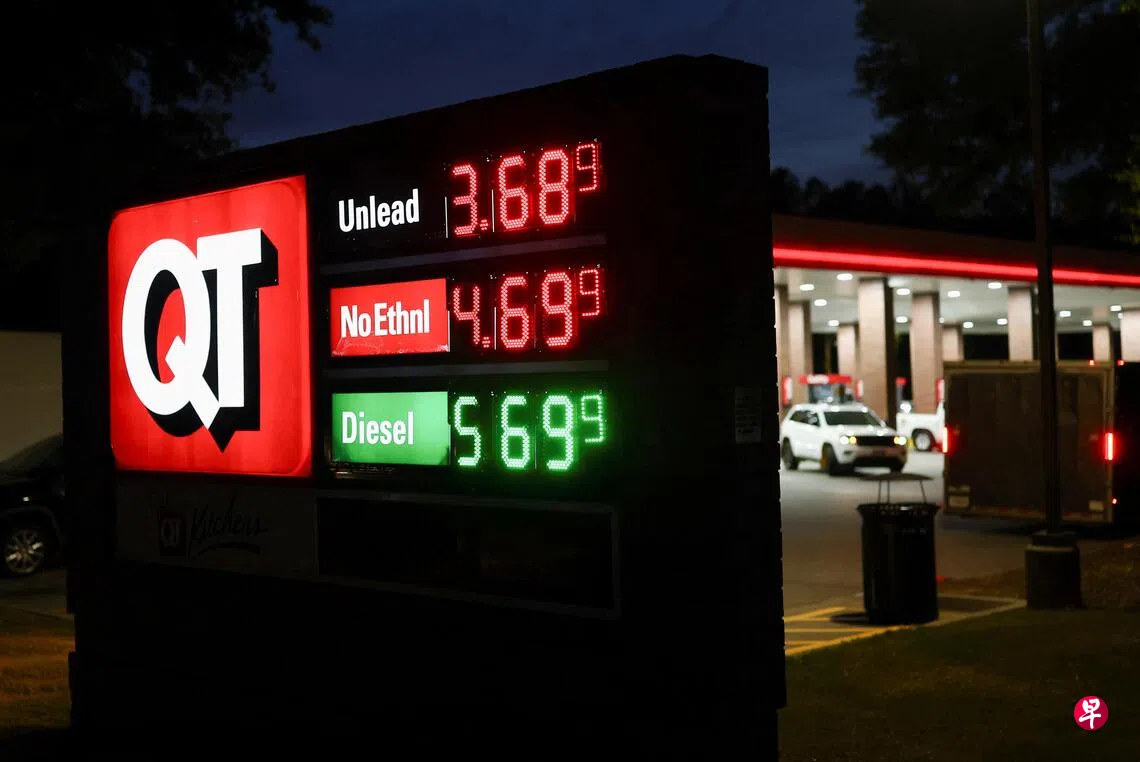
US consumers have incurred the highest additional petrol costs in the world as the US-Iran war drives up energy prices, according to a study released on Monday (26 October) by the Finland-based non-profit Centre for Research on Energy and Clean Air
The extra outlay averages US$471 (about S$604), far above the average of US$60 in other countries.
US consumers are paying more mainly because they rely more heavily on less fuel-efficient private cars, travel longer distances in their daily lives and have been relatively slow to adopt electric vehicles.
The study covered fuel spending in 169 countries from March to mid-October this year. Consumers worldwide paid about US$468 billion more because of higher fuel prices during this period, including US$160 billion in the US, US$54 billion in China and US$17 billion in Canada.
During his 2024 presidential campaign, Donald Trump pledged to bring petrol prices below US$2 a gallon. But an American Automobile Association survey found that Americans have paid an average retail price of US$3.472 a gallon for regular petrol since Trump returned to the White House in January last year, higher than the US$3.471 average under former president Joe Biden.
Both the Russia-Ukraine and US-Iran wars have tightened global supplies of crude oil and fuel. Since the US-Iran war broke out in late February, US petrol prices have risen by 43%, while diesel prices have surged by nearly 70% to a record high, making fuel prices the biggest point of contention for Republicans in the midterm elections.
Trump to ease methane emission limits to boost production
Campaigning in Mississippi on Monday, Trump acknowledged that the war had driven up oil prices, but reiterated that this was a small price to pay to prevent Iran from obtaining nuclear weapons. "I thought the price of oil was going to go much, much higher," Trump said. Referring to the war, he added, "It's worked out fine and it'll be over soon."
Trump was expected to announce an easing of limits on emissions of methane, a greenhouse gas, from oil and gas production while campaigning in Texas on Tuesday (27 October), Bloomberg reported. The move is aimed at encouraging greater domestic energy production and reducing costs.
The Environmental Protection Agency, which put forward the proposal, also advocates scrapping the Methane Super Emitter Program, which uses third-party technology to rapidly locate large methane leaks and notify oil and gas facility owners so they can make timely repairs.
The agency estimates that the proposals could save the US energy industry about US$45 billion between 2027 and 2050, while enabling the production of about 210 million additional barrels of crude oil and 1.41 trillion cubic feet of natural gas.
Parcel deliveries to cost more during year-end holiday rush
Due to soaring petrol costs, US retailers and e-commerce businesses must pay more for parcel delivery in the fourth-quarter holiday peak season, with industry data predicting surcharges will rise by 5.8% from last year to a record high.
As of 19 October, the average US diesel price was US$6.28 a gallon, up 65% since the US-Iran war began. At that price, major parcel delivery companies UPS and FedEx levy fuel surcharges of 29.5% and 29% respectively. The US Postal Service imposes an 8% surcharge on most parcels, while Amazon charges sellers an additional 3.5% fuel and logistics-related surcharge.
