

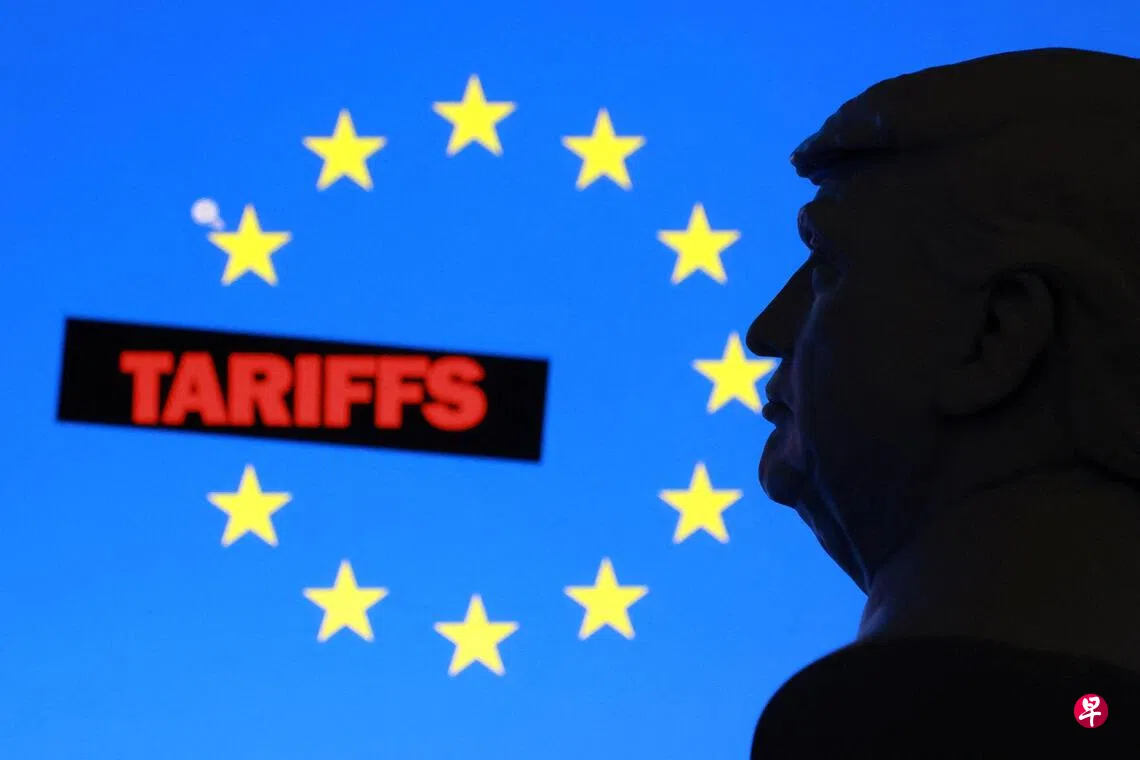
The EU has rejected proposed new US tariffs and called on Washington to honour the agreement it reached with Brussels last year.
Responding to US measures announced on Wednesday (25 November) to impose new tariffs over excess capacity, European Commission spokesman Olof Gill said, according to AFP, “We will study the findings…At the same time we strongly reject the premise that Europe is a source of structural overcapacity. To the contrary, Europe is among those most exposed to overcapacity.”
“The EU and the US share a real concern about global overcapacity, much of it state-driven and concentrated in third countries. We regret the lack of joint action,” Gill said of the US move.
He also said the European Commission would continue engaging with Washington to push for the implementation of the tariff agreement reached last year. Under the deal, tariffs imposed by Donald J. Trump on EU goods are capped at 15%.
Gill said, “We expect any measure from this investigation to respect it in full, including when combined with existing duties.”
The EU has already imposed trade restrictions to protect its domestic industries over concerns about excess capacity, but these measures mainly target China.
Brussels has long been concerned that China's excess capacity, driven in part by government subsidies, has led to an influx of cheap imports into the European market, hurting European manufacturers.
Following an eight-month investigation under Section 301 of the Trade Act of 1974, the Office of the United States Trade Representative announced its findings and plans for new tariffs on Wednesday. It will impose additional tariffs on 14 major trading partners, alleging that these economies create or contribute to structural excess capacity in manufacturing that burdens or restricts US commerce. The move could trigger another wave of trade tensions.
The countries and territories affected are mainland China, the EU, India, Japan, South Korea, Vietnam, Taiwan, Thailand, Malaysia, Indonesia, Switzerland, Singapore, Bangladesh and Cambodia.
