

The Chinese and US presidents will advance dialogue on artificial intelligence safety when they meet in Shenzhen, China, next week, seeking to jointly guard against risks and avoid miscalculations.
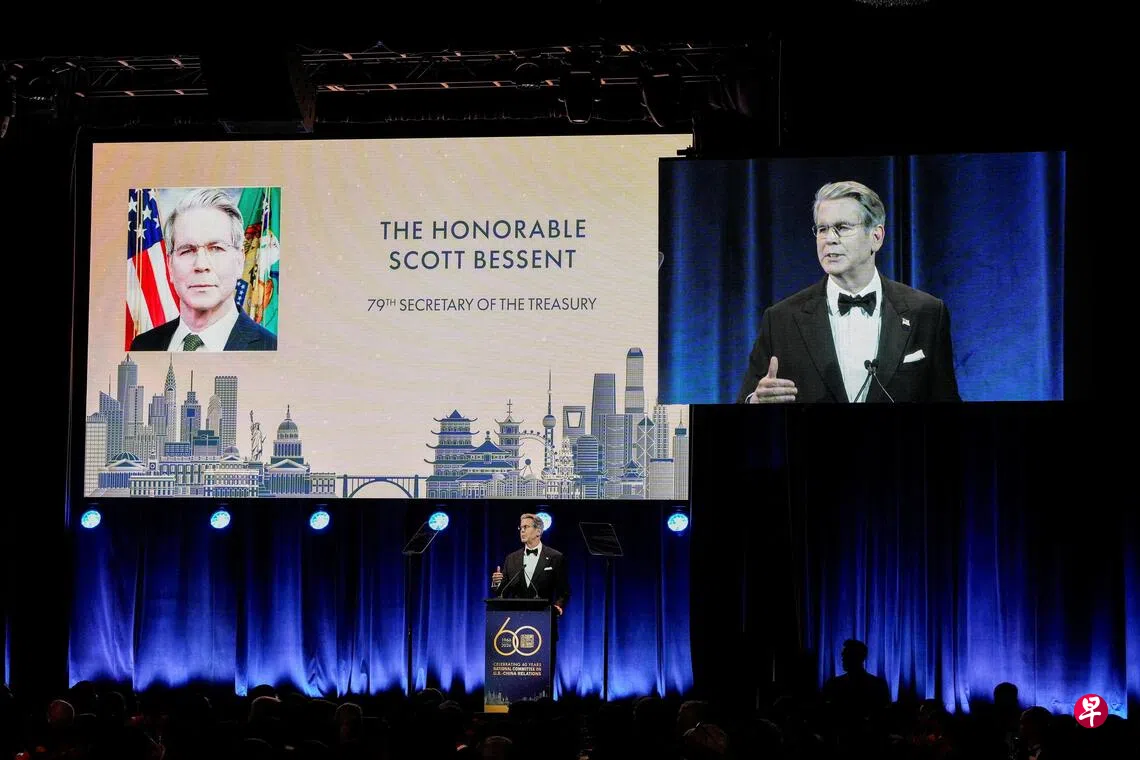
US treasury secretary Scott Bessent said the two countries were working to establish a direct notification channel to alert each other promptly to serious incidents involving AI models.
US President Donald Trump and Chinese President Xi Jinping agreed to establish the notification mechanism when they met at the White House in September this year. Bessent said the two sides would continue their dialogue on “superintelligence” in Shenzhen.
“Superintelligence” is a term the Trump administration frequently uses when discussing artificial intelligence (AI).
Bessent spoke at a dinner marking the 60th anniversary of the National Committee on US-China Relations in New York on Tuesday (10 November). According to his prepared remarks released by the US Treasury Department, Bessent confirmed that he would accompany Trump to China.
Trump and Xi are expected to meet during the Asia-Pacific Economic Cooperation (APEC) leaders’ summit in Shenzhen on 18–19 November. It will be their third meeting this year.
“We also expect to exchange best practices for evaluating and testing advanced models before their release, and for keeping human judgment firmly in command of this technology,” said Bessent.
As China and the US vie for leadership in AI, Bessent stressed that the US wanted a constructive relationship with China based on balance and reciprocity. However, he cautioned that their interests would not always align, nor would their approaches to various challenges necessarily be the same.
“As we do so, we should harbor no illusions about the differences between the US and China.”
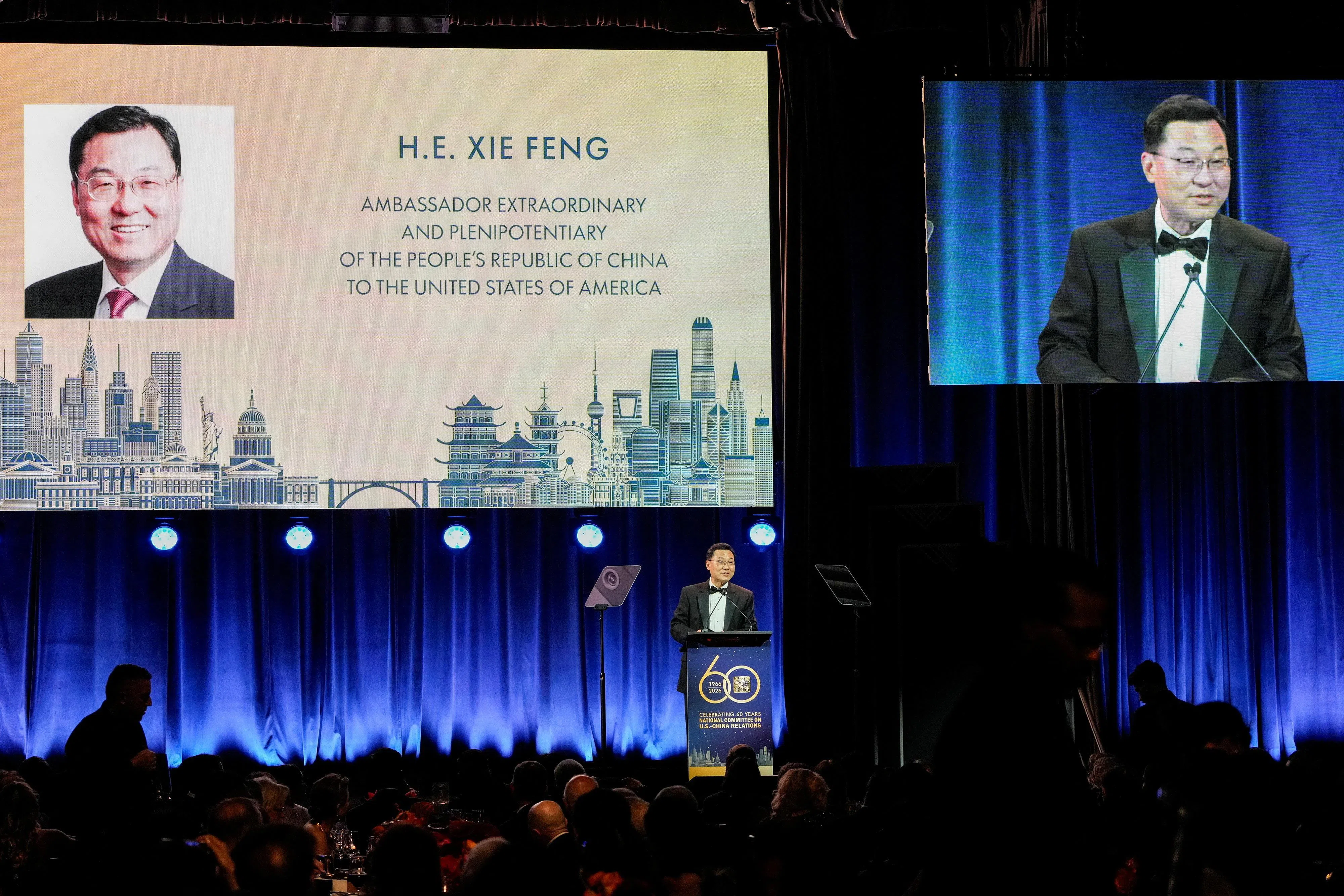
Chinese ambassador to the US Xie Feng told the dinner that improving AI governance and pursuing political solutions to international flashpoints both required joint efforts by China and the US.
Bessent’s speech did not mention the recent controversy surrounding Nvidia chief executive officer Jensen Huang over suspected Chinese espionage.
Nvidia’s board is conducting an independent investigation into reports that Huang may have been targeted by foreign intelligence operations, but stressed that there was currently no reason to believe US national security or company secrets had been compromised.
Huang attended the two meetings between the US and Chinese presidents in May and September this year. It remains unclear whether he will accompany Trump to China again this time.
On economic and trade issues, Bessent reiterated that the US wanted to de-risk trade with China, rather than decouple from it. He noted that the US trade deficit with China remained a source of friction and that Washington wanted to rebalance bilateral economic relations.
China and the US previously agreed to establish a trade committee to study tariff reductions on US$30 billion (about S$38.5 billion) worth of non-sensitive goods from each country.
They also agreed to establish an investment committee to discuss issues including US companies’ access to the Chinese market and greater predictability in the operating environment for Chinese companies.
Although China and the US have extended their tariff truce until January next year, differences remain over the fulfilment of economic and trade commitments and trade restrictions.
During a video call last week with Chinese Vice-Premier He Lifeng, Bessent and US trade representative Jamieson Greer urged China to take concrete steps to fulfil its commitments on purchases of US agricultural products, as well as on rare earths and other critical minerals.
Chinese state media reported that Beijing had expressed serious concerns during the call about recent US economic and trade restrictions.
Trump and Xi are expected to hold their fourth meeting this year during the Group of 20 (G20) summit in Miami in the US in December.
