

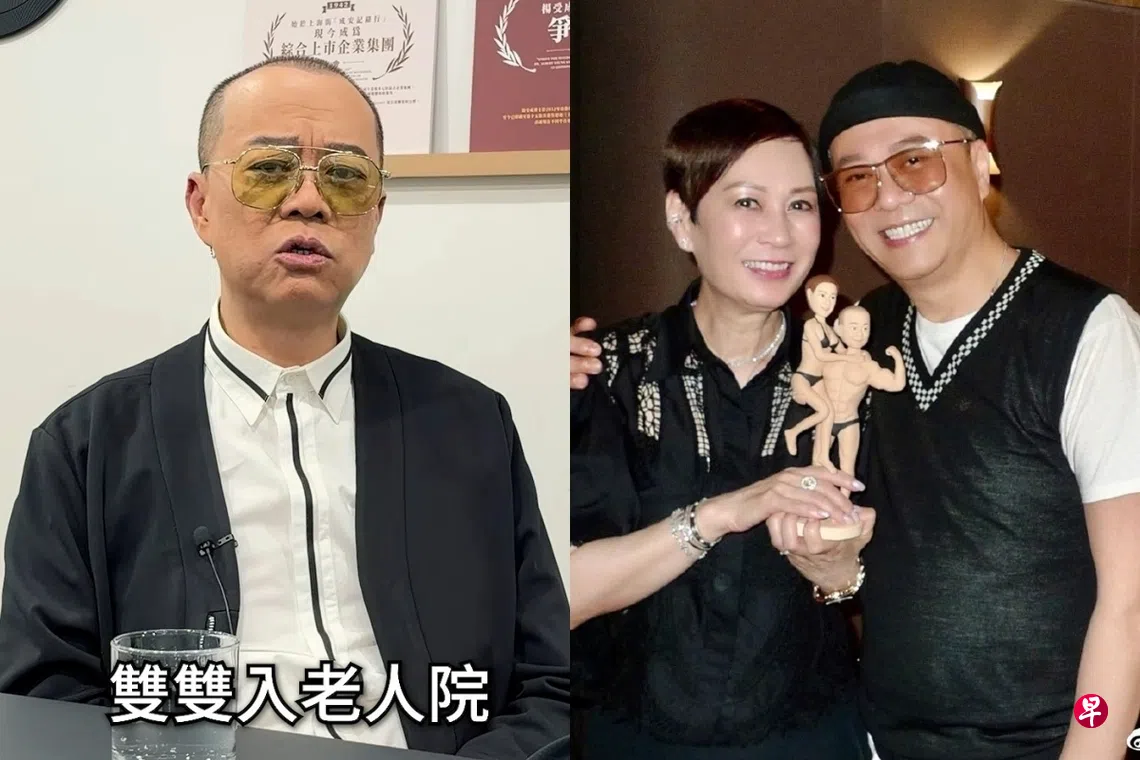
(Hong Kong) Hong Kong actor Bobby Au-yeung, 66, and his wife Fu Kit-han have remained as devoted as ever throughout their 30-year marriage. Fu is the granddaughter of Macau’s first casino king, Fu Tak-iam, and her family’s assets exceed HK$10 billion (at least S$1.6 billion). In a recent interview on veteran Hong Kong media personality Wong Man-ling’s YouTube show Quick Takes: Man Ling’s Lens (《快拍·曼镜头》), Au-yeung spoke again about the hurt of being labelled a man who lives off his wife. He stressed that he had paid all their expenses since they married: “I work so hard to support this household, yet so many people say nasty things, calling me the king of freeloaders… I’ve never spent a cent of her money!”
Au-yeung also opened up about why he and his wife have chosen not to have children. He admitted that when he married in his 30s, he was still a teenager at heart: “I may have looked 30, but mentally I was only in my teens. There were still so many things I hadn’t seen or tried!” After years of hard work, he explained, he had finally begun to enjoy financial comfort and did not want to be tied down immediately by parenthood. “I’d worked non-stop for more than a decade. By my 30s, I finally had a little more money and no longer had to look only at the prices when eating out. Surely I could have a few years to relax! Having a child isn’t the end of it — it’s just the beginning. A whole series of responsibilities follows.”
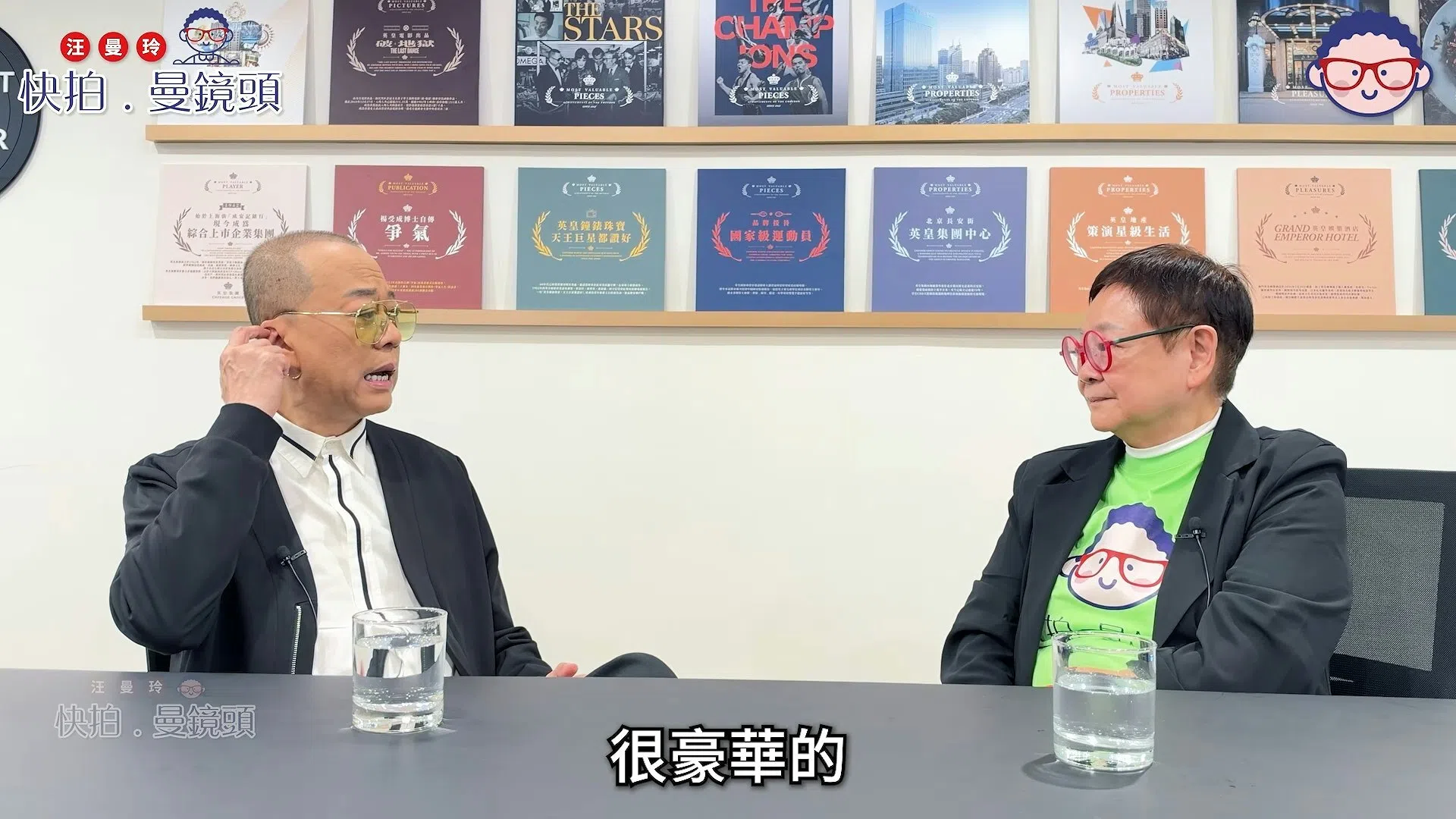
As for carrying on the family line, Au-yeung said both families were very open-minded and had put no pressure on them. “My wife and I are actually both quite daunted by looking after children… If we left it to a nanny, we wouldn’t know how well the child would be cared for, so we decided it was better not to have any!”
Asked who would care for them in old age without children, Au-yeung said matter-of-factly that he and his wife had long planned to move into a care home together. Modern care homes offer luxurious surroundings, he said, with staff to handle daily needs, meals and medication. The couple could still go shopping together; they would not have to wait until they needed wheelchairs to move in. He said: “As for carrying on the family line, you can’t predict how things will turn out… Parents should never have children expecting them to provide for their old age.”
Looking back on his life, Au-yeung described it as hardship followed by happiness, saying he deeply treasured the stability he now enjoyed.
“People say good fortune shouldn’t come too early in life. Hardship first, happiness later? That’s right. At my age, you understand that it’s easy to spend money buying something, but selling it to get your money back is harder than you could imagine! At this age, even if I wanted to invest in something, I might not get it right, so I really mustn’t spend recklessly.”
Although his wife comes from a prominent family worth more than HK$10 billion, Au-yeung has little desire for material luxuries. “I haven’t actually saved all that much for a rainy day, so I still need to work. It’s not that I’m very poor, just that I don’t have a lot in savings — enough for basic living expenses. I don’t ask for much. I don’t need gold or silver jewellery. I even save on haircuts by cutting my own hair. Think of the money that saves!”
