

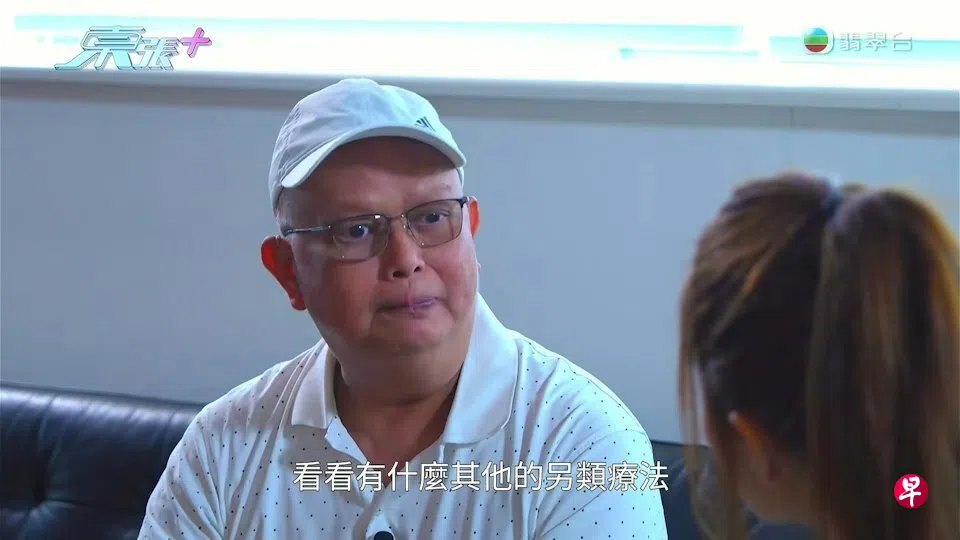
(Hong Kong) Hong Kong broadcaster TVB’s popular current affairs programme Scoop (《东张西望》) recently reported on a man surnamed Cheung who travelled to Japan for injections using his own immune cells. After he spent HK$2.5 million (about S$400,000), his nasopharyngeal cancer progressed to stage four. Even when he suffered heavy nosebleeds, the agent involved falsely reassured him that his body was “expelling dead cancer cells”. He eventually took advice to switch to conventional treatment, saving his life. The case has shocked Hong Kong.
Cheung said he was diagnosed with early-stage nasopharyngeal cancer in August 2022. Fearing the side effects of conventional radiotherapy and chemotherapy, he chose to manage his condition with traditional Chinese medicine. In early 2024, he noticed signs that the cancer was spreading. He searched online for treatments and found an agency promoting “immune cell therapy”, then made arrangements to receive it.
After the Scoop report aired, an internet user commented that a family member had watched an interview about “immune cell therapy for cancer” on HiEggo (《健康旦》), an online health and wellness programme hosted by Lawrence Cheng. The interview featured a female agent who arranged such treatment. The family member subsequently travelled to Japan and spent HK$1 million (about S$160,000) on cancer treatment, but showed no improvement. On returning to Hong Kong, the patient was taken straight to hospital and died. The commenter questioned whether the agent was selling treatment by offering false hope.
The commenter added that while the family member was undergoing treatment in Japan, the agent and doctor there repeatedly increased the charges, saying changes in the patient’s condition required more frequent stem cell injections. They continued to give the patient false hope, while selling different products whenever new symptoms arose. The commenter acknowledged that payment could be described as a willing transaction, but said ordinary people did not really understand these supposed new technologies, and cancer patients could only cling to hope.
Profiting from cancer patients’ desperation?
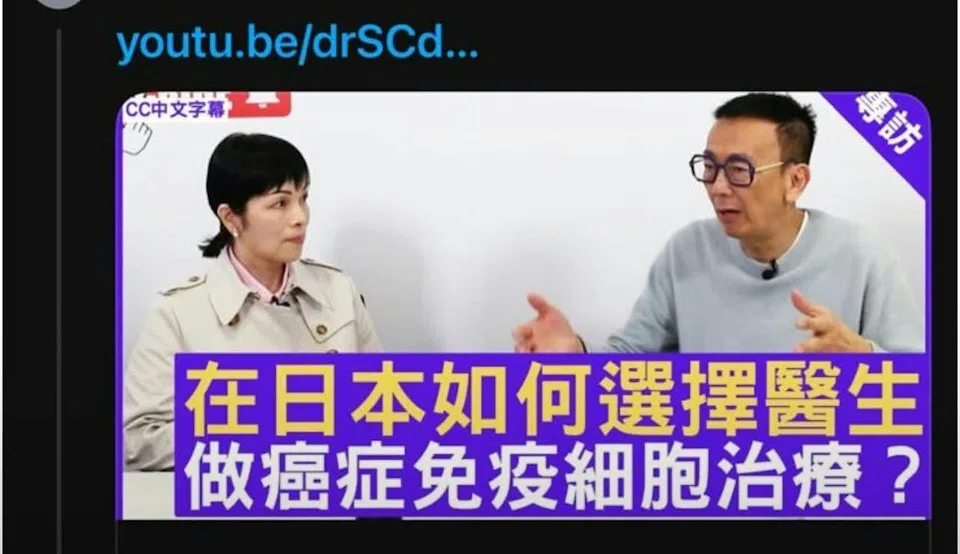
The commenter said the treatment was not provided at a regular hospital, so he and his family had to stay in hotels while in Japan. Consultations with the doctor were conducted through the agent, who interpreted from Japanese. They ultimately spent HK$1 million, but the patient died after returning to Hong Kong.
As internet users questioned immune cell therapy, some noted that the Hong Kong Anti-Cancer Society had previously introduced the treatment, but that its theoretical basis and actual effectiveness were different matters. They also questioned the lack of clinical data on its use in treating cancer and criticised those profiting from cancer patients’ desperation.
HiEggo took down the video soon afterwards but remained silent until a week later, on 11 November, when it issued a “special statement” on its social media platforms saying it took the matter very seriously. The statement said: “The original intention behind producing the interview was to promote public understanding of the issues concerned, not to recommend that viewers undergo any particular course of treatment.” It also reminded the public: “Any treatment decision involving a serious illness should first be discussed with a qualified specialist, with a full understanding of the scientific evidence for the treatment, its potential risks and other treatment options.”
Some internet users rejected the explanation. One wrote: “You’ve lost all credibility. Who knows how much advertising money you’ve made? You’re getting people killed. Shut down your channel.” Another said: “Shouldn’t you fact-check medical issues first? And Lawrence Cheng, you’re a public figure. Misleading people into believing this could really cost lives.” Others urged viewers not to put complete faith in treatments featured or promoted on programmes, saying it was best to seek a specialist’s advice. Some also condemned the scammers as unscrupulous: “Too many people are profiting from those in despair” and “They already have cancer, and still they’re being cheated by these supposed lifelines.”
