

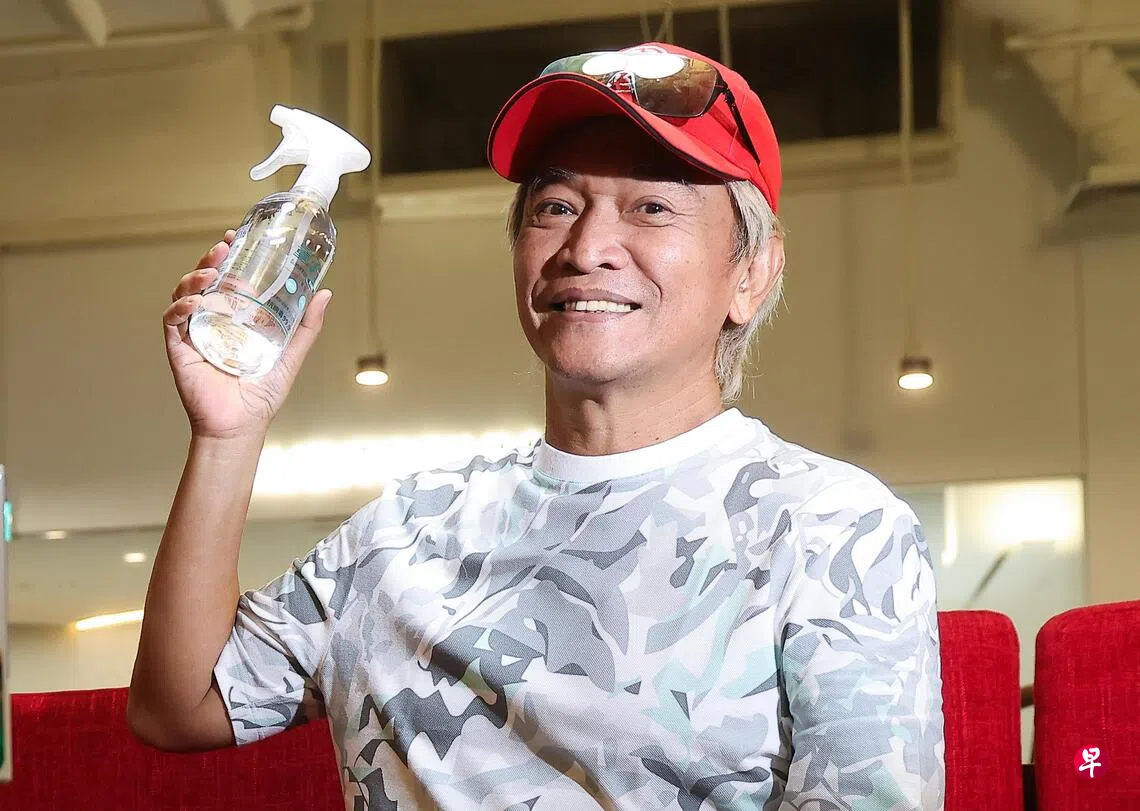
He was absent from the Golden Bell Awards, but his variety-show co-host still used his name to liven up proceedings. At Taiwan’s Golden Bell Awards ceremony for television programmes on 25 October, host Chen Han-dian opened with a dig at Jacky Wu, saying he had been “talking about retirement for 30 years”.
A typhoon had disrupted the ceremony’s schedule, leaving Wu, who was in Singapore, unable to attend. But he gamely responded from afar: “Always keep retirement in mind, and you’re a winner. You can push ahead or fall back as needed.”
Early on 26 October, the 64-year-old arrived at the SPH News Centre to promote his company’s new product, appearing on radio stations UFM100.3 and 96.3 Hao FM before speaking to Singapore media. As the conversation moved from work to life, he readily opened up about family matters. He did not shy away even from his marriage, which Taiwanese media had earlier made headlines with his “shocking first admission of being divorced for 12 years”.
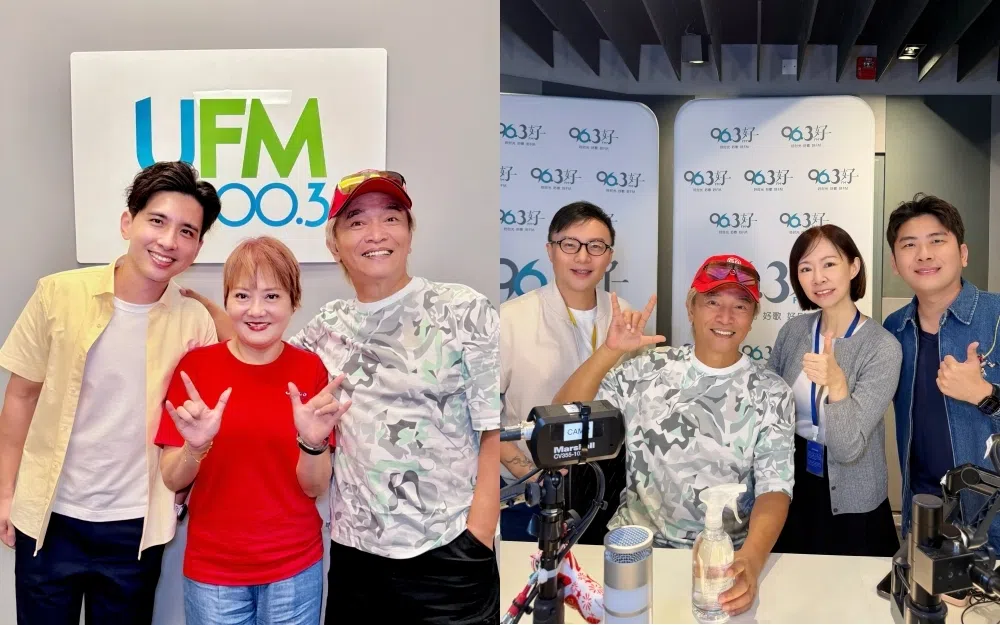
On retirement, a reporter noted that Singapore’s statutory retirement age had risen to 64 — his age. Wu first drew a distinction: “Retirement isn’t a question of what the law says. It’s a question of how you feel.” In his view, some people have already retired mentally at 50. He, on the other hand, is still launching new ventures and has no plans yet to take life easy.
Keeping his energy up through willpower
In recent years, Wu has devoted considerable energy to business, expanding into products such as quantum water essence and setting up a company in Singapore. Despite years of retirement talk, he insists he means it. “I genuinely want to leave [show business]. I’ve already achieved results in business. It’s just that people still want to watch my shows.”
On how traditional media can survive the digital wave, he has a philosophy of adapting to circumstances. “If the mountain won’t move, the road has to turn. If the road won’t turn, you have to change direction. If you still won’t change, all you can do is wait for your world to turn upside down.” With audiences moving from television to mobile phones and the mass market giving way to niche audiences, he believes content creators must rethink their approach rather than judge today’s performance by yesterday’s standards.
During the interview, Wu joked that neither his physique nor his looks gave him an advantage, and that his singing and creativity were average too. Hard work, he said, had made up for those shortcomings over the years. Asked how he remained so energetic in his 60s, he had a one-word answer: “Willpower.”
That drive also stems from anxiety about providing for his family. He likened his younger self to a leopard out hunting, worrying about what would happen to his four children if he failed to find prey that day. He also compared himself to a lone wolf carrying his young: others had one child on their backs, while he had four to look after.
Now that his children are grown, Wu has a different philosophy of fatherhood. “The more distance you give your children, the closer you are to them.”
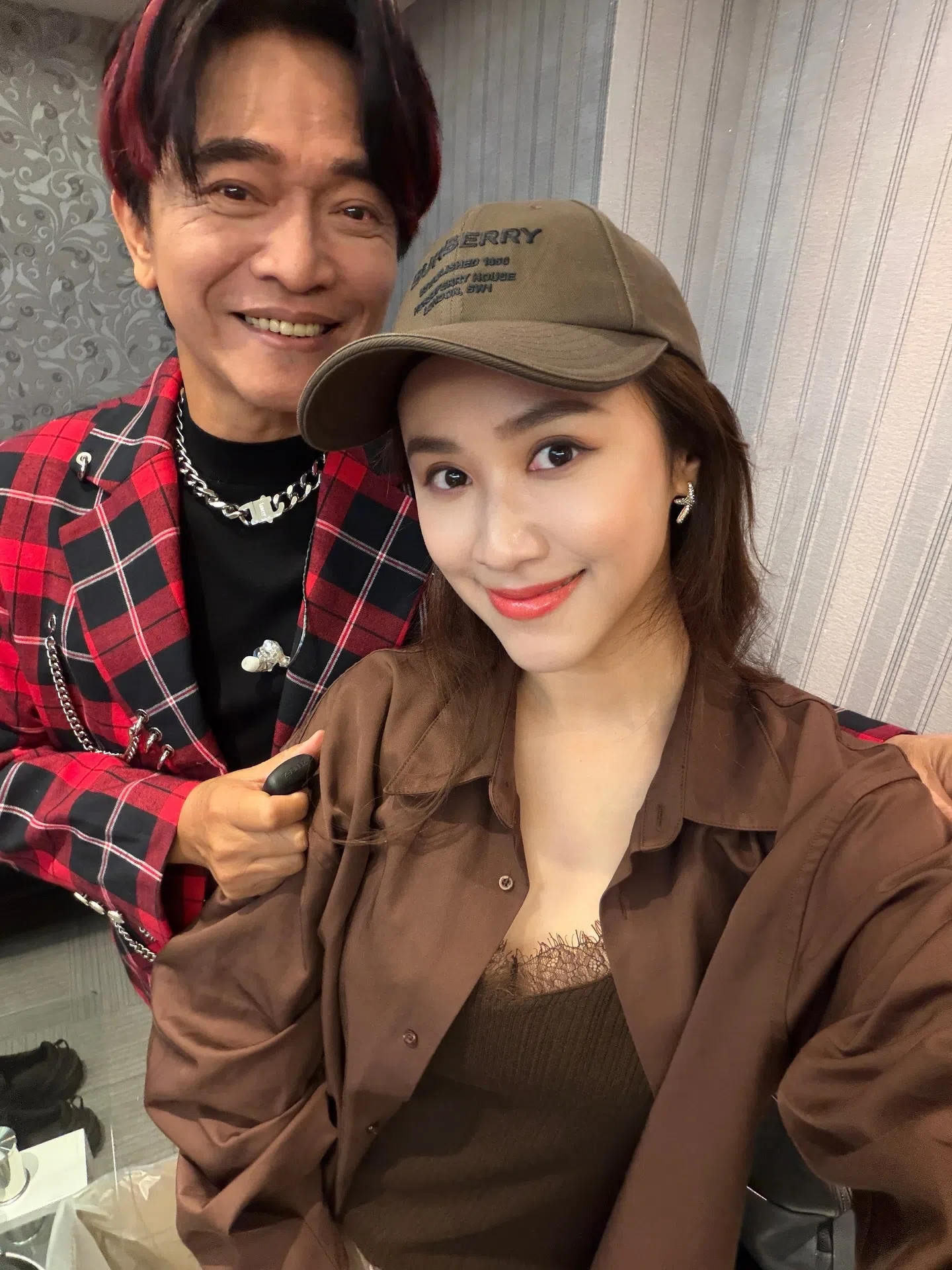
It sounds contradictory, but he explained that parents who watch their children constantly end up doing nothing but telling them what to do. Giving them space instead creates room for emotional closeness.
His visit coincided with a holiday in Singapore by his second daughter and her family. As he chatted, he took out his phone and beamed as he showed reporters photographs of his three daughters and grandson.
Calling his marriage a model
The conversation naturally turned to marriage. While performing in Genting, Malaysia, in mid-July this year, Wu revealed for the first time that he and Chang Wei-wei had been divorced for more than a decade.
Before the reporter could work out how to broach the divorce, he brought it up himself. “My marriage is a model. It proves that people don’t need that marriage certificate. I moved beyond such worldly conventions long ago.”
Asked why he had waited so long to disclose the divorce, he countered: why should anyone have to report their marital affairs to everyone? To him, these are private matters; what counts is whether he has fulfilled his responsibilities towards his family. He also pointed out that before he became famous in Taiwan, no media outlet cared whether he was married or had children.
Of his relationship with his former wife, he said: “The assets we share are these four children.”
He summed up their financial arrangements at the time of the divorce in one sentence: “The moment we divorced, she was richer than me.” He explained that he could still earn money and did not need to keep too much for himself, before adding with his trademark humour: “All I need is enough money for cigars.”
Advice to young people: don’t be too hard on yourself
Asked what advice he would give young people entering working life, the show-business veteran spoke not about money or success, but said: “First, learn to heal yourself.”
His advice is not to be too hard on yourself: accept the limits of your talents, your family background and your past, and do not let other people’s judgements dictate your life. “That is self-healing. Is it hard to do? No. It just takes a shift in mindset.”
Citing himself as an example, he acknowledged that he could not match Vincent Fang as a lyricist or Jay Chou as a composer. Nor did he come from a wealthy family like some of the rich heirs around him, who could show off luxury cars every day without having to work. But rather than compare yourself with others in every respect, he said, find your own strengths.
“You have no chance of beating Michael Jordan at basketball or Tiger Woods at golf. Switch to table tennis, and you might stand a chance.” He says he knows how to “choose his battles”, but also admits he has learnt far more from failure than success.
Choosing the right field is not enough; you also need something distinctive. Before following the crowd into opening shops, livestreaming or selling products, Wu urged young people to think carefully about what would make them stand out. “Without creativity, there’s no point.”
