


In this year’s Budget, the Singapore government announced new AI Missions to accelerate industry transformation, starting with the adoption of artificial intelligence (AI) in four key sectors of the economy: advanced manufacturing, connectivity, finance and healthcare.
Global professional services firm Accenture has made AI a core strategic pillar in recent years.
As Singapore steps up its push for AI adoption, Mark Tham, country managing director of Accenture Singapore, said the company would actively participate in the country’s AI development to drive further business growth.
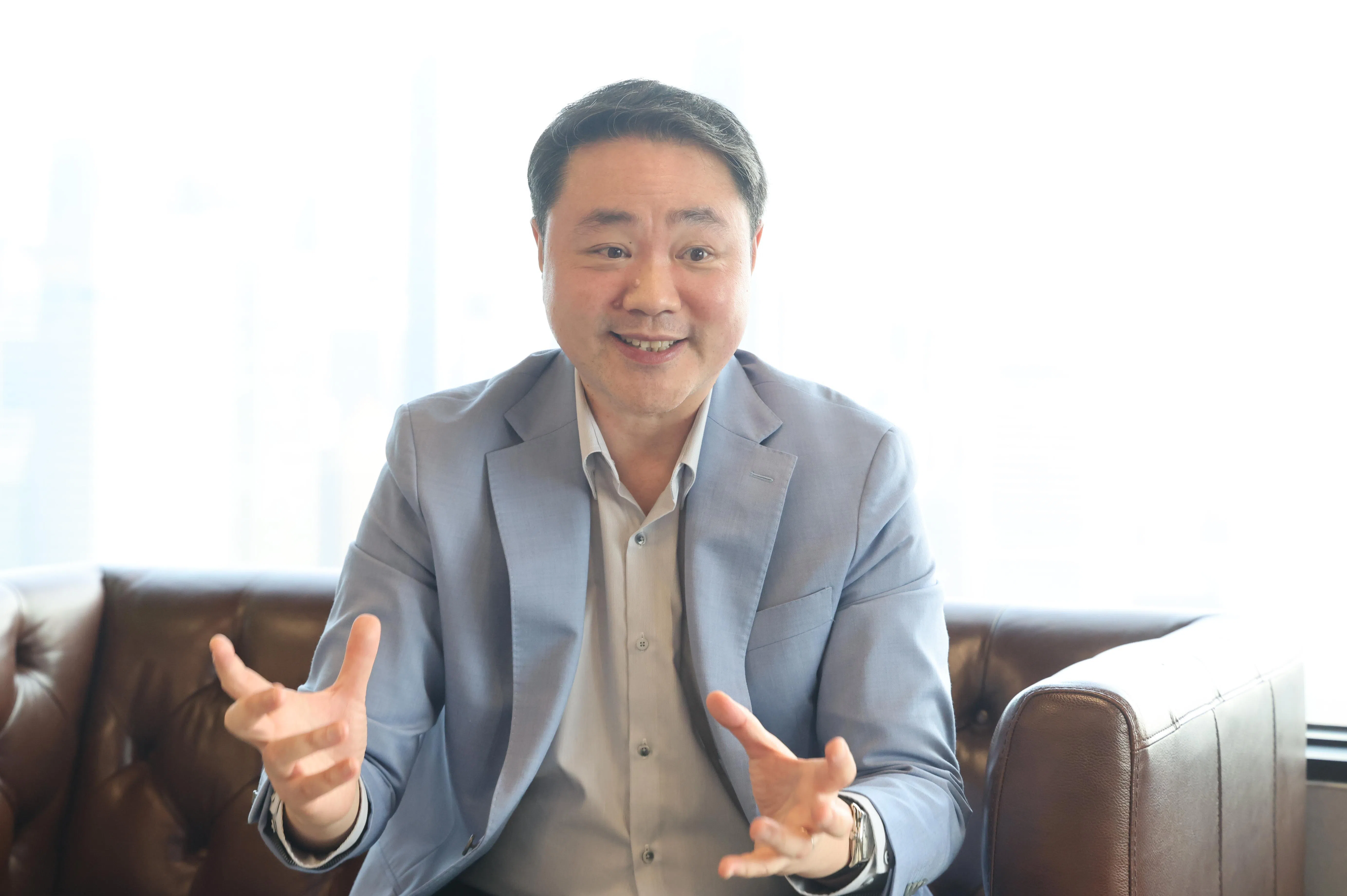
In his first exclusive interview with Lianhe Zaobao (LHZB) since taking up the role in May 2023, Tham discussed the company’s future direction and how AI is reshaping the way the consulting industry delivers its services.
He said Singapore’s clear national AI strategy and Prime Minister Lawrence Wong’s leadership of the National AI Council demonstrated the country’s commitment to AI development and its role as an “active laboratory”.
He said: "It may not be the largest in terms of market size, as we all know, but it's certainly a strong force when it comes to trying new things and bringing concepts to life. And that's how it's been since Smart Nation days until where it is today. "
The Smart Nation initiative was first launched in 2014 by then Prime Minister Lee Hsien Loong, with the aim of building digital capabilities and encouraging Singaporeans to use technology. In 2024, Singapore launched Smart Nation 2.0, focusing on advancing the digital economy and strengthening businesses and the workforce.
The company’s next goal is to help businesses transform at scale without overlooking the importance of talent, particularly in workforce transformation.
AI drives banking transformation
Tham has observed continued growth in demand for AI solutions in connectivity, advanced manufacturing, finance and healthcare.
In financial services, for example, the company is working with leading local and regional financial institutions to build a “Bank for the Future”. This includes upgrading legacy banking systems, deploying agentic workflows, automating compliance and risk management, and exploring new opportunities in agentic commerce.
The key to banks of the future lies in using AI for predictive analytics, automating complex workflows and delivering personalised financial solutions at scale, while retaining human expertise and judgement to support strategic decisions and manage client relationships.
According to a survey Accenture released last year, banks that effectively scale up their use of generative AI could achieve productivity gains of up to 30%, revenue growth of 600 basis points and an improvement of 300 basis points in shareholder returns over the next three years.
Adapting operating models to outpace market growth
Accenture began operating in Singapore in 1975 as a small consultancy providing bookkeeping automation services to a handful of clients. It later developed into a management consulting firm, shifting its focus to financial services and the public sector.
Over the years, Accenture has helped build systems integral to Singaporeans’ daily lives, including the Central Provident Fund (CPF) digital platform and the National Electronic Health Record (NEHR).
Tham said: "We aim to keep growing faster than our markets, which means constantly evolving our operating models to create more value for clients, more opportunity for our people, and a new standard for our industry."
Consultants more important in the AI era
With AI developing rapidly, the consulting industry is undergoing unprecedented change. The emergence of large language models means that basic tasks such as industry research and data analysis, which once took consultants considerable time, can now potentially be completed in seconds.
Discussing AI’s impact on consulting, Tham stressed that consultants are more important than ever in the AI era. They must bridge the gap between technological capabilities and tangible business value.
For AI to perform well, he said, data must first be sorted and organised. Turning data into a “product”, however, requires specialist skills — precisely where consultants excel.
He said: "So not everything is at the click of a button, right? To be able to do that and that's where we see our relevance."
He added: "We as consultants need to be able to come up with the right framework, do it safely, and design the approach so that the legacy modernisation is able to achieve its transformation outcomes. Not any of the AI tools can actually do this for that matter."
In Tham’s view, the value of consulting has remained constant through every major wave of technological change: solving complex problems and delivering tangible business outcomes.
He said: "Our focus is helping organisations move from using AI to enterprise-wide transformation, through reinvention of their core operations and workforce."
LHZB reported in September last year that Accenture had cut more than 11,000 jobs globally, primarily targeting employees who had not mastered AI skills. The company had not stopped hiring, however, and instead planned to expand its AI team.
The company currently has about 814,000 employees worldwide, with more than 3,000 in Singapore alone.
Tham said the company considers how to attract and develop talent, and how to further unlock employees’ potential after they join. It also supports existing staff in acquiring new skills to tackle more complex challenges.
He said: "We want to help organisations in Singapore build AI-ready talent so they can transform at scale, with humans in the lead."
Separately, the UK’s Financial Times reported on Monday (19 October) that Accenture was considering selling its Greater China business in a deal potentially worth up to US$1.5 billion (about S$1.9 billion).
According to the report, Accenture received unsolicited expressions of interest in acquiring its China operations over the past year. It has hired JPMorgan to conduct a strategic review of the business.
The Greater China business covers mainland China, Hong Kong and Taiwan. Private equity firms and a small number of strategic investors are expected to consider bidding.
People familiar with the matter said Accenture could retain a sizeable minority stake to ensure continuity of client services. It remains uncertain whether the strategic review will lead to a deal. Accenture and JPMorgan both declined to comment.
LHZB asked Accenture Singapore for its views on the Singapore business in light of the report, but received no response.
In the earlier interview, Tham said the company had been operating in Singapore for 51 years and that the country was an important part of the group’s future strategy.
According to Accenture’s latest results, its Asia-Pacific business, which includes Singapore, generated a revenue of US$10.68 billion in the 2026 financial year ended August.
