

Indonesia recently announced a reduction in its supply of piped natural gas to Singapore. Economists interviewed said that while the cut is relatively small, it could add to Singapore’s energy cost pressures and directly affect energy-intensive industries. It also underscores the urgency of strengthening Singapore’s energy independence and resilience.
OCBC Chief Economist Selena Ling said in an interview that although Indonesia’s supply cut is relatively small, Singapore relies heavily on piped natural gas. “The medium term strategic need to be more energy-independent may be increasingly important given the more significant pipeline reliance.”
Ling said that if oil supplies from the Middle East remain unstable, any further shortfall in natural gas supplies could leave Singapore facing an even more challenging energy supply situation.
On the industries affected, Ling said: “As it is, the feedstock disruption to the petrochemicals cluster has not fully resolved yet, so this is another potential pressure point for energy-reliant industries.”
Indonesia recently announced that it would reduce its piped natural gas supply to Singapore by 31 billion British thermal units per day (31 bbtud) from Saturday (24 October).
Djoko Siswanto, head of Indonesia’s upstream oil and gas regulator SKK Migas, told the media on Friday (23 October) evening that the country planned to reduce piped natural gas supplies to Singapore and redirect them to Batam, Bintan and Sumatra to meet domestic energy needs.
Analyst: Short-term supply cut has yet to cause material harm; duration is key
Indosuez Wealth Management’s Asia Chief Strategist Francis Tan said in an interview that higher natural gas procurement costs could eventually push up electricity prices, but the impact is not yet apparent.
Tan added that energy-intensive industries are more sensitive to increases in electricity and natural gas prices. “Petrochemicals and manufacturing could experience some margin compression, while data centres face higher operating costs.”
He said: “Businesses may face some additional cost pressures, but these should remain manageable unless the supply reduction becomes more substantial or prolonged.”
He stressed that the current cut is not large enough to cause material harm to the local businesses concerned, but how long the reduction lasts warrants closer attention.
Tan said this also underscores Singapore’s structural vulnerability as an energy-importing economy. “Pipeline gas remains important, but diversifying supplies will be increasingly critical.”
The Energy Market Authority of Singapore (EMA) said on Saturday that Indonesia’s supply cut amounts to less than 2% of Singapore’s daily natural gas demand. It stressed that Singapore has contingency measures in place and can import natural gas from other countries to address the reduction.
According to the EMA, natural gas generates about 95% of Singapore’s electricity. Last year, liquefied natural gas (LNG) from the Middle East, Africa, the US, Australia and elsewhere accounted for 57% of Singapore’s natural gas imports. The remaining 43% was imported by pipeline from Malaysia and Indonesia.
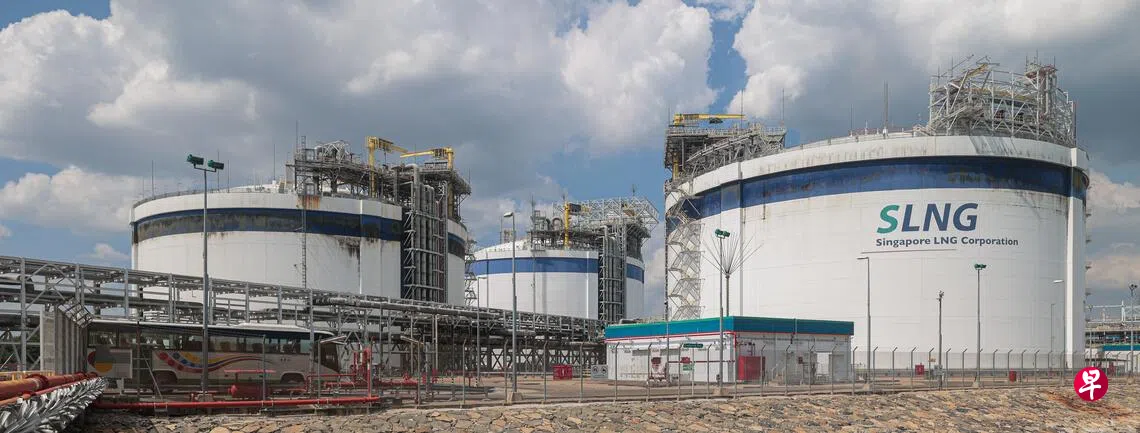
Singapore’s authorities have also continued to invest in the natural gas supply chain. In 2024, Singapore LNG Corporation announced that it would build a second LNG terminal, expected to begin operations before 2030. This will increase the company’s annual LNG handling capacity to 15 million tonnes.
