

Higher operating profit driven by persistently strong passenger and cargo yields, along with lower losses at associated company Air India, lifted Singapore Airlines (SIA) Group’s net profit for the second quarter of its 2026/27 financial year by 303.8% year on year to S$210 million, from S$52 million a year earlier.
The board has proposed an interim dividend of 2 Singapore cents per share and a special interim dividend of 5 Singapore cents per share, payable on 11 December. The books closure date is 26 November. This brings the first-half dividend to 7 Singapore cents per share, down from 8 Singapore cents a year earlier.
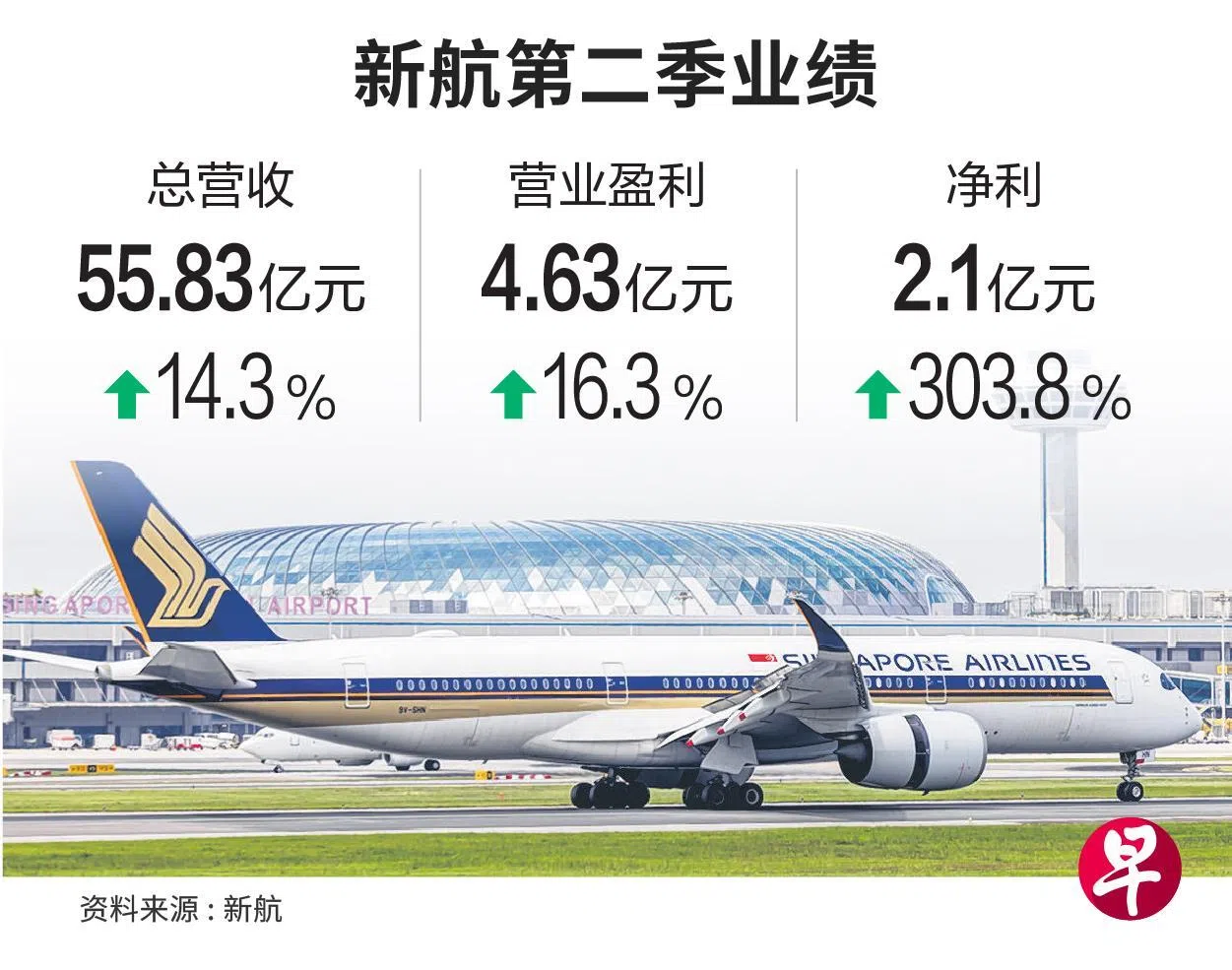
In its quarterly business update released after the market closed on Wednesday (11 November), SIA said demand for air travel and cargo remained strong. Second-quarter group revenue rose 14.3% to a record S$5.583 billion, from S$4.885 billion a year earlier.
Despite high fuel costs, persistently strong passenger and cargo yields helped lift both group operating profit and net profit in the second quarter. Group operating profit rose 16.3% year on year to S$463 million, from S$398 million. Passenger yields increased by 12.2% in the quarter.
Losses at associated companies, mainly Air India, narrowed by S$110 million year on year in the second quarter. SIA holds a 25.1% stake in Air India.
For the first half, group net profit fell sharply by 43.9% year on year to S$134 million, from S$239 million, while operating profit declined 29.1% to S$569 million. Total revenue rose 16.8% to a record S$11.297 billion, from S$9.675 billion a year earlier.
Management said the strong first-half revenue growth was driven by robust demand for air travel and air freight, record passenger numbers, and strong growth in passenger and cargo yields of 12% and 25% respectively. Passenger yields reached 11.1 Singapore cents per revenue passenger kilometre (RPK).
However, first-half operating profit and net profit fell significantly year on year as the Middle East conflict drove jet fuel prices higher.
SIA Group carried 10.9 million passengers in the second quarter, up 3.8% year on year. SIA said air travel demand remained healthy, supported by seasonal travel patterns. First-half passenger numbers rose 5.0% year on year to a record 21.8 million.
Air cargo demand remained firm, supported by shipments of semiconductors and cloud computing-related products, as well as a shift from sea to air freight prompted by geopolitical and climate-related disruptions.
However, SIA cautioned that the aviation industry was operating in an uncertain environment, with fast-moving geopolitical developments, including the Middle East conflict, adding complexity to operations and supply chains.
Jet fuel prices remain above levels seen before the Middle East conflict, continuing to put significant pressure on costs. SIA Group has raised airfares and cargo rates, but these measures cannot fully offset the impact of persistently high fuel prices. A prolonged conflict could affect the broader macroeconomic environment, potentially adding inflationary cost pressures and affecting demand for air travel and air cargo.
Management said the group was well placed to navigate the current volatility. Its diversified global network and broad passenger mix help cushion the impact of shifts in demand. Meanwhile, the complementary positioning of SIA and its subsidiary Scoot allows them to serve different markets and customer segments, while retaining flexibility to adjust capacity and flight schedules.
SIA shares rose 0.42% on Wednesday to close at S$7.17.
