

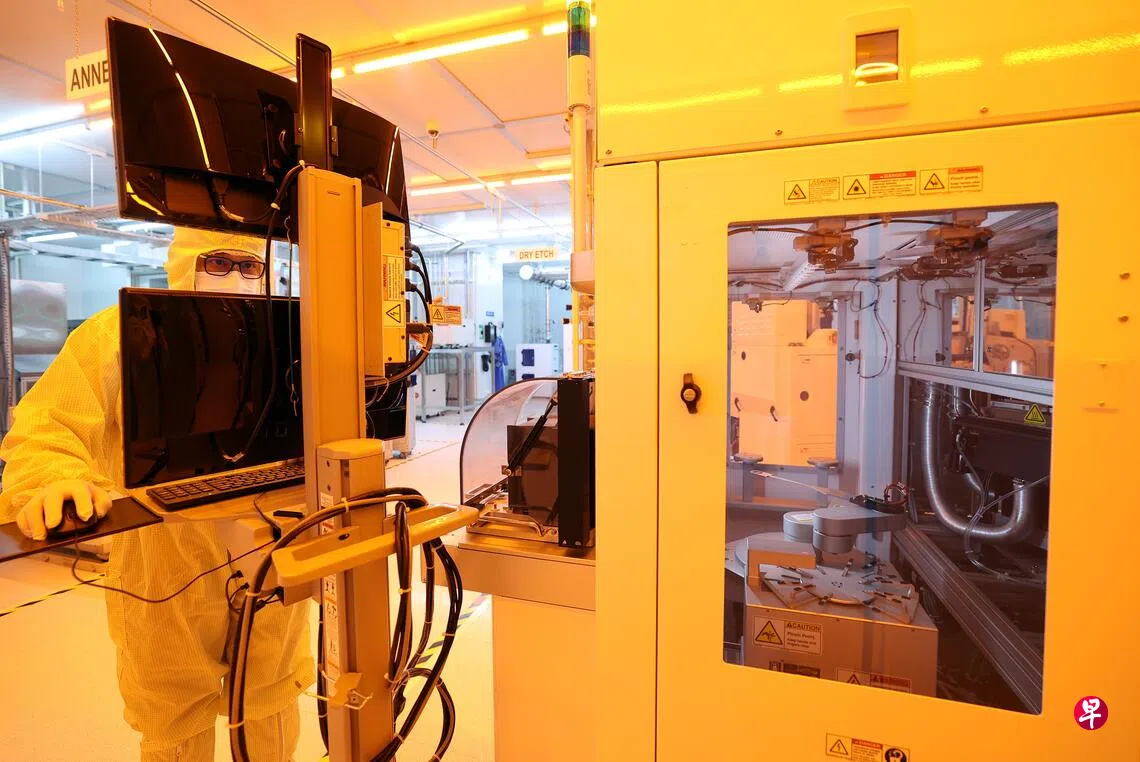
Singapore’s manufacturing output growth slowed to 3.4% year on year in September, down from 15.4% in August and missing the median forecast of 7.8% in a Bloomberg survey, as electronics production lost momentum.
Excluding biomedical manufacturing, September output rose 9.0% year on year, down from 16.8% in August.
Preliminary data from the Economic Development Board (EDB) on Monday (26 October) showed total manufacturing output fell 3.9% month on month on a seasonally adjusted basis in September 2026. Excluding biomedical manufacturing, output fell 5.5%.
Electronics, which accounts for the largest share of manufacturing, grew 5.7% year on year in September, slowing sharply from 28.3% in August. On a seasonally adjusted basis, the sector fell 12.8% month on month, with semiconductor output down 13.1%.
Analysts said the overall picture remained robust. They attributed the electronics pullback to capacity constraints rather than weaker demand for artificial intelligence (AI), which is expected to continue driving manufacturing growth and, in turn, the broader economy.
UOB associate economist Jester Koh said the pullback in electronics output may reflect capacity constraints at local firms rather than weaker AI-related end demand. The new export orders index in September’s electronics purchasing managers’ index (PMI) rose, while the finished goods inventory index fell. This suggests firms are drawing down inventories to meet demand, which could support electronics output in the coming months.
Standard Chartered economist Jonathan Koh also said the slowdown in electronics growth did not signal that the AI capital expenditure cycle was starting to weaken. He noted that the ratio of new orders to finished goods inventories in the electronics PMI was at a nine-year high, indicating that orders remained strong. Output growth is expected to receive support as new capacity comes on stream.
However, he cautioned: “The growing financial vulnerability of hyperscale cloud service providers remains a risk to watch.”
DBS senior economist Chua Han Teng said that although semiconductor growth had slowed to its lowest in about a year, forward-looking indicators such as new export orders and order backlogs in electronics continued to expand. Continued investment in AI infrastructure by hyperscale cloud service providers, together with the progressive fulfilment of existing orders, is expected to keep supporting semiconductor production.
Besides electronics, precision engineering, transport engineering and general manufacturing also recorded year-on-year growth. Only two of the six manufacturing clusters — chemicals and biomedical manufacturing — contracted.
Precision engineering was the strongest performer, with output rising 31.0% year on year, driven by increased production of semiconductor equipment.
Chua said precision engineering’s second consecutive month of year-on-year growth above 30% also reflected Singapore’s strengths as a major semiconductor equipment producer. Singapore accounts for 20% of global semiconductor equipment output.
Transport engineering output grew 10.6% year on year, supported by growth in the land transport and aerospace segments. General manufacturing output rose 4.0%.
Chemicals output fell 4.6% year on year, weighed down mainly by the other chemicals and petrochemicals segments. Biomedical manufacturing output declined 32.8%, largely because of a different mix of active pharmaceutical ingredients produced by the pharmaceuticals segment during the month.
Third-quarter manufacturing beats official estimate; GDP growth could be revised upwards
Chua noted that Singapore’s manufacturing output had recorded year-on-year growth for 13 consecutive months. Although September’s growth was the slowest since August 2025, output for the third quarter as a whole rose 8.5%, above the official estimate of 7.5%.
Looking ahead to manufacturing’s fourth-quarter performance, he said: “Despite a high base in the fourth quarter, we expect manufacturing segments benefiting from AI demand to remain resilient. However, performance across segments could continue to diverge amid risks such as higher energy and input costs and supply chain disruptions.”
Jonathan Koh said Singapore’s 3.4% year-on-year manufacturing output growth in September exceeded the 1.2% implied by the advance third-quarter economic growth estimates. All else being equal, third-quarter gross domestic product growth could therefore be revised upwards from the initial estimate of 5.4% to 5.6% year on year.
Jester Koh also expected the Ministry of Energy, Trade and Industry to raise its full-year economic growth forecast for 2026 from 4.5–5.5% to around 6%. UOB currently forecasts economic growth of 5.7% for 2026.
