

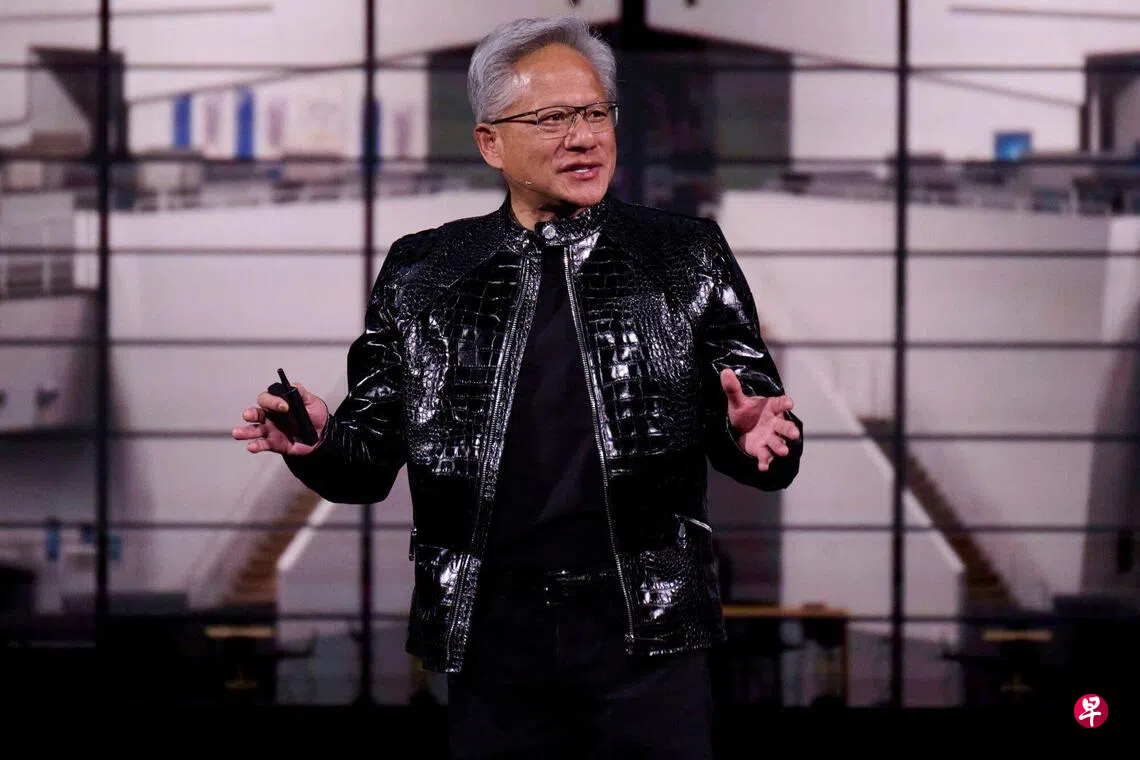
In just 11 days, the global artificial intelligence (AI) industry has witnessed a power reversal worthy of a Hollywood blockbuster.
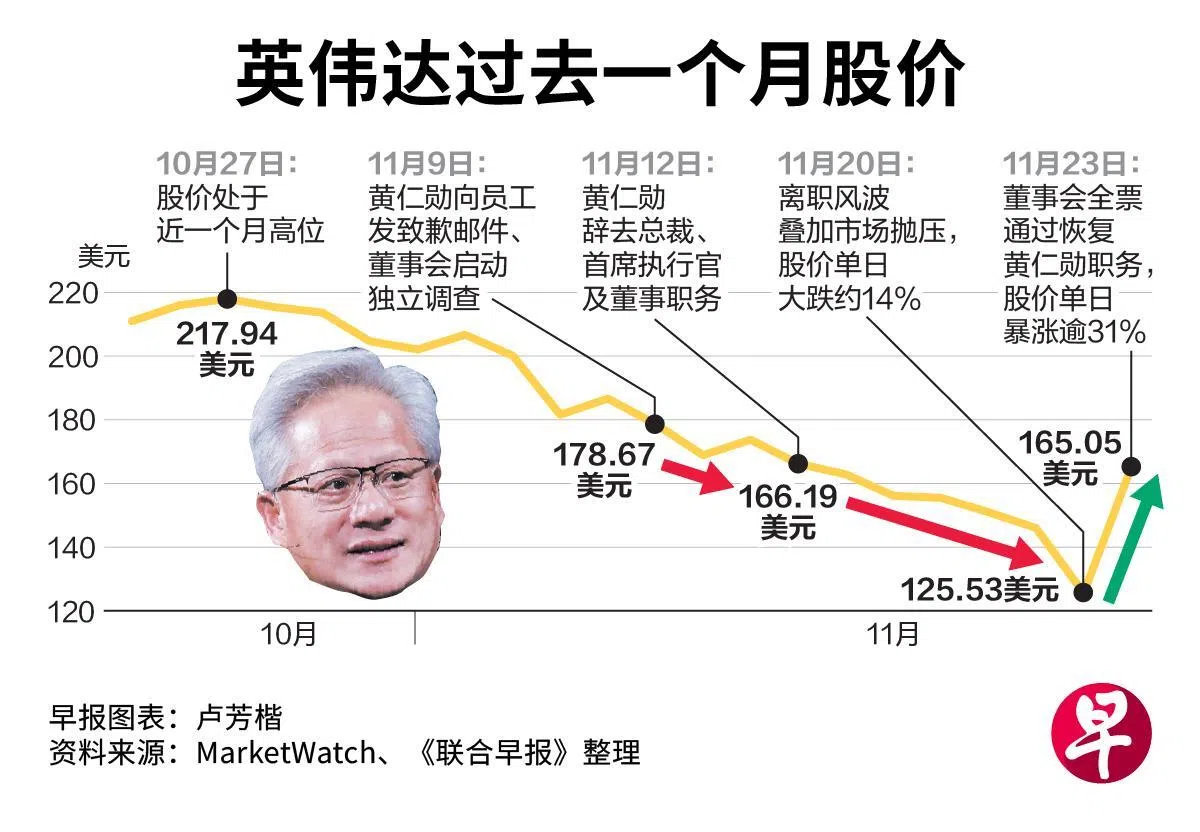
On 12 November, Nvidia co-founder Jensen Huang, 63, resigned as chief executive, president and a director, taking responsibility amid controversy over extramarital affairs and alleged China-related intelligence links.
Just last week, Nvidia chairman Harvey Jones said emphatically on an earnings call that the board had “no intention of reinstating Huang”.
Yet less than a week later, on Monday (23 November), Nvidia’s board voted unanimously to reinstate Huang immediately as president, chief executive and a director.
Returning to the company’s Santa Clara headquarters in a dark blue jacket, Jensen Huang told cheering employees: “I will do a better job in my return as CEO.”
Investors voted with their money. Nvidia shares surged 31.5% in a single day, restoring nearly US$1 trillion (S$1.3 trillion) in market value overnight.
Beyond the clamour, who drove Huang’s unprecedentedly swift reinstatement? What does it mean for Wall Street and global markets? More importantly, where will it take Nvidia? Lianhe Zaobao examines the forces at work.
1) An 11-day reversal: who put Huang back in the CEO’s seat?
Founders returning to lead technology giants after leaving are not without precedent.
Apple co-founder Steve Jobs, for instance, left the company in 1985 after losing a power struggle with its management, and subsequently founded computer company NeXT. Eleven years later, Apple acquired NeXT, bringing Jobs back as an adviser. He became chief executive in 1997.
More recently, the board of US AI company OpenAI removed co-founder Sam Altman as chief executive and a director on 17 November 2023. Hundreds of employees then signed a letter demanding the board’s resignation and threatened to leave, prompting OpenAI to announce Altman’s return four days later.
Huang’s absence was therefore not the shortest. But the interplay of political, financial and industry forces behind his return is rare in business history, and may make this one of the most complex such power struggles.
Three main forces drove Huang’s comeback:
Unprecedented direct White House intervention
This was the most decisive — and most contentious — factor. US President Donald J. Trump publicly acknowledged that he and Vice-President JD Vance had put direct and indirect pressure on Nvidia’s board, saying: “My intervention was crucial to bringing Huang back.”
Revelations about Huang’s extramarital affairs involved at least two Nvidia subordinates and Huang Le, a former executive at Singapore data centre operator Megaspeed whom US authorities suspected of having links to Chinese intelligence agencies. Nevertheless, the White House conveyed its assessment to the board that his reinstatement “posed no national security risk”. US Treasury Secretary Scott Bessent, who had initially advocated looking outside the company for a new chief executive, also softened his position over the weekend, saying Huang was now an “outsider” since he had resigned.
Economic and market pressure: “too big to fire”
Nvidia carries substantial weight in the S&P 500 index and is a key financier and chip supplier for the broader AI infrastructure buildout, including OpenAI and CoreWeave. Moody’s chief economist Mark Zandi noted that the AI boom had contributed a third of US real gross domestic product (GDP) growth this year. The sell-off triggered by Huang’s departure directly threatened US stocks and US economic growth.
Strong support from Silicon Valley and employees
Technology heavyweights rallied behind Huang, from Tesla founder Elon Musk and Uber co-founder Travis Cordell Kalanick to Silicon Valley investor David O. Sacks. Alongside a petition calling for Huang’s return that gathered more than 180,000 signatures, this strong support pressured the board to change its position.
2) Market impact: a rally, but the risks remain
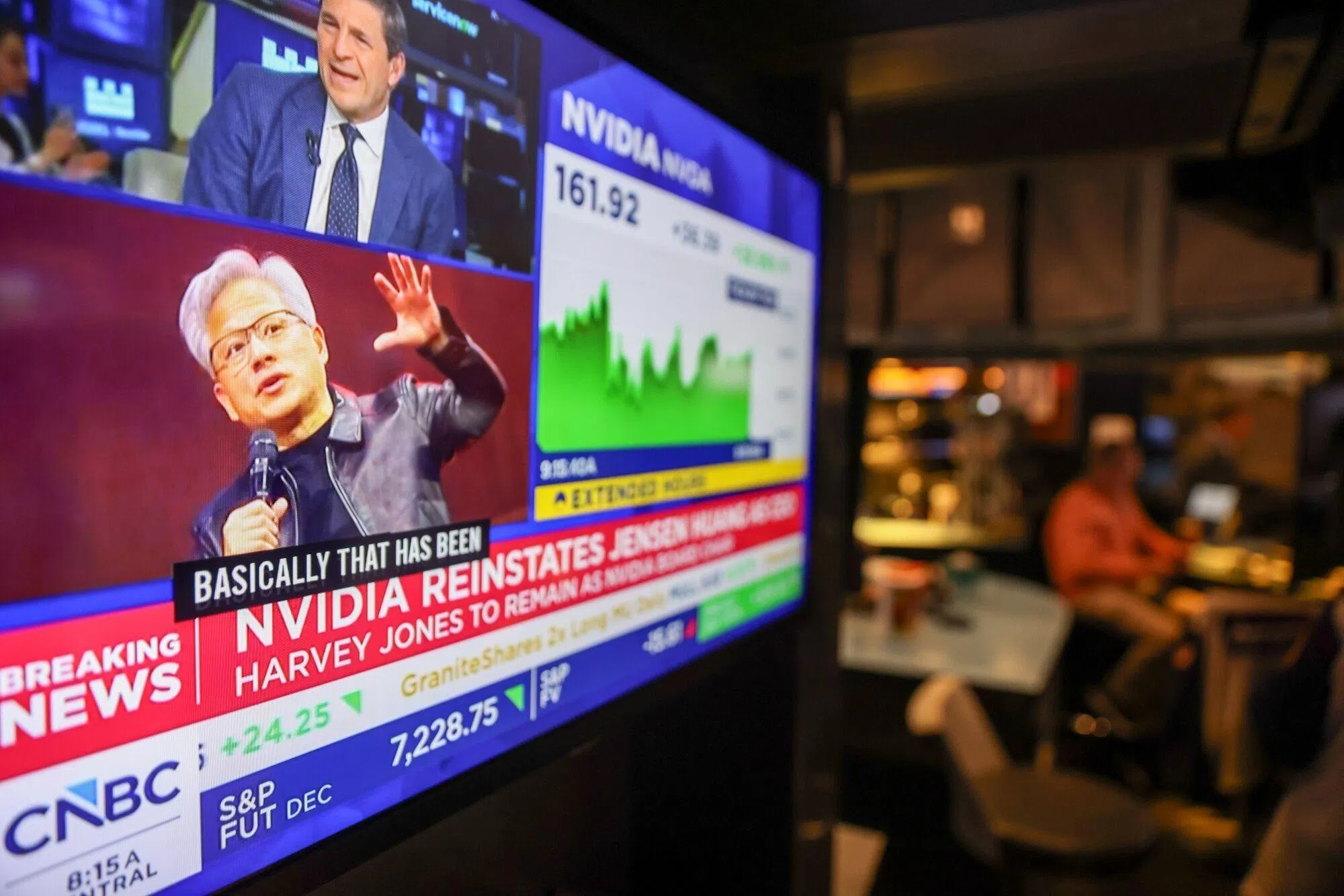
Huang’s reinstatement immediately breathed life into the faltering global AI trade.
On Monday in the US, Nvidia closed 31.5% higher, regaining its position as the world’s second-most valuable company, behind only Apple.
The surge in Nvidia shares helped lift the S&P 500 by 4% and the Nasdaq by nearly 6%. Europe’s Stoxx 600 index also rose.
AI cloud provider CoreWeave, which had previously come under pressure, jumped 22%. Among AI-related hardware stocks, Dell rose more than 20%, Micron about 19% and Intel more than 16%.
Asia-Pacific stock markets also rallied broadly on Tuesday (24 November). The MSCI Asia Pacific Index gained 4%, its biggest one-day rise in more than three months. South Korea’s Kospi jumped more than 7% at one point. As Japanese markets reopened after a long holiday, the Nikkei 225 extended its gain to 5%. Singapore’s Straits Times Index rose about 0.75%.
Despite the exuberance in global equity markets, many analysts stressed that Nvidia shares had yet to recover all the ground lost since Huang resigned on 12 November, and the company was not out of danger.
Saxo’s chief investment strategist Charu Chanana said the rebound in Nvidia and AI stocks offered investors an opportunity to reassess their portfolios, rather than blindly increase their exposure to AI. The Jensen discount may be reversing, but the AI return-on-investment debate is far from settled.
Gabelli Funds portfolio manager Hendi Susanto also said that although companies across the AI supply chain continued to report strong demand, markets remained awash with noise over financing, geopolitics, sustainability and scepticism.
Interactive Brokers chief strategist Steve Sosnick was more direct: “Now may not be the time to chase the rally.”
Over the longer term, the upheaval has left Nvidia with several structural vulnerabilities.
First, confidence in Nvidia’s corporate governance has been badly damaged. With an independent investigation still under way, and its chairman having publicly declared just last week that Huang’s “conduct did not meet company standards”, the board completely reversed its decision within days. Several Wall Street figures and academics described this as “a textbook case of poor corporate governance”.
Lindsey Stewart, Morningstar’s London-based director of institutional insights, said: “But alongside that sense of relief, there are sure to be questions about who is best placed to provide appropriate governance and oversight of key risks at the now-giant company at the centre of a critically important global AI ecosystem.”
Second, “key-man risk” has been laid bare.
Huang has long run Nvidia with an iron grip and an extremely flat management structure, with about 60 executives reporting directly to him and almost every decision, large or small, requiring his approval. This model has made Nvidia exceptionally efficient, but has also exposed startling structural fragility at the multitrillion-dollar giant.
Nada Kakabadse, professor of corporate governance at the UK’s Henley Business School, put it bluntly: “When the CEO is too big to fire, the board’s job isn’t to fire him. It’s to fence him in.”
Third, Nvidia has become deeply entangled in Washington’s political battles.
Michael Useem, emeritus professor of management at the Wharton School, said a US president’s direct intervention in the appointment or removal of a chief executive at an entirely privately owned, publicly listed company was unprecedented in modern business history. Although White House backing helped Huang weather the immediate crisis, it could also make Nvidia a focal point of US partisan rivalry and the US-China technology contest.
3) The next act is only beginning: where does Nvidia go from here?
In his statement on his reinstatement, Huang said he “couldn’t wait to get back to work”. But rather than a smooth run competing in the computing-power business, he faces a tough battle on multiple fronts.
1. A congressional hearing on 3 December and multiple investigations
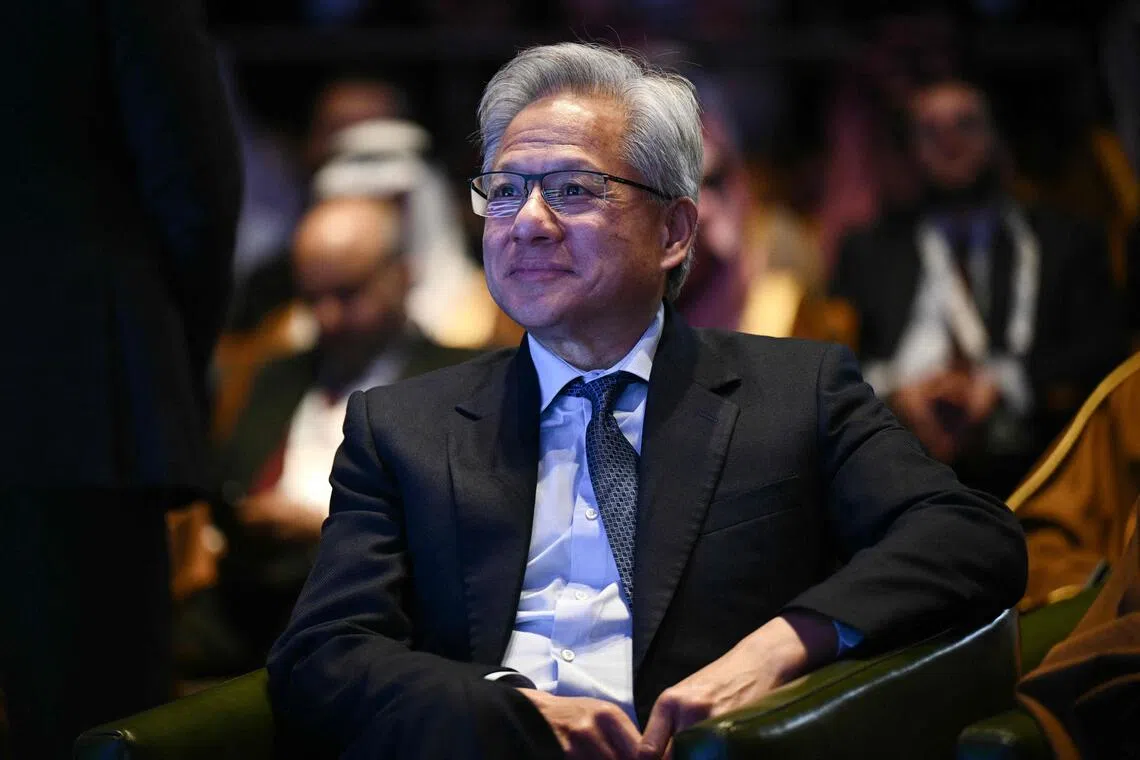
Huang’s reinstatement has drawn strong opposition from several members of Congress. Senate Minority Leader Chuck Schumer accused Trump of “putting personal financial interests above national security”. Former House Speaker Newt Gingrich also sharply criticised the decision on social media, saying it was “deeply wrong” to put an executive who had been involved with a suspected Chinese spy back in charge of the world’s most advanced chip company.
Huang has agreed to appear at a public hearing before the US Senate Banking Committee on 3 December. It will be his first major public test since his reinstatement, and he is expected to face tough questioning from senators.
Meanwhile, a US Justice Department investigation, trade blacklist sanctions against Singapore company Megaspeed, shareholder class-action lawsuits, and scrutiny of accounting compliance and chip smuggling are all proceeding in parallel. Huang and Nvidia are not yet clear of the storm.
2. Addressing weaknesses in corporate governance and succession planning
To reassure regulatory authorities and institutional investors, Nvidia’s board has established a “National Security and Export Controls Committee” to investigate “whether foreign intelligence agencies targeted Huang” and “national security and export control compliance”. It is also creating a chief compliance officer post.
Nvidia is likely to strengthen internal compliance reviews and export monitoring, and will be compelled to begin building a genuine succession pipeline. This means the company can no longer rely solely on chief financial officer Colette Kress to step in during emergencies. It must develop a core executive team capable of sharing Huang’s authority to reduce its dependence on a single individual. Significant internal changes may follow.
3. Keeping the product cycle on track as customers reduce reliance on Nvidia
In its core business, Nvidia faces fiercer competition than ever. Overseas technology giants and start-ups are accelerating the development of their own AI chips, hastening the shift away from Nvidia. The latest turmoil has only strengthened customers’ resolve to diversify their supply chains.
The US recently tightened export controls on advanced AI chips, extending licensing restrictions to Singapore, Malaysia, Thailand, Indonesia and Brazil, and bringing overseas data centres and computing-capacity rentals under regulatory oversight. These measures have also had a significant impact on Nvidia’s revenue, supply chain, compliance costs and ecosystem.
Wall Street has also long harboured doubts about Nvidia’s “circular financing” model, in which it uses its own cash flow to invest in downstream AI start-ups that in turn buy its chips. Huang must deliver the next product cycle and solid results to demonstrate that AI demand is real and sustainable, rather than a bubble inflated by financial leverage.
In short, Huang is back. Nvidia has steadied itself for now, and calmed Wall Street’s nerves. But these 11 days of upheaval have changed the rules, and cracks appear to have emerged in the AI success story he built.
The market spotlight on Nvidia will only intensify, while Huang’s actions will attract closer scrutiny from the media, investors and even the White House.
Huang’s reinstatement on 23 November was merely the halfway point. As the next act unfolds, he faces tougher tests in his “second term”.
