

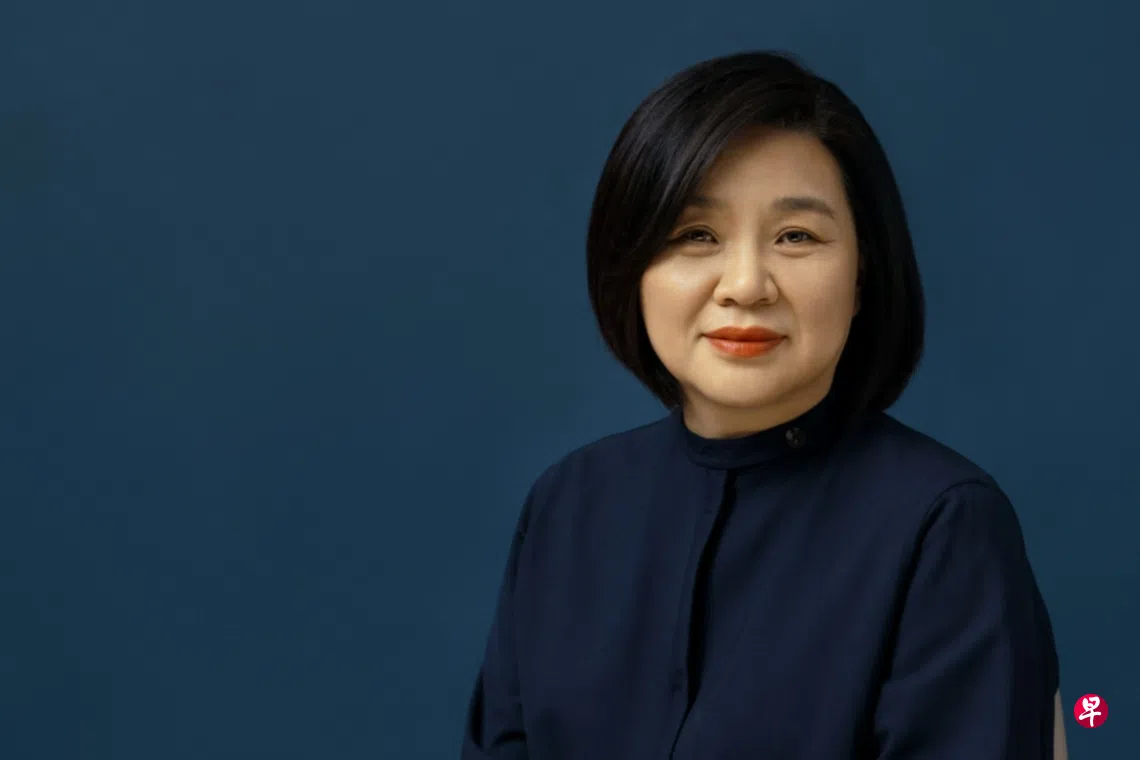
Gabriel García Márquez had Macondo, Mo Yan has Gaomi, and Liang Hong has her own Liangzhuang.
Where is Liangzhuang? The village lies in Dengzhou, Henan province, deep in China’s central plains, just off the axis of Chinese history. Liang was born here in 1973.
As a child, she did not yet know that she would spend many years making her way out of her hometown, then return time and again, continually writing about her origins and destiny.
By 2010, Liang, then 37, had long completed her doctorate and become a conventional university academic. Non-fiction was quietly gaining ground in China, and People’s Literature had launched a section devoted to it.
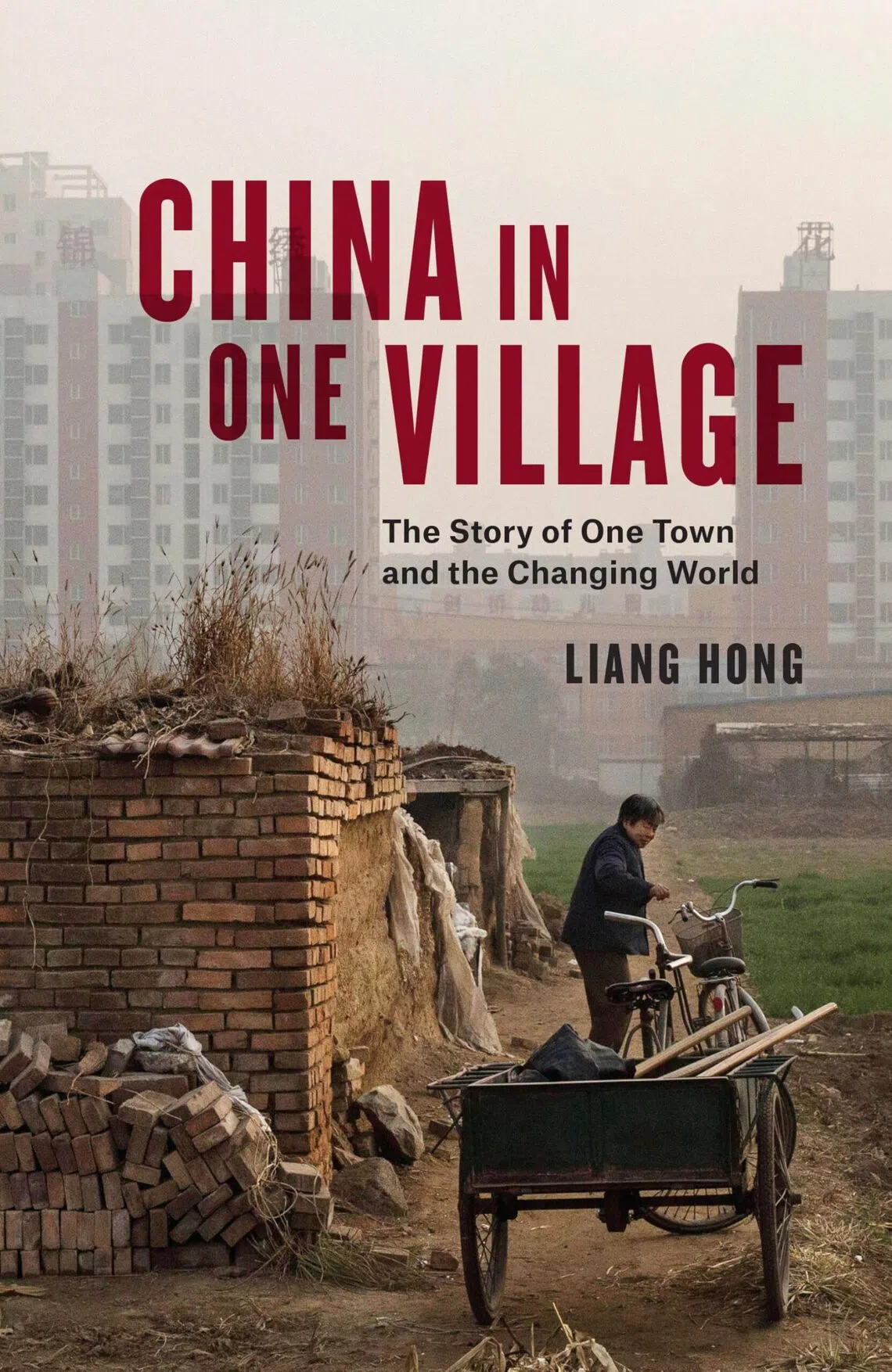
Taking on the role of a writer, Liang published the book-length documentary work Liangzhuang, later released as China in One Village.
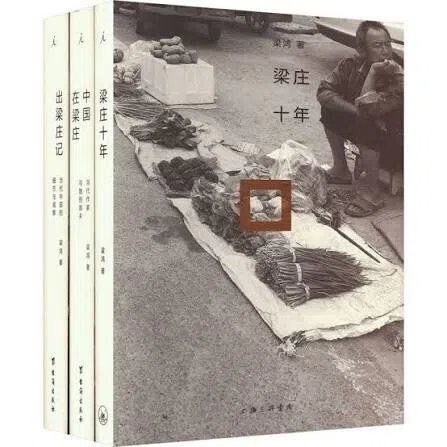
Over the following decade and more, Leaving Liangzhuang and Liangzhuang: Ten Years followed, winning numerous literary awards. Gradually, “Liang Hong of Liangzhuang” became “Liang Hong’s Liangzhuang”.
As the world came into sharper focus, Liang did not stop at Liangzhuang. In 2025, she published Let There Be Light, turning her attention to young people struggling emotionally and to families in both cities and the countryside. The book won the reportage award at the 9th Lu Xun Literature Prize.
From villages to young people, Liang has kept asking: how, exactly, do people live? In 2026, she has been invited to the Singapore Writers Festival (SWF) to share her stories of Liangzhuang and light with local readers.
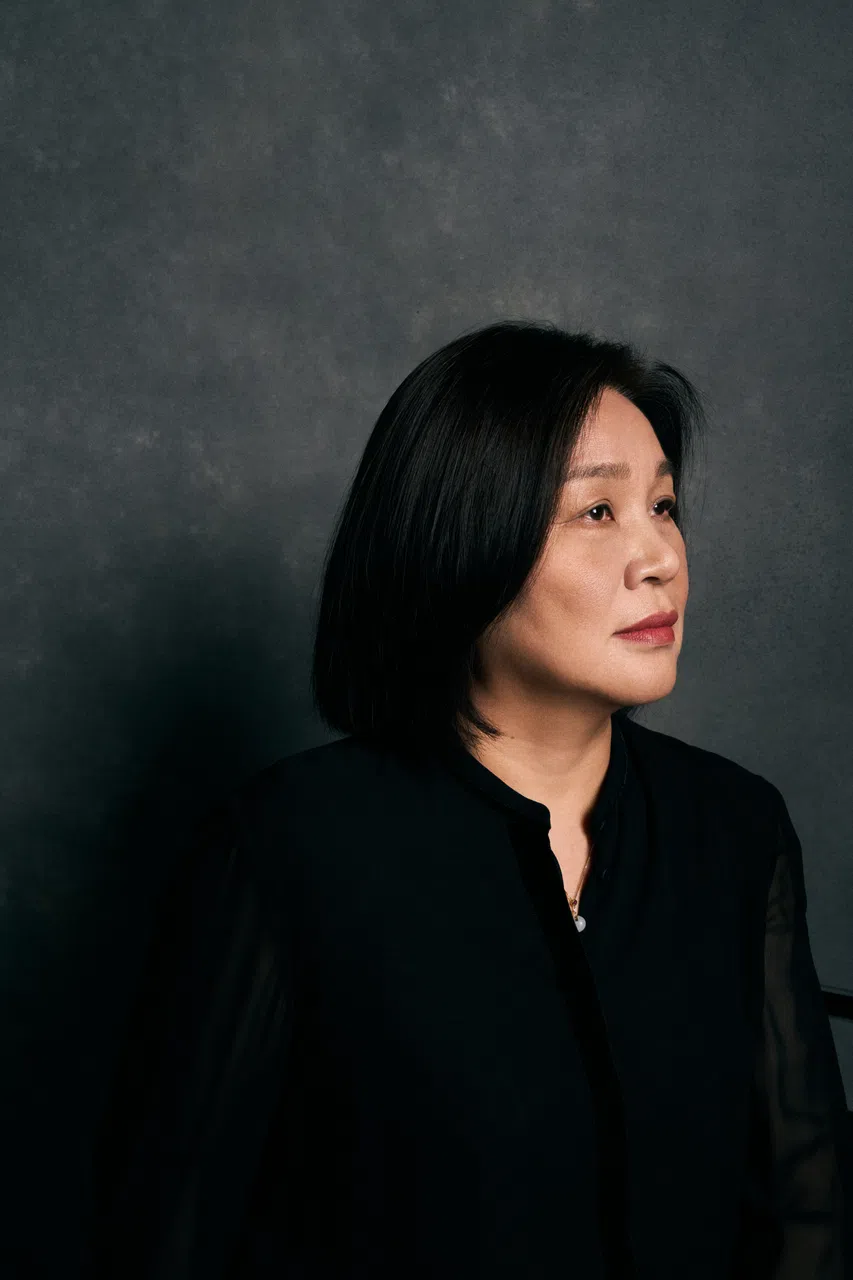
Not a “spokesperson”, but a witness to life from within
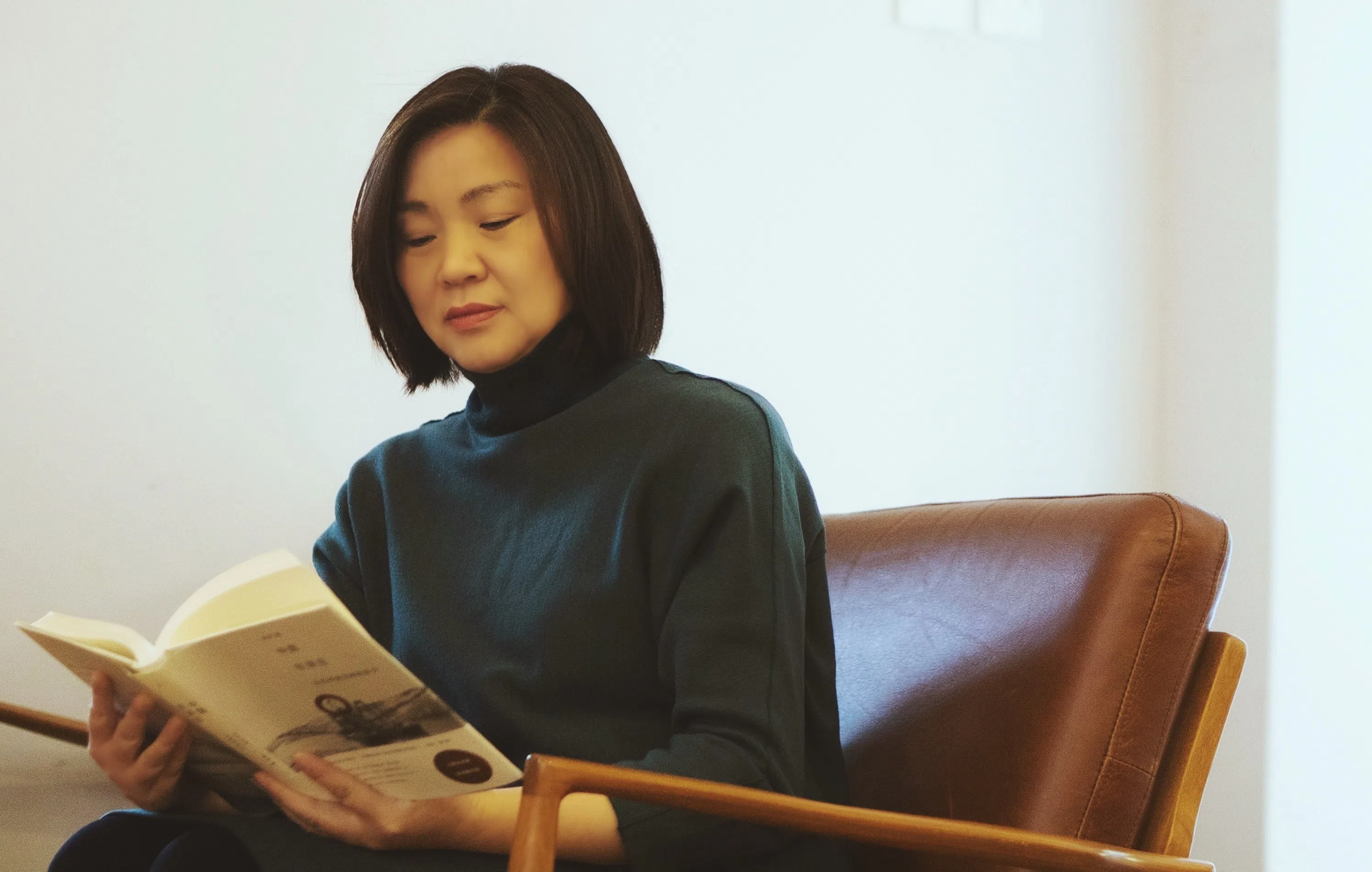
When Liang spoke to Lianhe Zaobao (LHZB) by video call, she had just returned to Beijing from Hangzhou, where she had completed her jury duties at the West Lake International Documentary Festival after a lengthy schedule of screenings.
Trees stood outside her study window, their leaves filtering sunlight into patches across her face. As she spoke, she usually faced the light. She said she disliked writing while facing a wall, preferring somewhere with a view outside. In Beijing’s late autumn, the leaves formed mottled layers: some yellow, some still green, others already shrivelling.
Liang’s voice was resonant and full. “Rather than relying on artificial intelligence or technology, I would rather look at a scene like this with my own eyes, let it take shape in my mind, then write it down,” she said. “If I want to write well about a real person, I have to spend time with them.”
Looking outwards is both her way of writing and her way of returning home.
That return began with unease and dissatisfaction. When she began writing about Liangzhuang, Liang felt a certain emptiness in her life and intellectual surroundings, and wanted to find a new way of understanding China.
Had she simply wanted to escape, she could have gone to lie on a beach. She chose home because she sensed that the village was deeply connected to China as a whole, and to her own life.
People returning home after years away often resemble the narrator in Lu Xun’s “My Old Home”, separated from a childhood playmate by a “lamentably thick barrier”.
Liang believes that on a brief family visit, one is merely passing through, and the discomfort is emotional. But when one stays to live, observe and think, that personal discomfort recedes into the background.
“At that point, the ‘I’ expands. It is no longer just the ‘I’ visiting relatives back home, but also a writer and a thinker.”
Whether writing about neighbours and fellow villagers or intellectuals, Liang has never been anyone’s “spokesperson”.
“When a music professor writes about a literature professor, no one calls it speaking on someone’s behalf. Why use that term when the subject is a farmer? Behind the word lies an assumption about power: the writer is above, and the farmer below.”
“Every person in this world is someone living their own life.” In her view, the people she writes about are not silent: they, too, reflect on their lives.
Once, at home, she put two questions to a younger male cousin: did he regret returning from Beijing? And if someone offered tens of thousands of yuan for his family’s land, would he sell?
The room fell silent. A few minutes later, her cousin answered earnestly: he would not sell. He could not let the family’s land be lost on his watch.
Liang treasures such moments. What she wants is to make these pauses in lives consumed by earning a living visible, rather than speak for others.
“Speaking on someone’s behalf is too bound up with power, and too one-dimensional. I simply want to enter life from within and show people’s richness and complexity.”
“No one lacks the right to write about anything; everyone has the right to write about everything. What matters most is how you write: your words, your values, your stance, your worldview, including how you see life.”
Life is hard to capture in its entirety. Life itself really is rounded; it is rich and constantly expanding, not flat. — Liang Hong
After more than 20 years of writing about Liangzhuang, has Liang come closer to herself and to the truth? In her view, this is an endless process of approaching, rather than ever possessing the whole.
“Life is hard to capture in its entirety,” she said. “Life itself really is rounded; it is rich and constantly expanding, not flat.”
The narrower the focus of observation, the greater the depth and breadth the writing can reveal, because within one person lie countless layers waiting to unfold. “Reality is not laid out on the ground waiting to be recorded. It has to be discovered through deep exploration.”
Liangzhuang on the move: Beyond the urban-rural divide
In Liang’s eyes, Liangzhuang is a living organism, always on the move. Older villagers die one after another, while younger adults leave to find work.
As people move, the networks of rural life extend into the cities: a farmer puts down roots, his wife joins him, then her younger brother, followed by the brother’s wife.
A “little Liangzhuang” hence forms spontaneously, bound together by kinship and a shared hometown. When family disputes arise, people will still turn to a senior maternal uncle to adjudicate.
The differential mode of association described by sociologist and anthropologist Fei Xiaotong a century ago in From the Soil is still both fading and enduring in Chinese lives today.
“You may live in a city now, but in your heart you may still be thinking of Liangzhuang. I am not writing about a closed, stagnant village, but one moving forwards with the times,” said Liang.
This movement is evident not only in the village’s changes, but also in people’s complex emotional lives. When it comes to dividing identities into urban and rural, she cautions against rigid binaries.
“Life itself is a mixture. There is no need to pick apart what is rural and what is urban. A person’s attachment to their mother, or longing for genuine affection, for instance, cannot be described as purely urban or purely rural.”
Everyone is, first and foremost, an individual living a life, their own richness and complexity interwoven with the currents of the times.
Yet a stagnant countryside may be the impression Chinese literature leaves on many overseas readers. Liang explains that this is closely tied to writers’ backgrounds: the older generation grew up in a predominantly rural society, her generation records the advance of urbanisation, while younger writers already lead highly urbanised lives.
She hopes more people will read the work of young Chinese writers, gaining a fuller, more diverse picture of Chinese literature.
Diasporic longing: Finding a place in the river of history
When people leave their villages, they leave not only the village, but also their homeland. Chinese migrants have travelled not just from “Liangzhuang” to the cities, but to places far beyond. Some crossed the strait; others sailed to Southeast Asia.
Generations later, some have turned back, directing their non-fiction writing towards distant ancestral homes.
Taiwanese writer Chang Yu, who lives in Singapore, has ancestral roots in Henan. To write his family biography, The Loess Family, Chang too returned to Henan to trace those roots.
He said he read all three books in Liang’s Liangzhuang trilogy while researching the province’s villages, and that they were essential to his understanding of rural northern China.
Yet as Chang repeatedly recounted this family history in Singapore, he began to feel a sense of distance. Had the homeland he was writing about become displaced in time and space, no longer belonging to him?
Discussing writing about rural roots from the greater distance of the Chinese diaspora, Liang said that writers removed from the scene undoubtedly bear greater responsibility. Still, by exploring dimensions such as social and emotional structures, they can strive for a kind of “greater philosophical closeness”.
In Singapore’s Chinese-language literature, nostalgia encompasses not only longing for ancestral villages, but also a yearning for the “kampung spirit” of the past.
Liang believes this idealisation and search are by no means an artificially manufactured, illusory homesickness, but a human instinct to resist absolute loneliness.
“People want to find something to lean on, to find a river of history. They want to be in that river, rather than cast alone upon its banks. They want to be an extended line with a point of origin, rather than an isolated dot in the vastness of time and space.”
Through the shadows: Seeing people and light
Liang is currently writing about the women of Liangzhuang. Her starting point was not a desire to revise a particular portrayal of rural women in literary history, but a person she liked very much.
“I rarely think about how you are writing, or how someone else is writing, and therefore how I should write. I focus only on my subject.” What draws her to these rural women is their work, humour, uninhibited spirit and pride.
She considers herself a feminist, but remains alert to the danger of turning gender into an overly adversarial divide. “When gender becomes too polarised, the gender perspective itself becomes an obstacle. Women are, first and foremost, part of life and civilisation.”
This close, equal regard also informs her examination of young people’s emotional struggles and the burdens on families in Let There Be Light.
Liang believes Singapore and China share similar East Asian patterns of emotional relationships within families. The writer’s task is to lay bare the contradictions within love, allowing everyone to see themselves as well as one another.
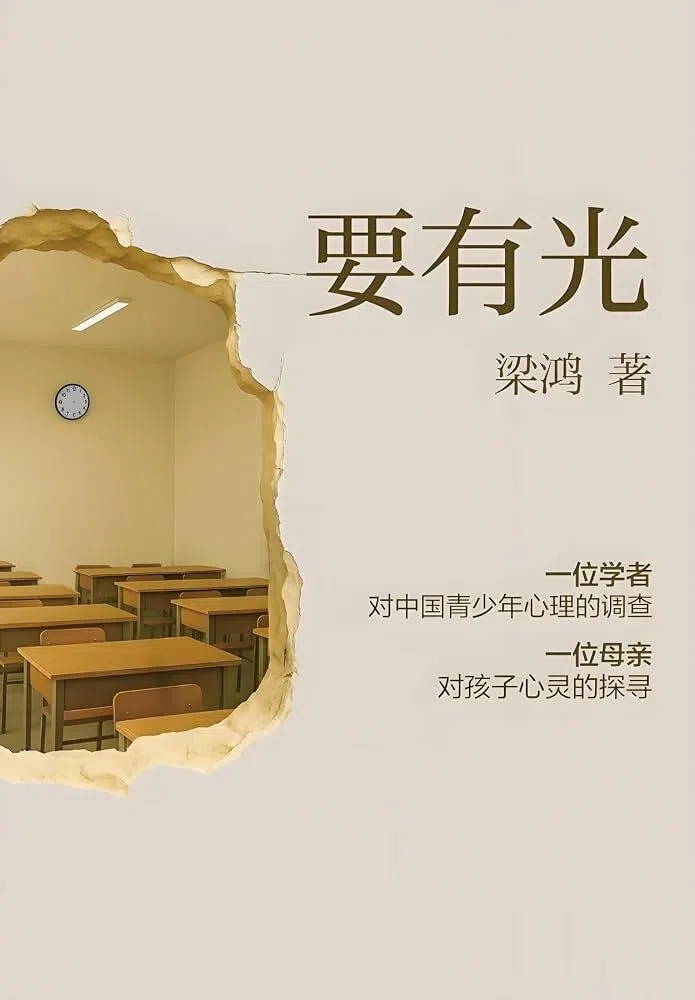
From her novel Liang Guangzheng’s Light to the non-fiction work Let There Be Light, “light” is a recurring word in Liang’s book titles. She said she had not planned this deliberately. If she had to explain it, perhaps it reflected a deep-seated longing for light.
“Human nature itself is complex: warmth and darkness, cruelty and light are intertwined.” Liang said she does not shy away from reality’s shadows. Yet deep in her writing, her gaze remains fixed on the warm light that pierces them.
As she said this, she was looking out of the window. Sunlight still flickered through the leaves. “Even sunlight like today’s has shadows,” she said.
Liang will soon be in Singapore to continue this searching conversation with readers about life, rural roots and light.
▲Festival Keynote Talk: Liang Hong – Non‑fiction and the Predicament of Our Times
Saturday (14 November), 11am to 12.30pm
Ngee Ann Kongsi Auditorium, National Gallery Singapore
In Mandarin, with simultaneous interpretation into English; tickets: $20.
Tickets: bit.ly/4iAnRVL
▲Liang Village: Continuity and Change in Rural China
Sunday (15 November), 10.30am to 12pm
Play Den, The Arts House at the Old Parliament
In Mandarin, with AI-assisted translation; admission with a Festival Pass.
Tickets: bit.ly/3WnZG45
▲Writing the Lives at Home
Sunday (15 November), 7.30pm to 9pm
Ngee Ann Kongsi Auditorium, National Gallery Singapore
In Mandarin and English, with simultaneous interpretation in both languages; tickets: $20.
Tickets: bit.ly/3UmaY8q
