

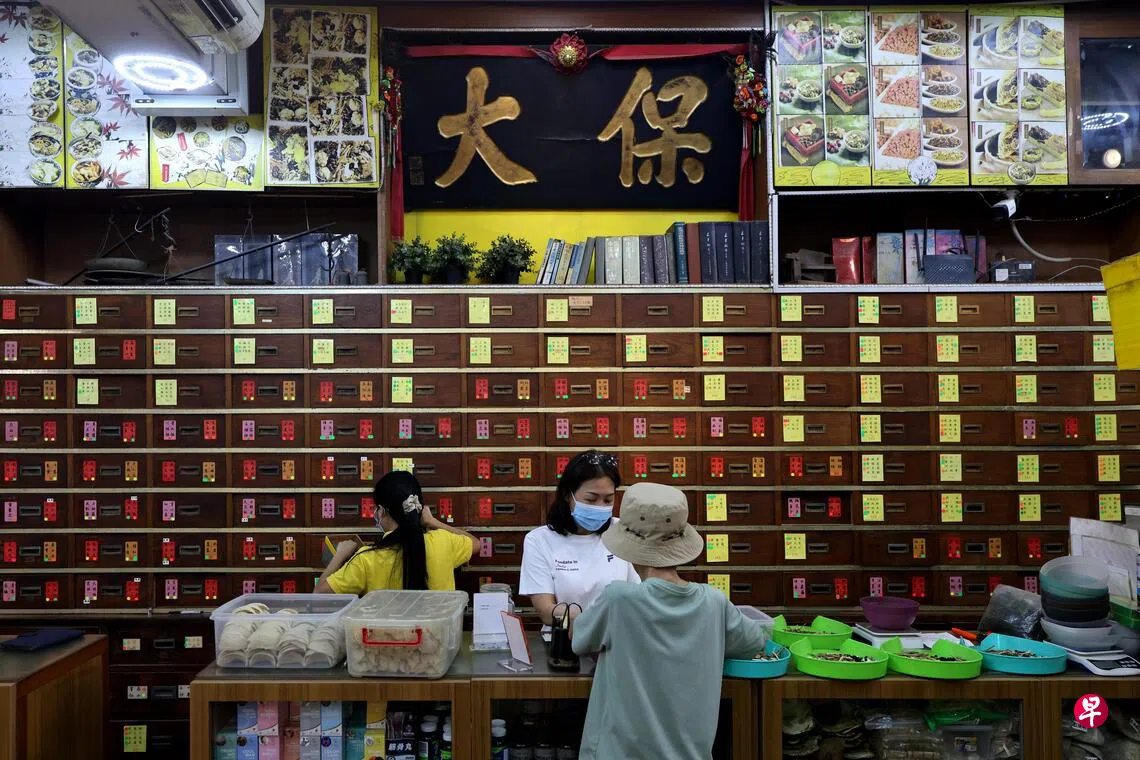
In the last century, the sound of herbs being pounded reverberated from one end of Hokkien Street to the other. In traditional Chinese medicine halls, assistants would call out to people to come in for a cup of cooling herbal tea, while holding brass pestles and rhythmically pounding brass mortars.
Choong Tzien Tao, 67, grew up with those sounds. Back then, a two-minute walk from his family’s shop would take him past three herbal shops vying for customers. Decades on, the shops have gradually dwindled and the streetscape has changed beyond recognition, but the third-generation owner of Ming Tai Medical and Trading still holds to the practices passed down by his elders.
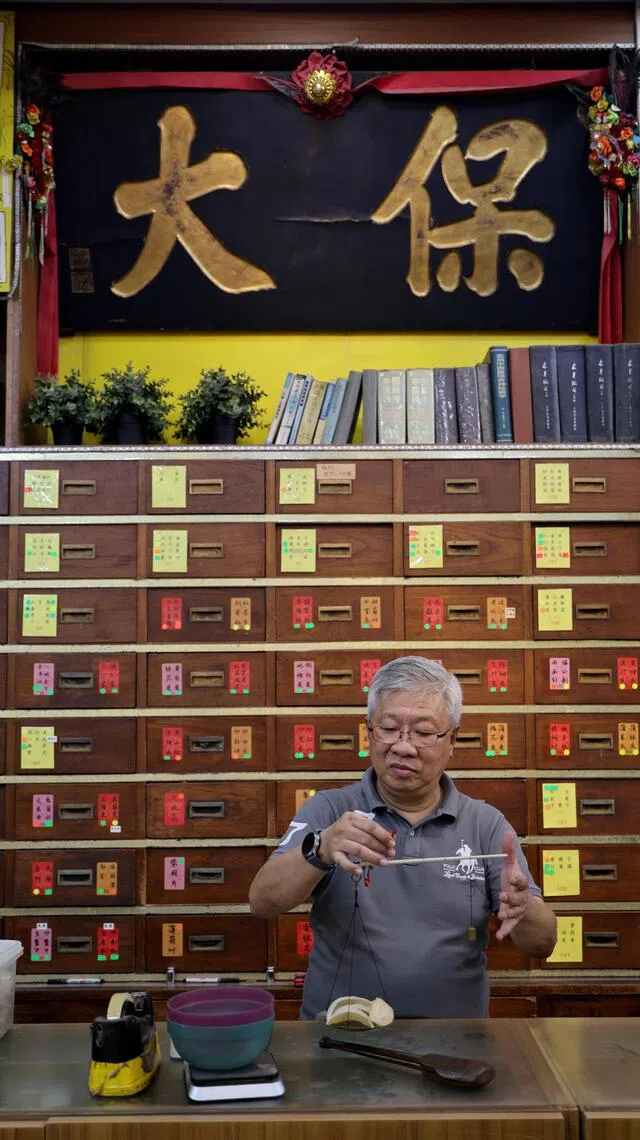
Seated at his herb-cutting blade, he told Lianhe Zaobao (LHZB): “Running a herbal shop is not an impersonal business. My elders taught me to act with integrity and take an interest in customers’ lives. If I could, I would carry on using an abacus and iron scales.”
Choong’s grandfather, Choong Hin Cheong, came to Singapore from Guangdong, China, in the early 20th century. He founded Ming Tai in 1946, where the family initially ran an import-export business at 1 Hokkien Street, then later specialising in Chinese medicinal herbs and liquor, as well as dispensing herbal prescriptions.
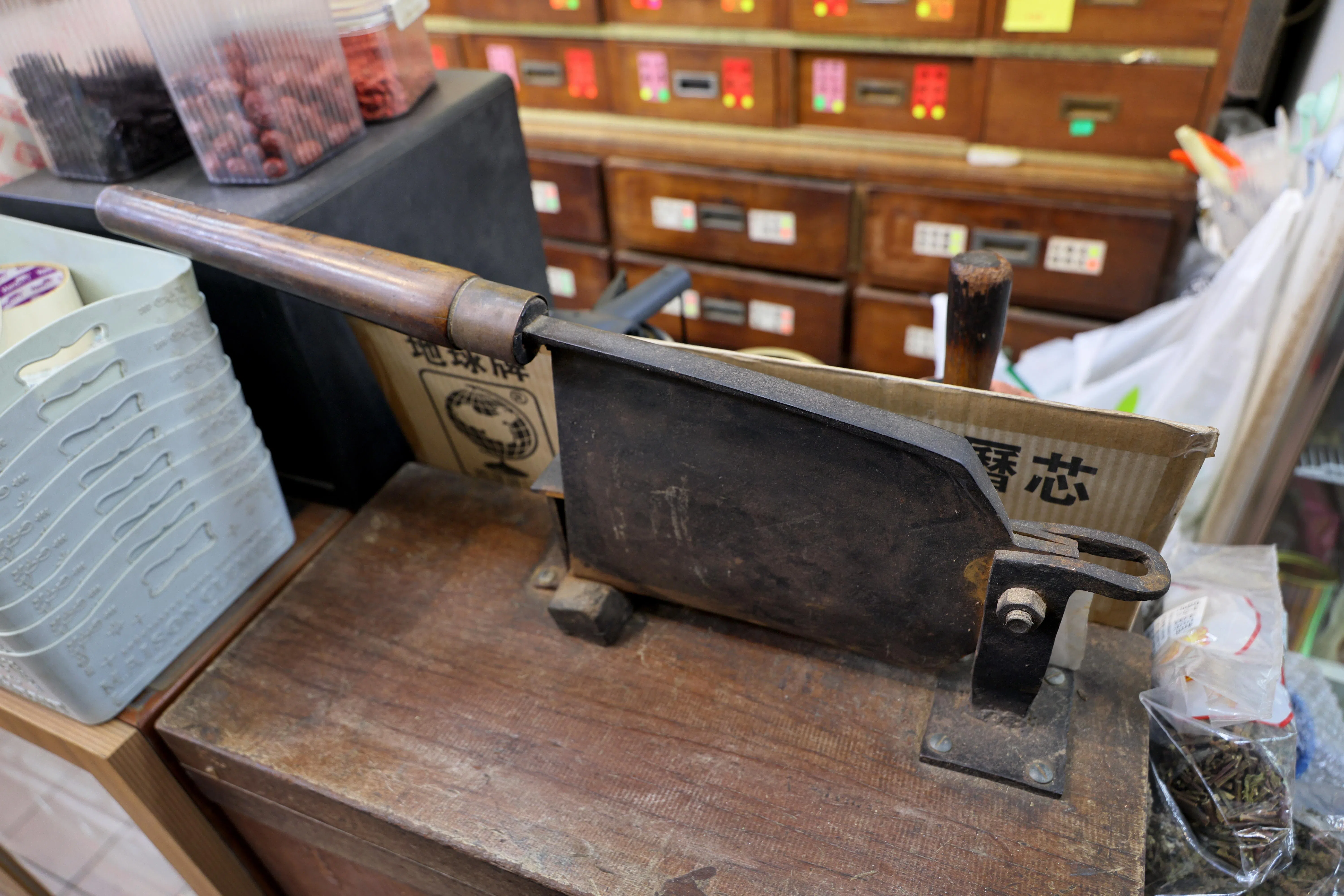
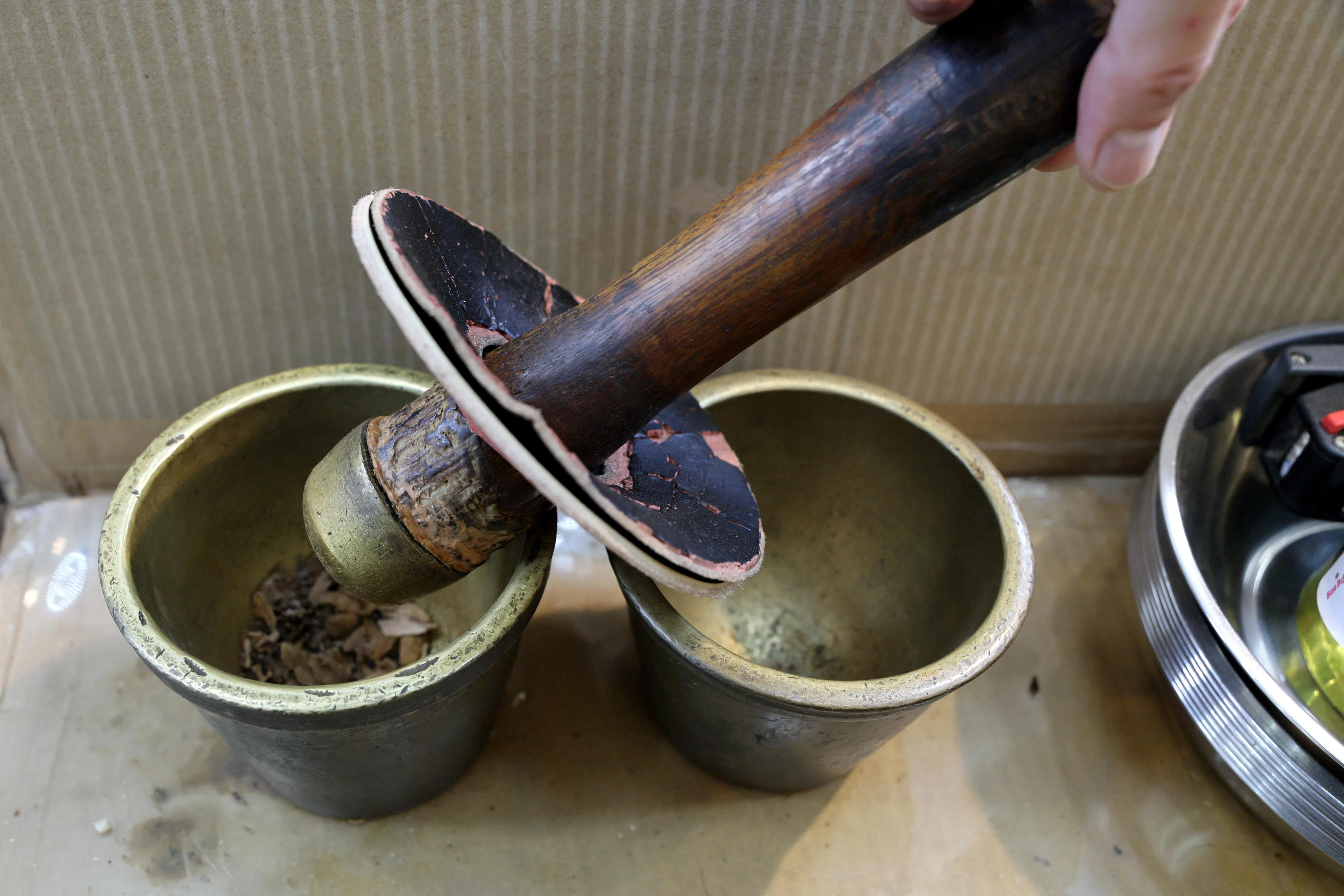
In 1975, Choong’s father moved the shop to Upper Cross Street, where it remains today. “There were three traditional Chinese medicinal halls then: Zhengda, Ming Tai and Baoda. Around 2000, my father bought the Baoda name and merged the two businesses.” Choong took over the family business in 2005. His children later set up an online shop and introduced electronic equipment.
Founded by Choong’s grandfather, Ming Tai now has an 80-year history.
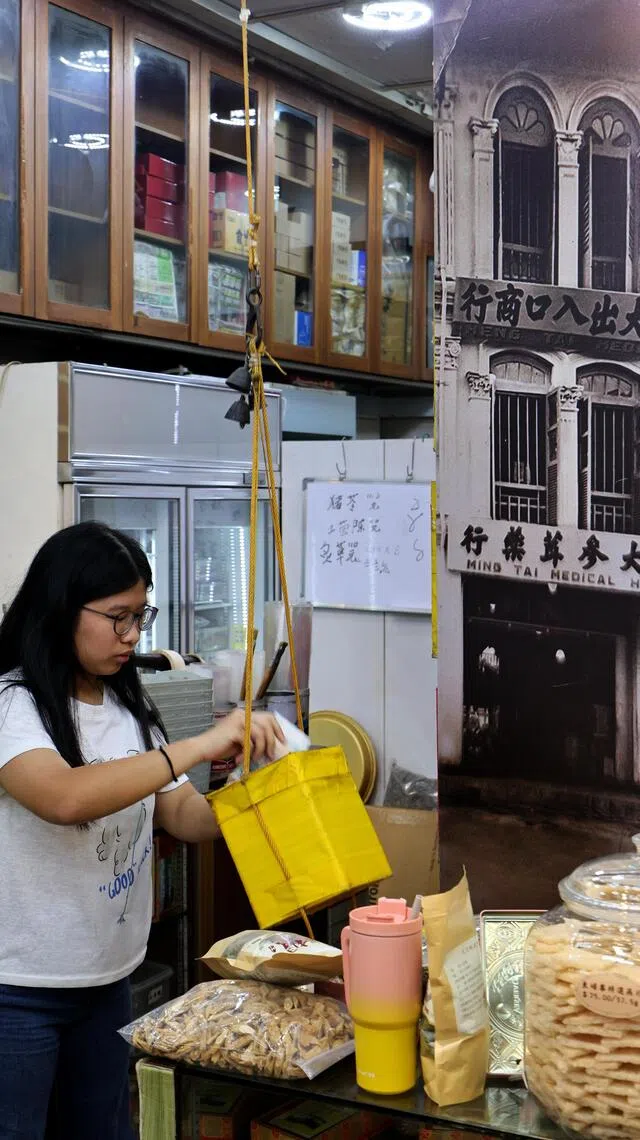
Honing his ginseng-slicing skills on the third floor
Choong spent his childhood on the third floor of the shophouse. “The ground floor was the shop, the second floor was used for storage, and meals were sometimes served on the third floor. We were poor; at night, I would unfold a canvas bed to sleep on and put it away at daybreak. When I was teething, my family did not buy teething biscuits. My father gave me a codonopsis root to chew on instead.”
A mischievous child, Choong never thought he would take over the business, especially since he received an English-language education. Yet while his peers went out to play, he would practise slicing ginseng alone on the third floor. “Unlike machine-sliced pieces, Hand-cut ginseng slices are thin but do not crumble. When I first started practising, I did not tell anyone. I often cut the flesh on my index finger while rats scurried past me. Now I can slice ginseng without looking at the knife.”
As his skills grew, so did the shop’s reputation. In those days, people living around Hokkien Street often sought treatment at Thong Chai Medical Institution, and many patients would bring their prescriptions to Ming Tai to have them filled.
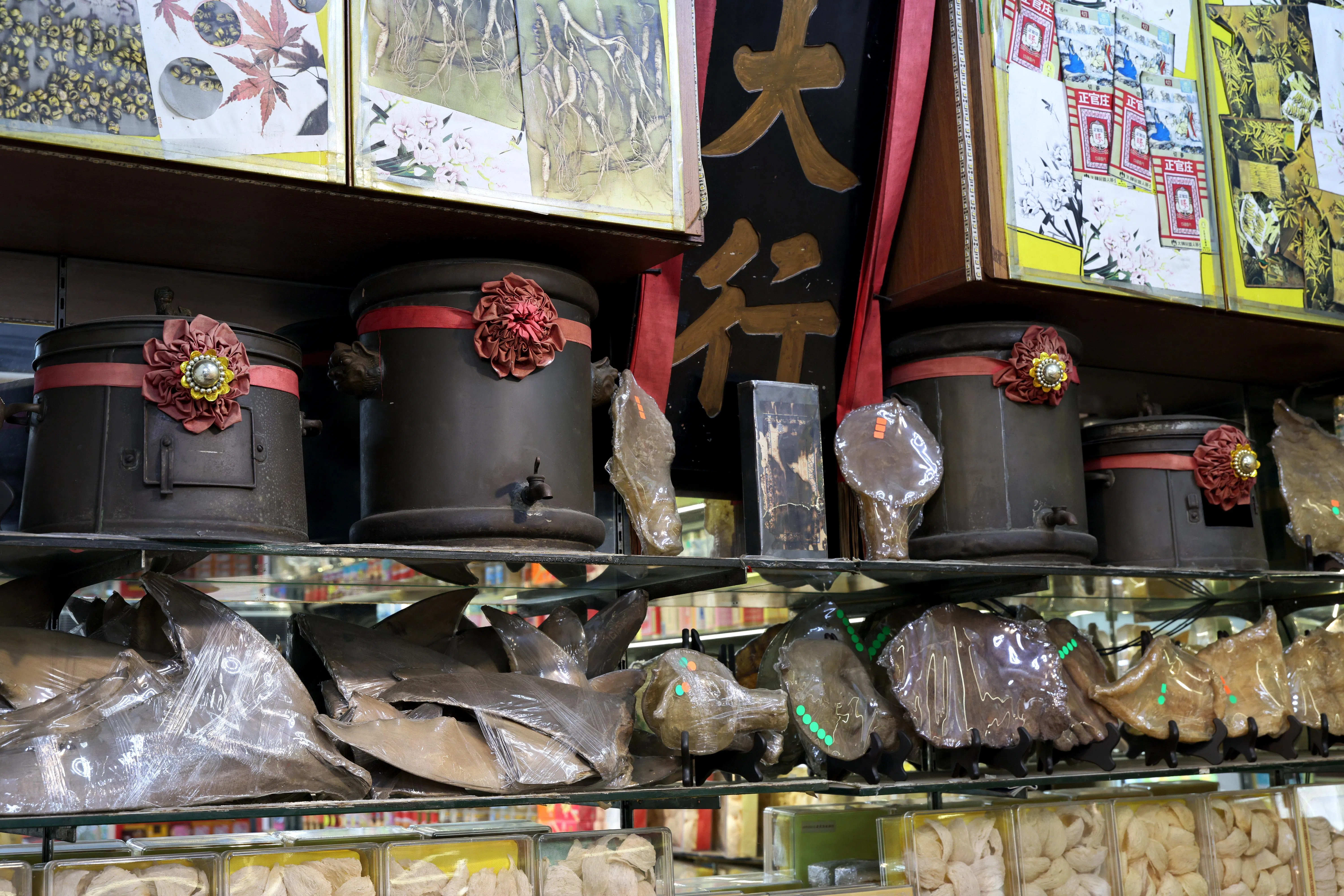
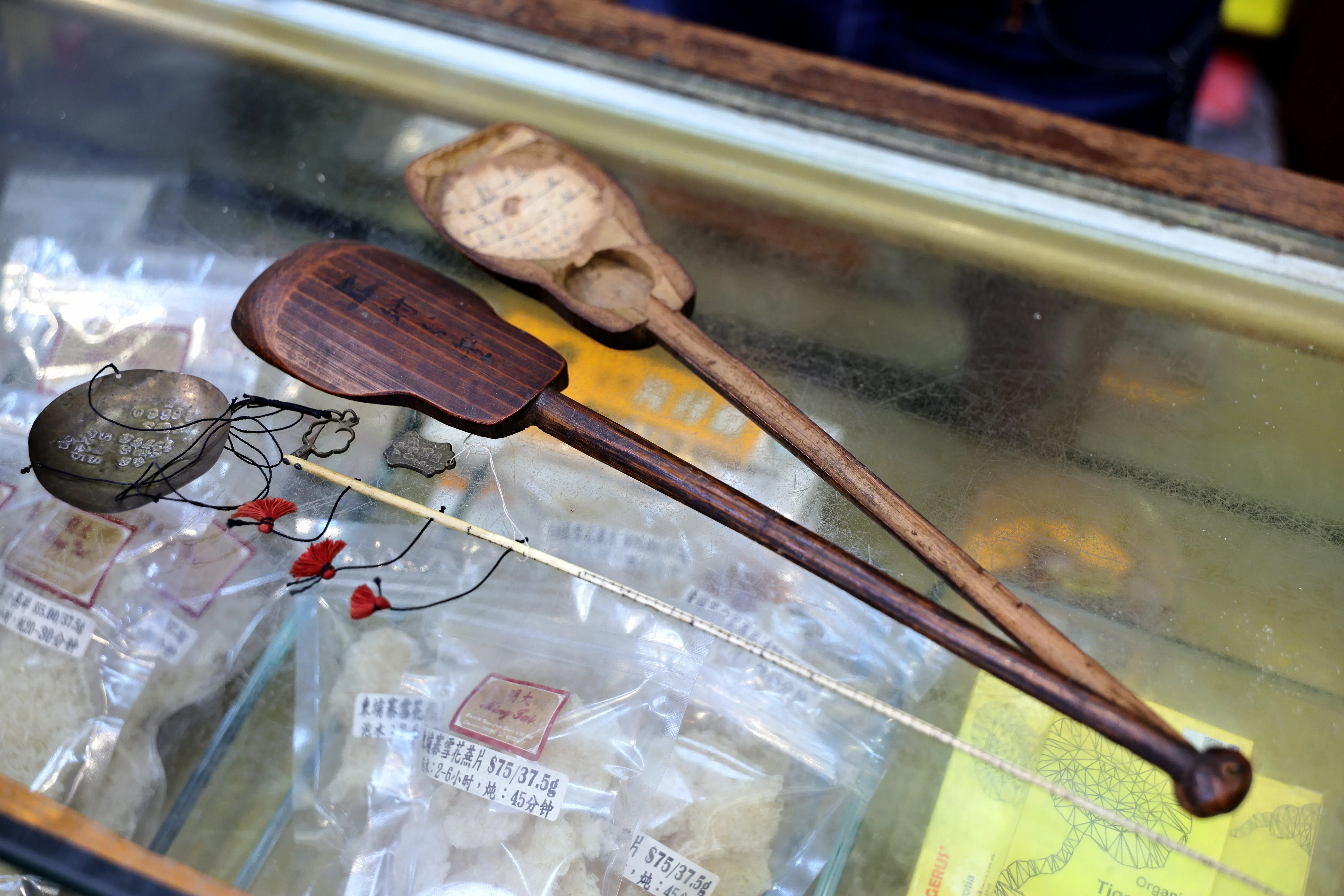
Choong recalled patients who had their prescriptions filled elsewhere but returned to their physicians after the medicine failed to help. The physicians told them the problem was not the prescription, but where they had obtained the herbs. They were then advised to follow the main road and look for the shop with the brightest lights at its entrance.
“Those of us dealing in medicinal herbs cannot be careless. We have to live up to people’s trust. More than 20 years ago, I wanted to find better-quality ingredients, so I went to Cambodia to source natural bird’s nests. The situation there was unstable, and I had to take precautions whenever I went out. Now I go once every quarter and carry the goods back myself to prevent anyone from switching them.”
Choong is just as particular about soup. He made a special trip to the traditional Chinese medicinal halls in Hong Kong’s Sheung Wan to see how others prepared soup, and also learnt about shop decor, product displays and techniques. On returning to Singapore, he gave his shop a makeover.
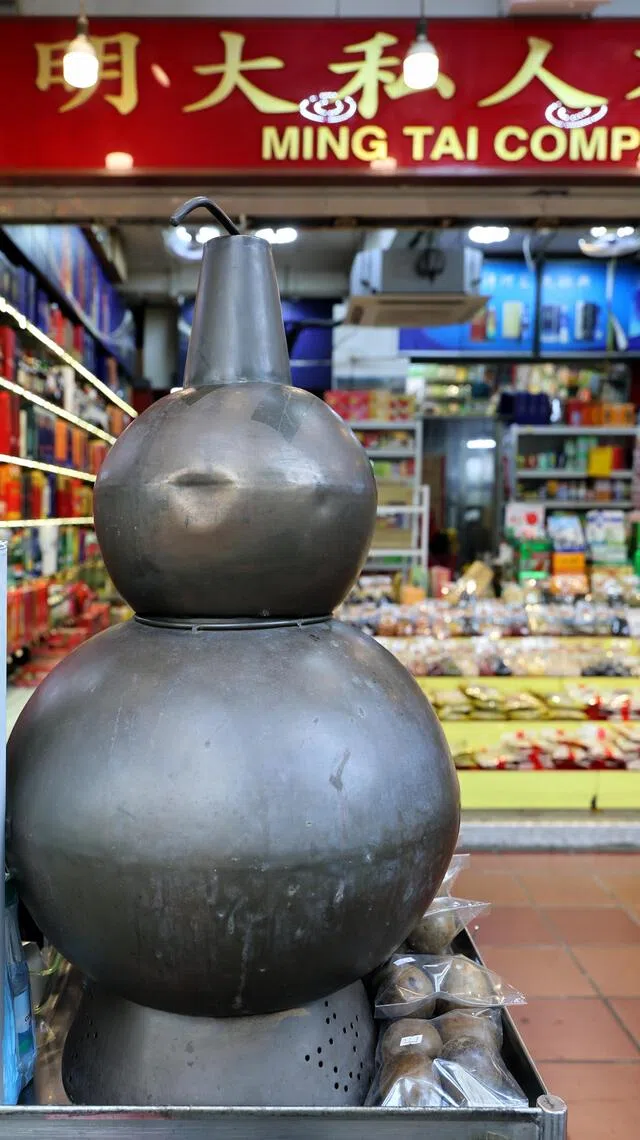
“For the Cantonese, the rule is that it does not count as soup unless it has simmered for a full three hours. Singapore’s weather is hot and humid, so I would add plantain herb, lysimachia and cogon grass root to dispel dampness, such that my soup recipes suit local tastes and the soups are lighter and more soothing.”
Soup recipes developed during his wife’s confinement
To Choong, running a medicinal hall is about more than just selling goods. Over his years behind the counter, he has watched generations of customers grow up. “Their mothers used to lead them into the shop by the hand. Later, they came in carrying children of their own. I ask how their families are doing and tell them how to make the best-tasting soup.”
That care extends to the products. The shop’s popular 30-day confinement soup packs originated in the family kitchen. When his wife, Tay Bee Lan, 55, was in postnatal confinement more than 20 years ago, Choong cooked soup for her every day, adjusting it to her physical condition. Only after several revisions did he settle on the recipes for sale.
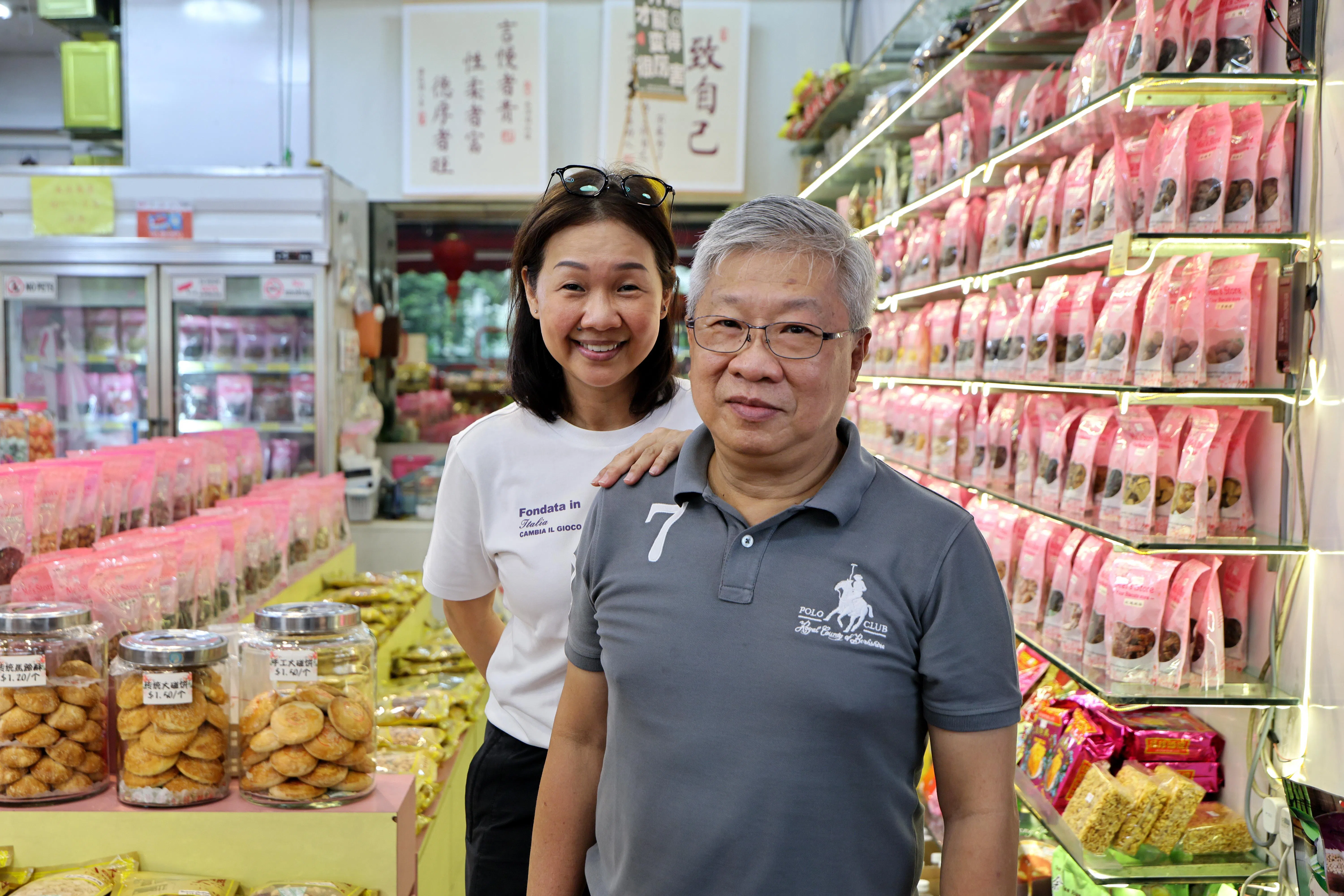
Choong repeatedly expressed his gratitude to Tay. Born in Penang, Malaysia, she speaks fluent Mandarin and can communicate with a wider range of people. She also studied traditional Chinese medicine in Beijing and helps to share the workload at the shop.
Choong opened a nostalgia-themed shop for her next door, “Mei‘s Store”, stocking biscuits and sweets popular in the 1980s and 1990s.

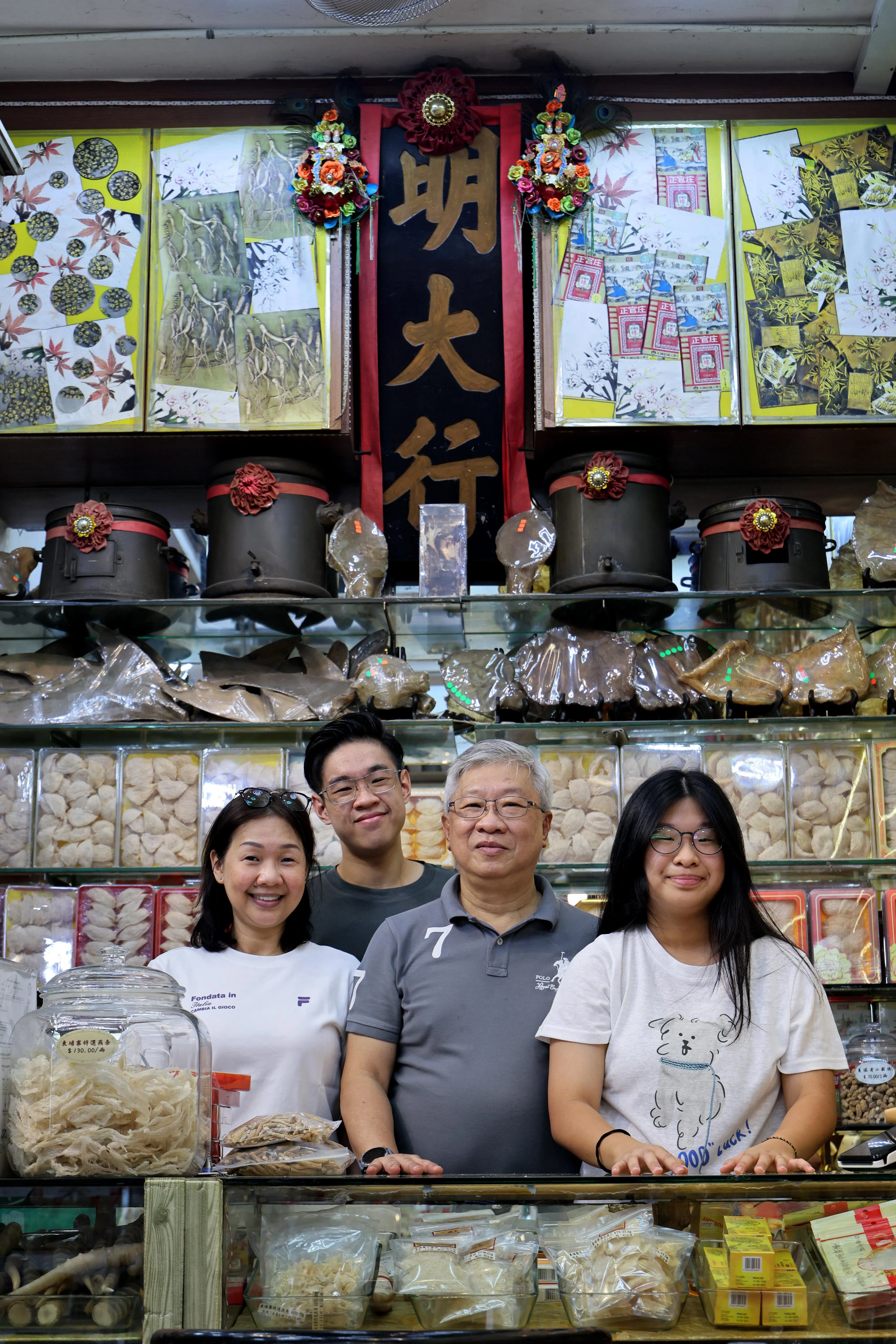
The couple’s son, Choong Jia Xiang, 23, has been learning in the shop since childhood but feels he is still far behind his father. “Customers come to you not just to buy products, but also for your knowledge.” Older customers sometimes use Cantonese or Hokkien mnemonic phrases to ask for less common herbs. When he cannot understand them or recognise the written characters, he would not be able to dispense what they need.
Will he take over one day? Jia Xiang, who is due to enlist for national service soon, neither committed nor ruled it out. “If you walk into a medicinal hall and see someone very young, you might not trust him.” He reckons he will need to learn from his father for another 20 years before he is fully trained.
Still, Jia Xiang sees opportunities to reach new customers. “At 20, young people tend to think they are healthy and do not need to nourish their bodies. By 25 or 26, when they have started working and their health need attention, they will naturally come to us.”
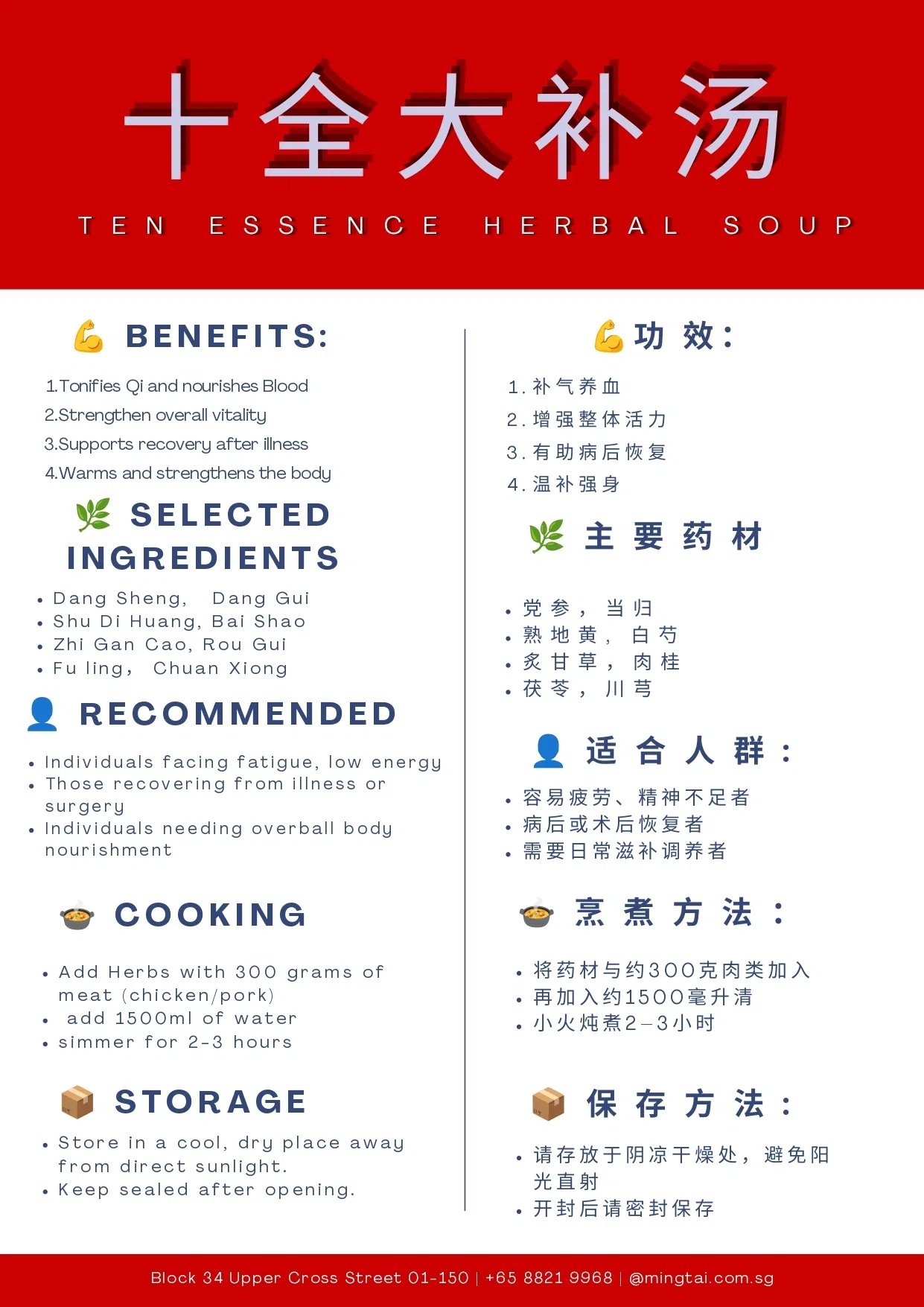
To draw younger people into the shop, daughter Choong Jia Xin, 19, wants to start with the details. Currently studying accountancy at a polytechnic, she is working on standardising the soup packs’ packaging.
“The back of the packaging used to have only cooking instructions. I wanted to add the ingredients, benefits and who the soup is suitable for, so young people can understand.” She also wants to manage the shop’s social media, seeing Ming Tai as a shared family endeavour.
As a child, Jia Xin had to help at the shop on weekends while her classmates visited one another’s homes. Now she sees it differently. “I get to see my parents every day and be closer to them. That makes me happy. They are getting older, and I want to spend more time with them.”
A fire broke out at Ming Tai Medical and Trading on the afternoon of 11 November. Choong and his wife were admitted to hospital for observation after inhaling smoke. When the reporter visited that day, the shop was temporarily closed, with Jia Xiang managing matters in their place. Scorch marks remained at the entrance. The shop has since resumed normal operations.
