


As more Singaporeans buy tour packages directly from travel agencies or private guides in China through social media platforms such as Xiaohongshu and Facebook, travellers need to know how to assess their reliability and seek redress when services fall short of what was promised.
Singapore travel operators interviewed said bypassing local travel agencies to buy tour packages online directly from operators in China carries considerable risks. Travellers should check an agency's registration and business background before paying, rather than deciding solely on the basis of social media promotions. Chinese websites also offer advice on dealing with tour packages that fall short of what was promised, including gathering evidence and lodging complaints.
Check the travel agency's background before paying
Chen Wu, who provides highly customised travel services rarely available on the market, told Lianhe Zaobao that many consumers bypass Singapore travel agencies to save money, buying packages directly from agencies or private guides in China. “But travel agencies in China vary in size and service standards, and some may not have a business licence.”

He warned that some operators may make lavish promises about itineraries and services before accepting bookings, only to evade responsibility when problems arise. “You are not a local, and you do not understand China's laws and procedures. If something goes wrong and the other party stops answering your calls, or even leaves you by the roadside, what can you do?”
He said travellers should check an agency's registration and business background before paying, and sign a travel contract through proper channels wherever possible, rather than relying solely on social media promotions and positive reviews.
Chen noted that few companies in China genuinely specialise in high-end bespoke travel. “Travellers who request five-star hotels should also confirm whether these are hotels with a domestic five-star rating in China or international-brand hotels meeting international five-star standards. The two cannot simply be treated as equivalent.”
Travel agencies must also be able to handle emergencies
Chen suggested that travellers consider engaging experienced local travel operators to plan their itineraries. “For the tours I plan, I find out about travellers' needs, ages, health and travel habits before departure, then arrange transport, accommodation and activities accordingly.”
He cited a recent Silk Road trip involving about 20 travellers, most of whom were older. He arranged a vehicle specifically to transport their luggage so that they would not have to haul it onto trains. During the trip, one traveller developed tinnitus after visiting Tianchi, and the symptoms persisted the following day at the Flaming Mountains. Chen immediately arranged for a guide to take the traveller back to an international hospital in Urumqi for an examination. Doctors found that the traveller had suffered hearing damage and needed to remain there for a week of treatment.
“This traveller could not speak Mandarin. What would he have done without someone to help arrange medical care? If he had taken an emergency flight back to Singapore, his condition might have worsened.”
He said travel agencies must be able to handle emergencies, not just arrange sightseeing and accommodation. Travellers who book a private small-group tour through a legitimate local agency can immediately alert its local representative if a hotel or itinerary does not match what was promised. The agency can then contact its ground operator in China to resolve the issue, for example by changing hotels or adjusting arrangements, and follow up on how the matter is being handled.
Chen cautioned that travellers should look beyond package prices and consider whether an agency can handle emergencies. “Saving some money is certainly appealing, but if something goes wrong and no one is willing to take responsibility, travellers may end up paying a higher price.”
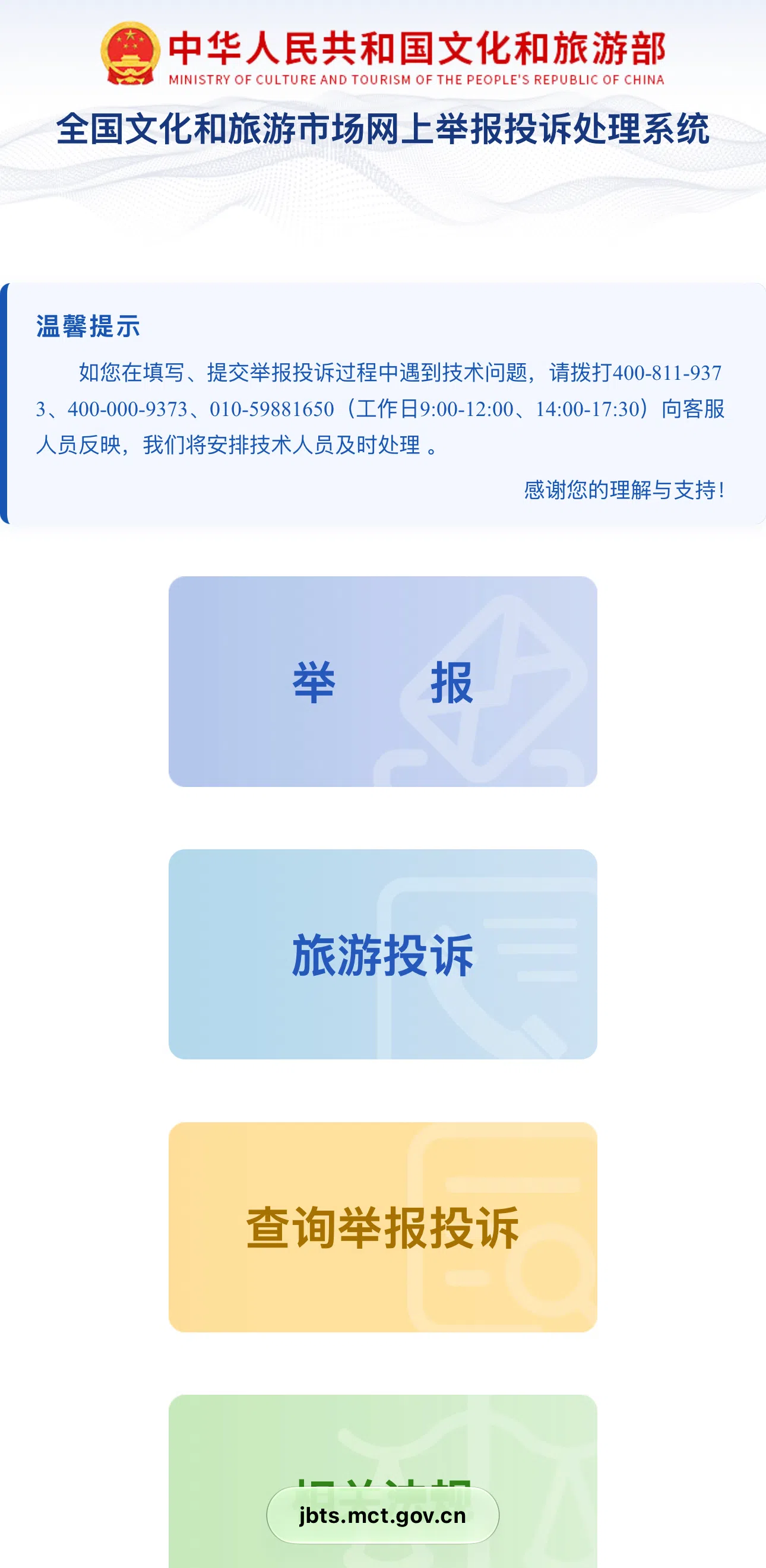
Gather evidence and complain immediately if services fall short
According to information published by China's Ministry of Culture and Tourism and other sources, travellers whose tourism services do not match what was promised can take the following steps:
· If travellers discover on arrival that the services provided do not match the contract, they should immediately take photographs and videos, and retain advertisements, itineraries, payment records, contracts and chat records with the operator.
· Travellers should also immediately complain in writing to the person in charge at the travel agency and the booking platform, clearly setting out the problems and requesting remedies, such as reinstating the original itinerary, changing hotels or refunding the relevant fees.
· If the travel agency asks travellers to sign a settlement document, agree to itinerary changes or confirm their satisfaction with the services, they should read the contents carefully and avoid rushing to sign before the dispute is resolved.
· If the two sides cannot reach an agreement, travellers can submit a complaint under their real names through China's national online reporting and complaints system for the cultural and tourism market (jbts.mct.gov.cn). They can also call the 12345 government service hotline at their travel destination to report issues such as breaches of contract by travel agencies, misconduct by tour guides and forced shopping.
· Even after returning to Singapore, travellers can retain evidence and continue to complain to the relevant Chinese authorities. If necessary, they can seek mediation or arbitration, or pursue legal action for redress. Under China's Measures for Handling Tourism Complaints, which took effect on 15 March 2026, tourism complaints should generally be lodged within 90 days of the end of the period for fulfilling the travel contract.
