

The 2026 calendar for late May and early June was brightened by two public holidays in quick succession: Hari Raya Haji on Wednesday and the Buddhist festival of Vesak Day on Sunday, with Monday (1 June) a public holiday in lieu. Taking just two days of annual leave and, with the weekend, presented a six-day break.
Draw a circle on the map with a radius of five hours’ flying time, and Perth in Western Australia shoots to the top of the shortlist. Western Australia, Australia’s largest state, covers more than 2.5 million sq km, over 3,000 times the size of Singapore, yet its population is about half of Singapore. Late May marks the transition from autumn to winter, with daytime temperatures of around 15 to 20 deg C — comfortably cool. The land is vast and open, the scenery is grand and there are few people.
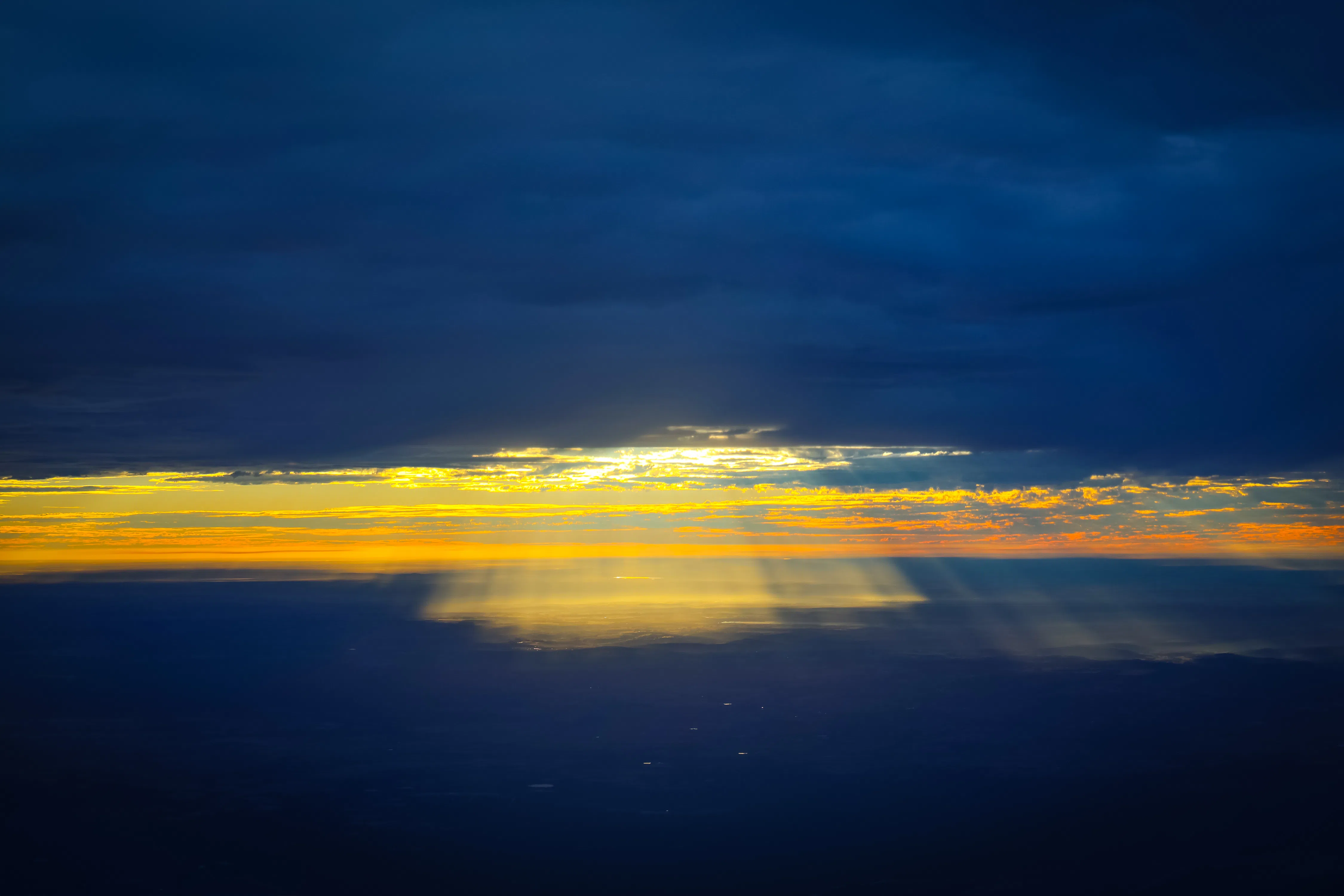
At 3am, our Scoot aircraft cuts through the night sky. Sleep on a red-eye flight is always fitful and hard-won. It is a long, trying, sleepless night, with time slowing in the darkness. Then dawn breaks, and the clock seems suddenly to speed up. At 8am, the plane touches down smoothly in Perth. With automated immigration clearance now available at Perth Airport, it is not long before the crisp morning breeze outside greets us.
Fresh off our “night shift” and still tired from the red-eye flight, we spend our first day in Perth walking about near our accommodation. At the turn of autumn and winter, Perth’s pavements are carpeted with golden plane-tree leaves. They lie quietly, rustling beneath the feet of the occasional passer-by, or rise into a graceful dance on a gust of winter wind. Although traffic flows steadily along the roads, there are few pedestrians, and the city feels a little short on life.
Before leaving Singapore, we checked the Perth forecast, which showed it will rain every day. It felt as though our plans could be washed out at any moment. On the second morning, a shower arrives right on cue, instantly dampening our spirits: today’s sandboarding was probably a washout. Yet after driving more than 100km north of Perth to the Lancelin dunes, we find clear skies.
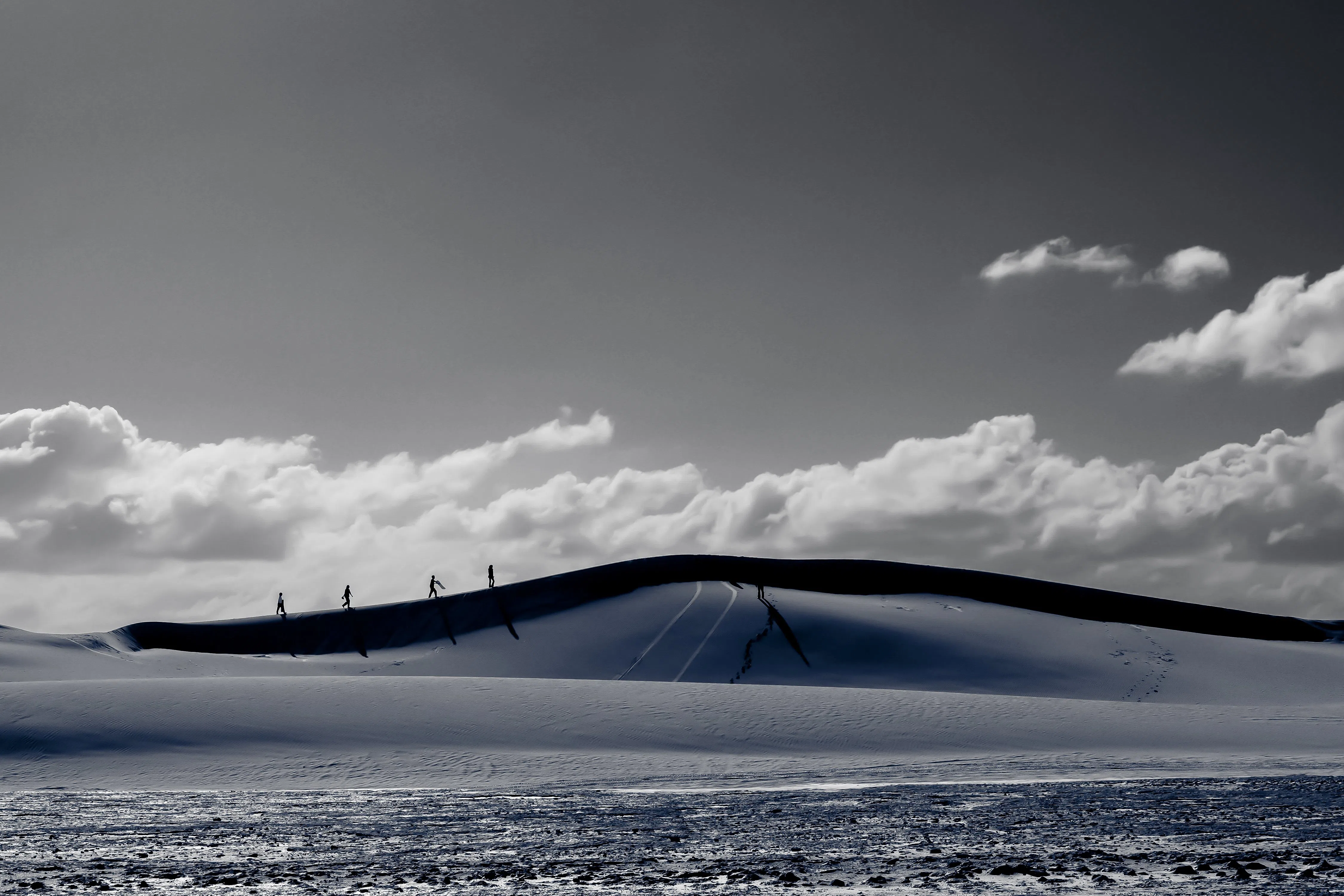
Sandboarding fun on Lancelin’s white dunes
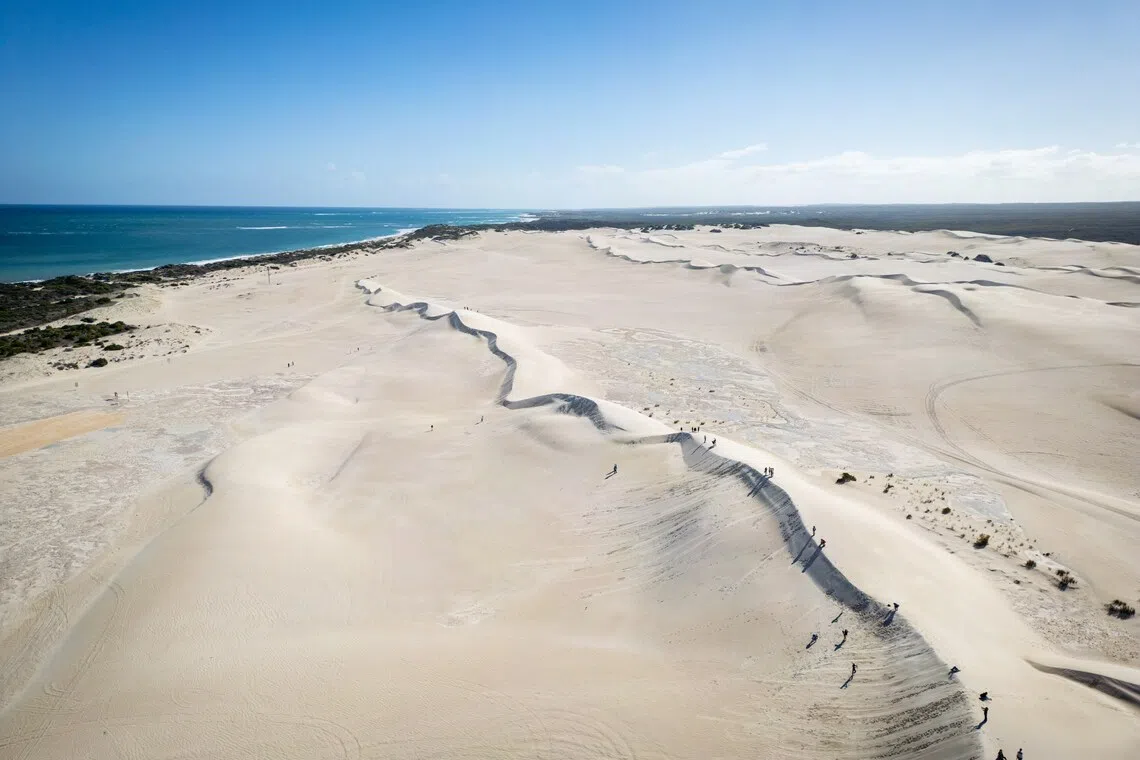
We pay A$10 (about S$9) to rent a sandboard roughly the size of a surfboard, then hurry towards the dunes, boards in hand. Nobody wants to waste a moment in case the fickle skies start weeping again. These dunes beside the Indian Ocean are not tall and lack the imposing scale of Namibia’s desert dunes along the Atlantic. But that does nothing to diminish our enthusiasm. There are slopes of varying heights, from steep drops of three to five metres to gentler ones of one or two metres.
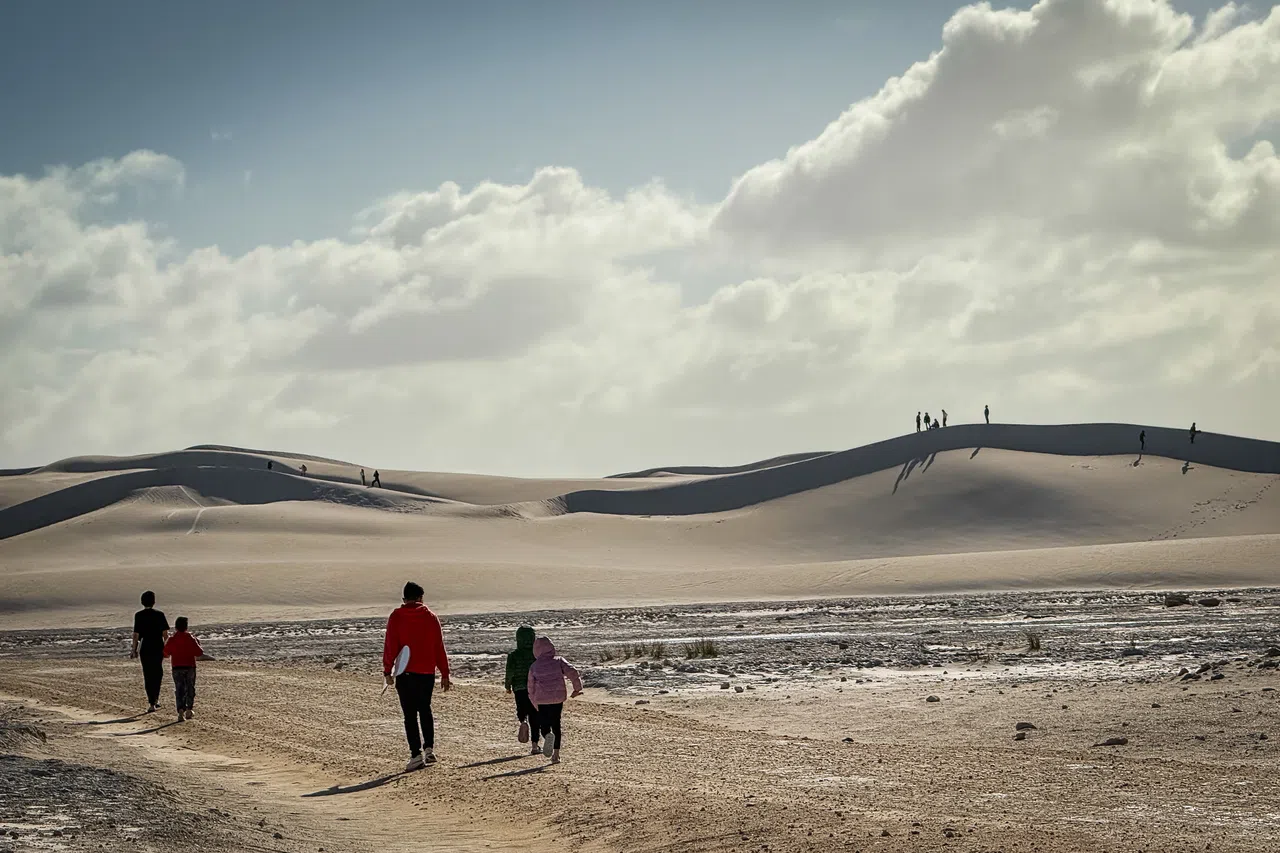
For my first run, I choose the hardest slope. Watching others glide down from the top, it all looks so easy. But once I sit down and look towards the foot of the dune, doubt creeps in: should I go or not? Egged on by everyone, I somehow make a perfect descent, to the astonishment of a young man nearby. On my second attempt, I choose the wrong line. Halfway down, the board suddenly swings sideways and veers out of control, sending me tumbling. My first experience of sandboarding was in Namibia, where the sand is soft and forgiving, making falls less likely. Here, the rain has left the sand firmer, with unevenly smooth patches on either side of the tracks that make it easier to veer off course and overturn. Across the rolling white dunes, people slide down and climb back up, never tiring of the fun, as though reliving the childhood joy of a playground slide.
The Pinnacles: an ancient enchanted forest
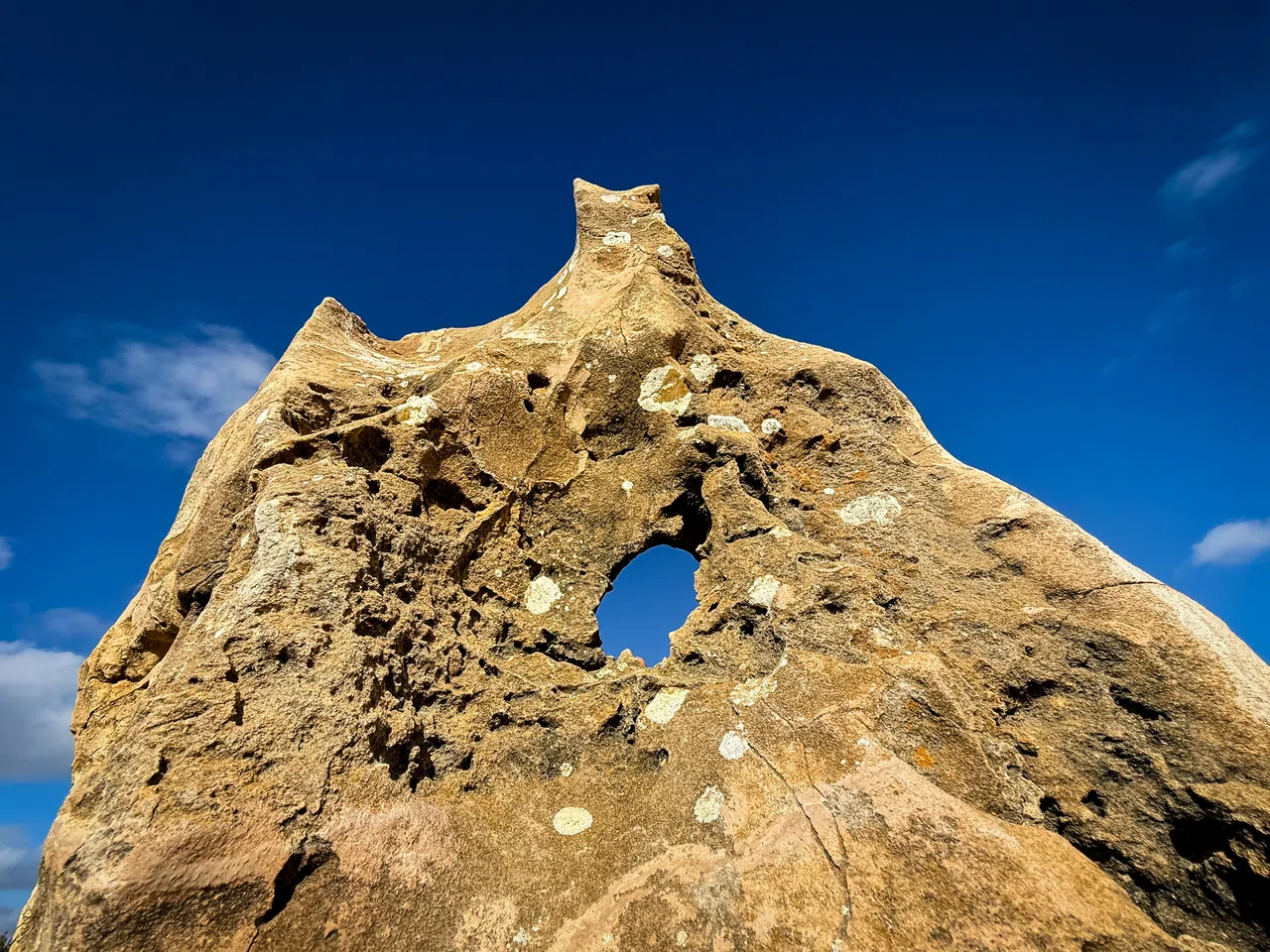
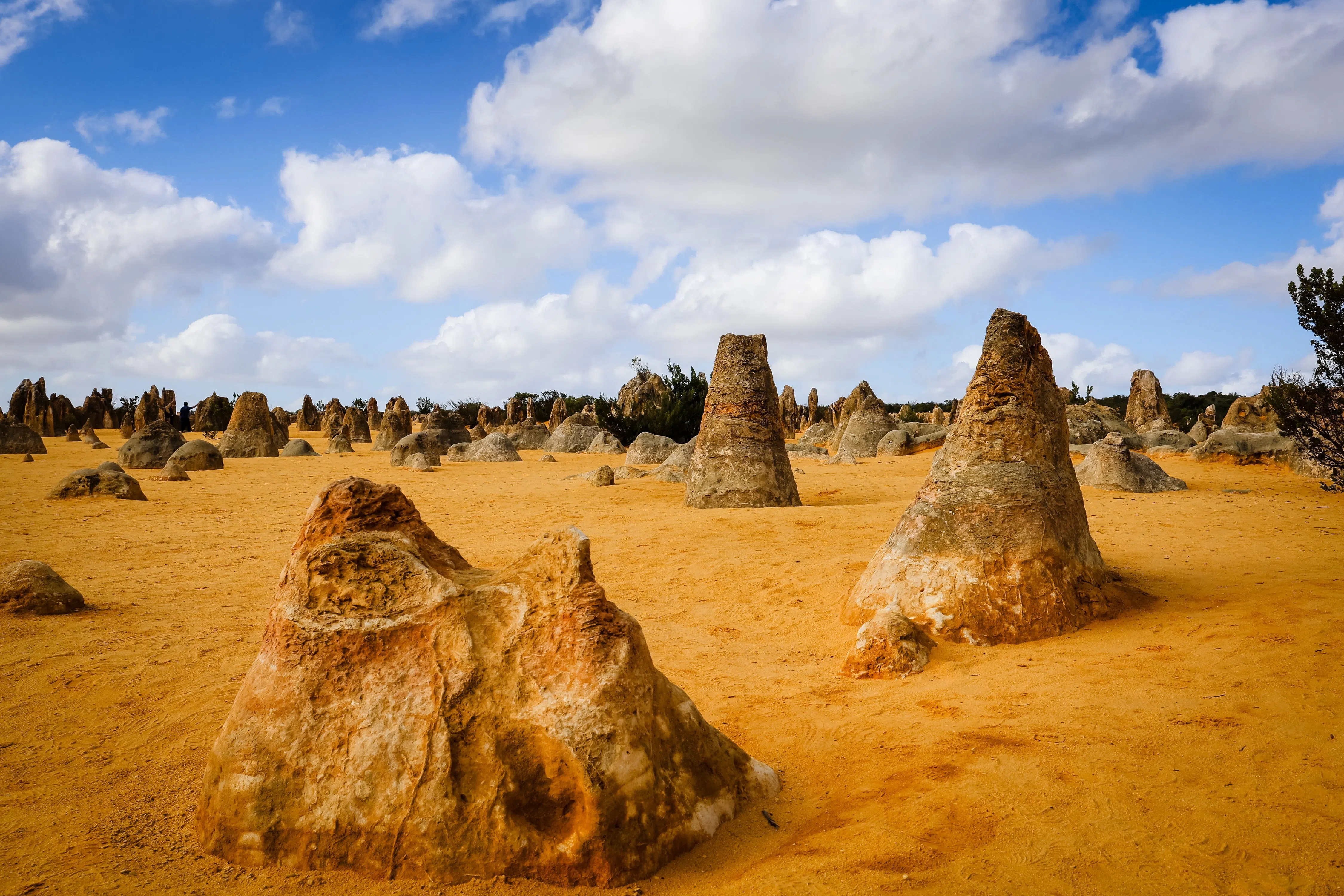
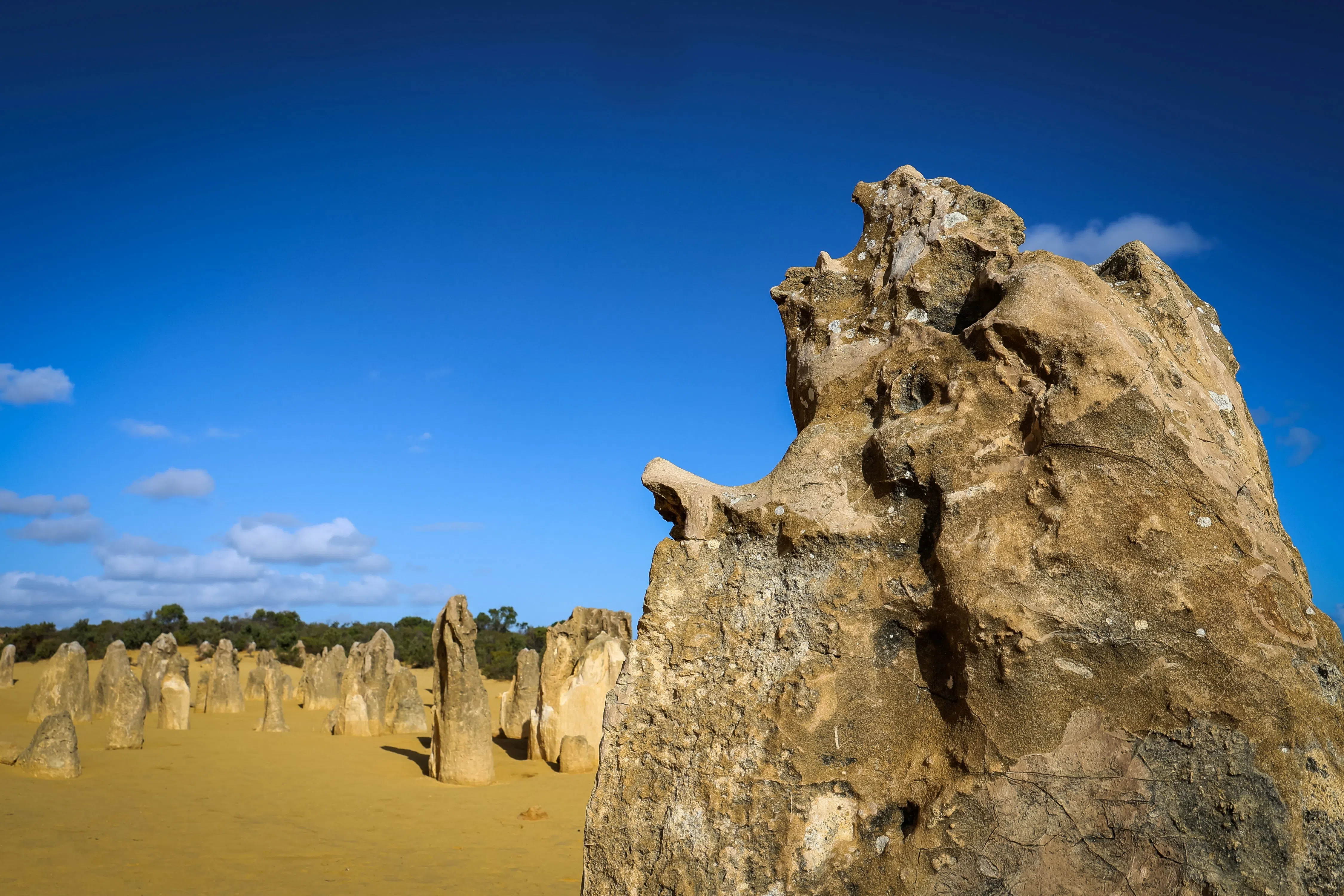
An hour’s drive north of the Lancelin dunes brings us to Western Australia’s most mysterious wilderness: the Pinnacles, deep within Nambung National Park. Thousands of limestone pillars rise from shifting golden sands, forming an extraordinary variety of arrangements. Long ages of weathering and erosion have sculpted the limestone into these pillars of different shapes. Their formation is a geological marvel spanning hundreds of thousands of years, involving marine organisms, erosion by wind and rain, and plant roots. It feels like an ancient enchanted forest frozen in time. As we move slowly through this stone forest stretching back tens of thousands of years, the wind whistling through the gaps seems to be the music of this primeval woodland.
Geraldton is our base for exploring the north of Perth. The drive there from Perth follows the Indian Ocean Drive and other roads northwards, all in very good condition. For most of the route, there is one lane in each direction, with a speed limit of 110kmh. For the vast majority of the long journey, there is no car behind us in the rear-view mirror and no oncoming traffic ahead. We drive on alone, as if the world has shrunk to the few of us in the car.
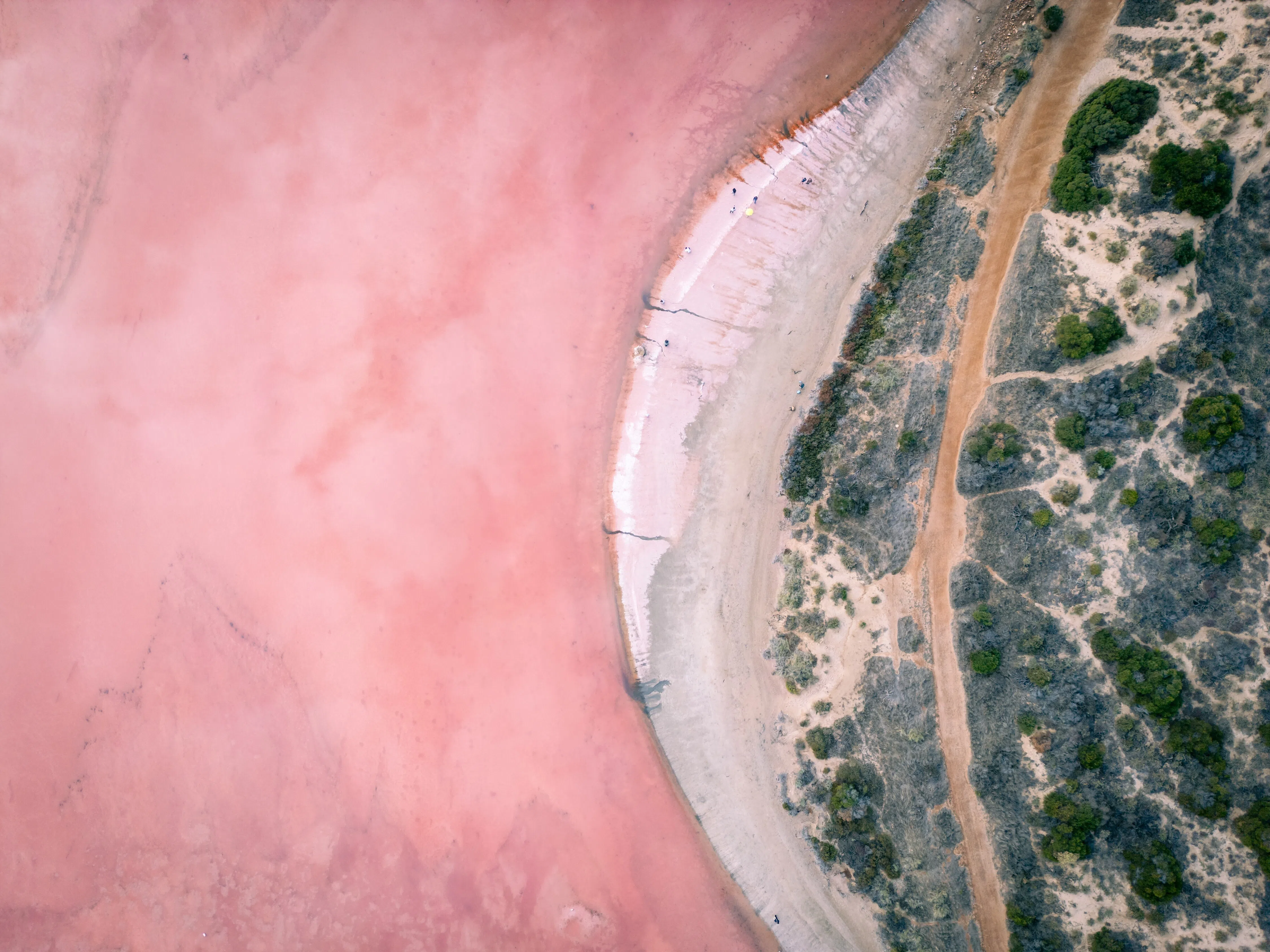
A pink lake and a window of layered rock
After a night settling in and resting in Geraldton, we turn north again, bound for the fabled dreamscape of Hutt Lagoon. Western Australia’s pink lake is a masterpiece of collaboration between nature and microorganisms. Its dreamy colour comes mainly from the abundance of Dunaliella salina algae in the water. The lake’s beauty is highly dependent on the weather: only the strongest sunlight brings out its most intense pink. Our luck could not be better. By the lakeshore, white clouds dot a blue sky and the sun shines brilliantly. The water glows pink, while fine salt crystals pile up along the shore like pink snow. Seen from above, the pink surface carries reflections of a few fluffy white clouds, sharply contrasting with the lush green wilderness around it.
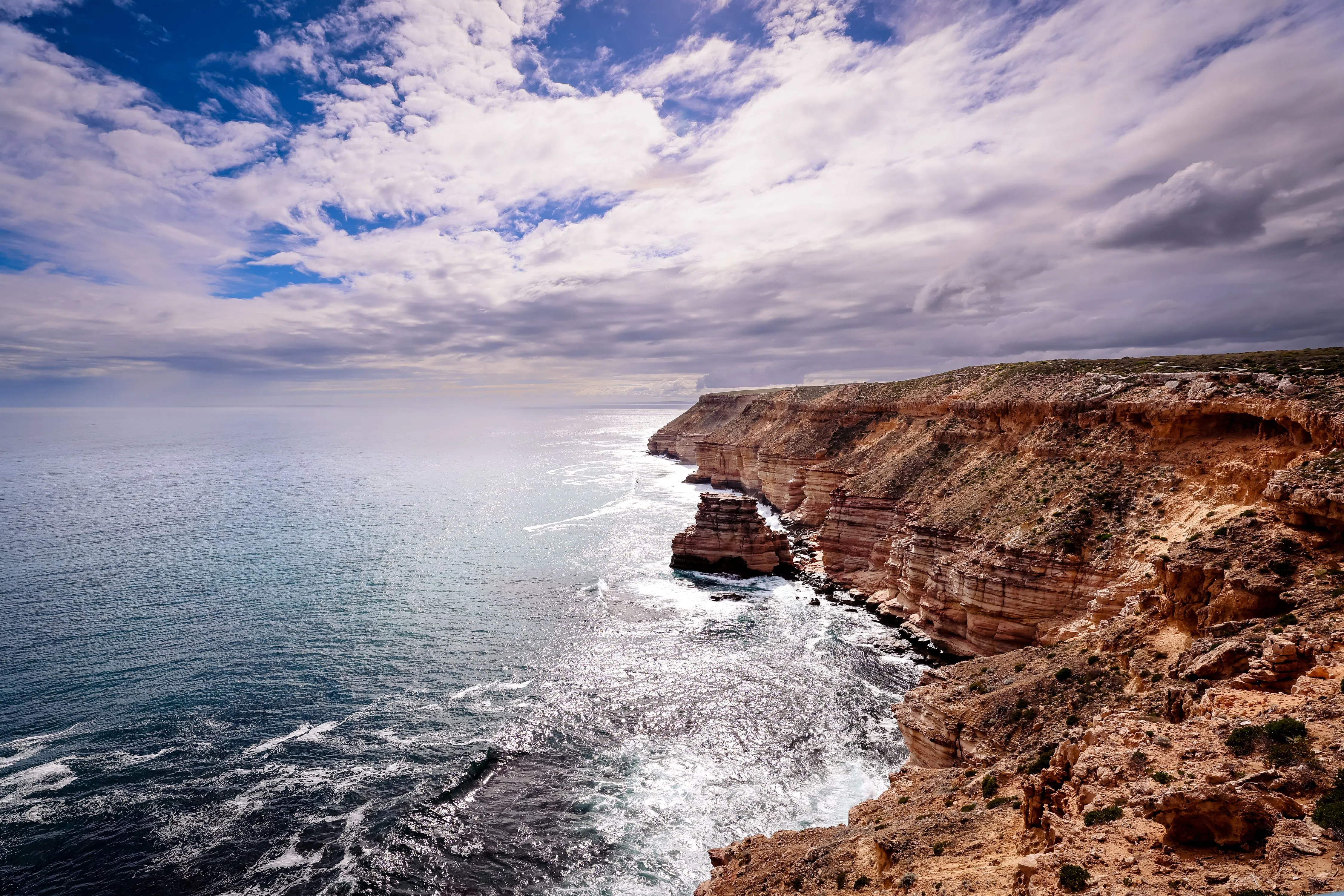
On our way through Kalbarri National Park to Nature’s Window, an experienced traveller in our group finds two hidden spots that were not on our itinerary: Castle Cove and Natural Bridge. Facing the boundless blue Indian Ocean, surrounded by coastal cliffs, oddly shaped rocks and steep slopes, we are instantly reminded of the scenery near Melbourne along the Great Ocean Road, home to the Twelve Apostles. You could spend a whole day slowly walking this stretch of coast. Compared with the celebrated Great Ocean Road, it offers an almost extravagant tranquillity: no throngs of visitors, no jostling crowds with cameras and long lenses. You can have an entire cliff and a vast sweep of ocean to yourself.
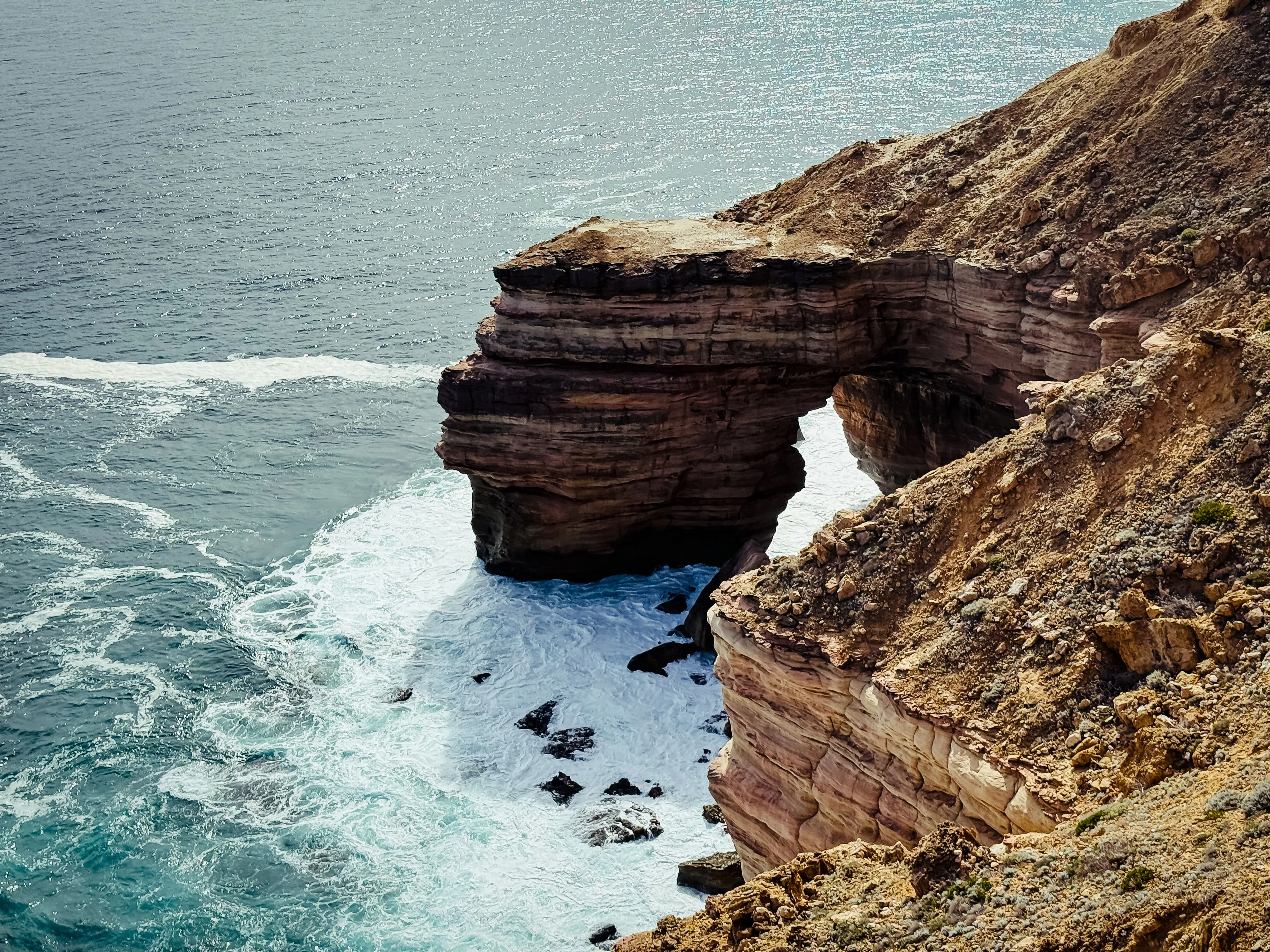
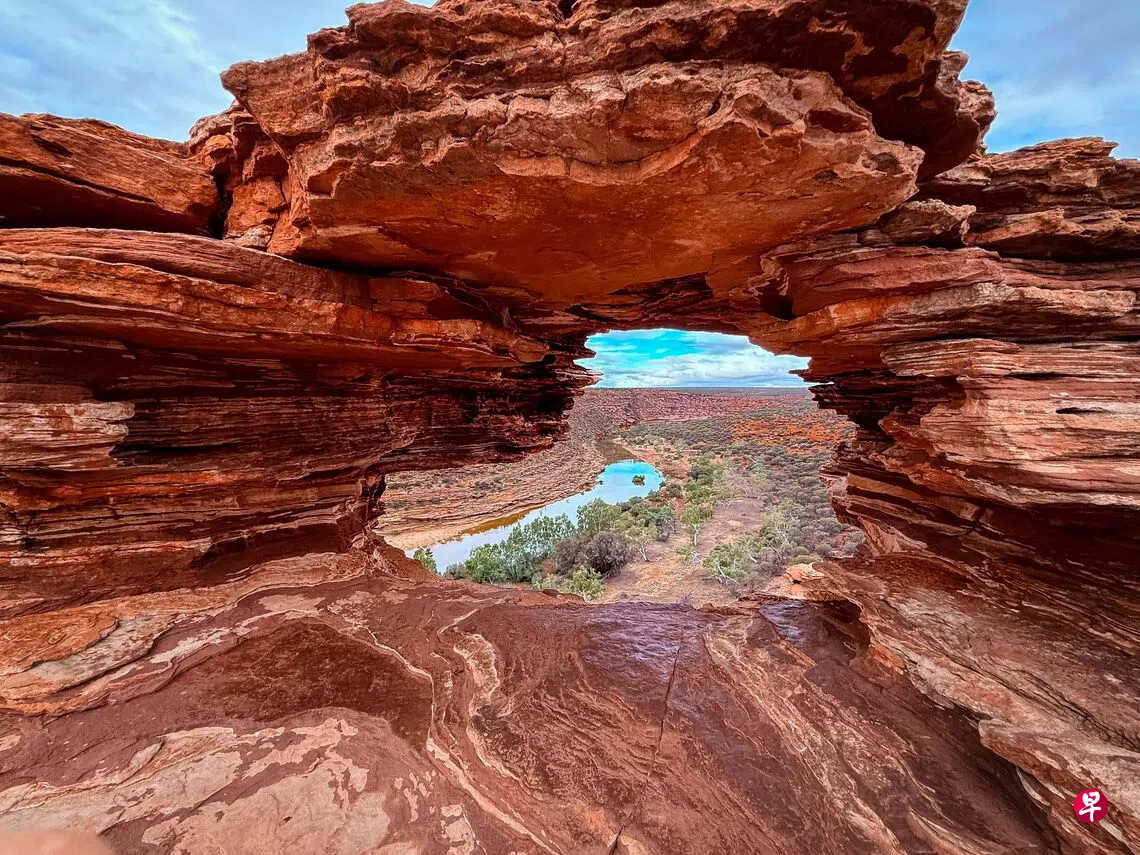
Who first discovered the masterpiece that is Nature’s Window in this seemingly endless wilderness? Beyond the park’s entrance and fee station, there is still a drive of nearly 30km. After parking, we follow the signs down into the gorge, surrounded by red sedimentary rock formations and rugged wilderness. Without signs and a map, Nature’s Window would be hard to find.
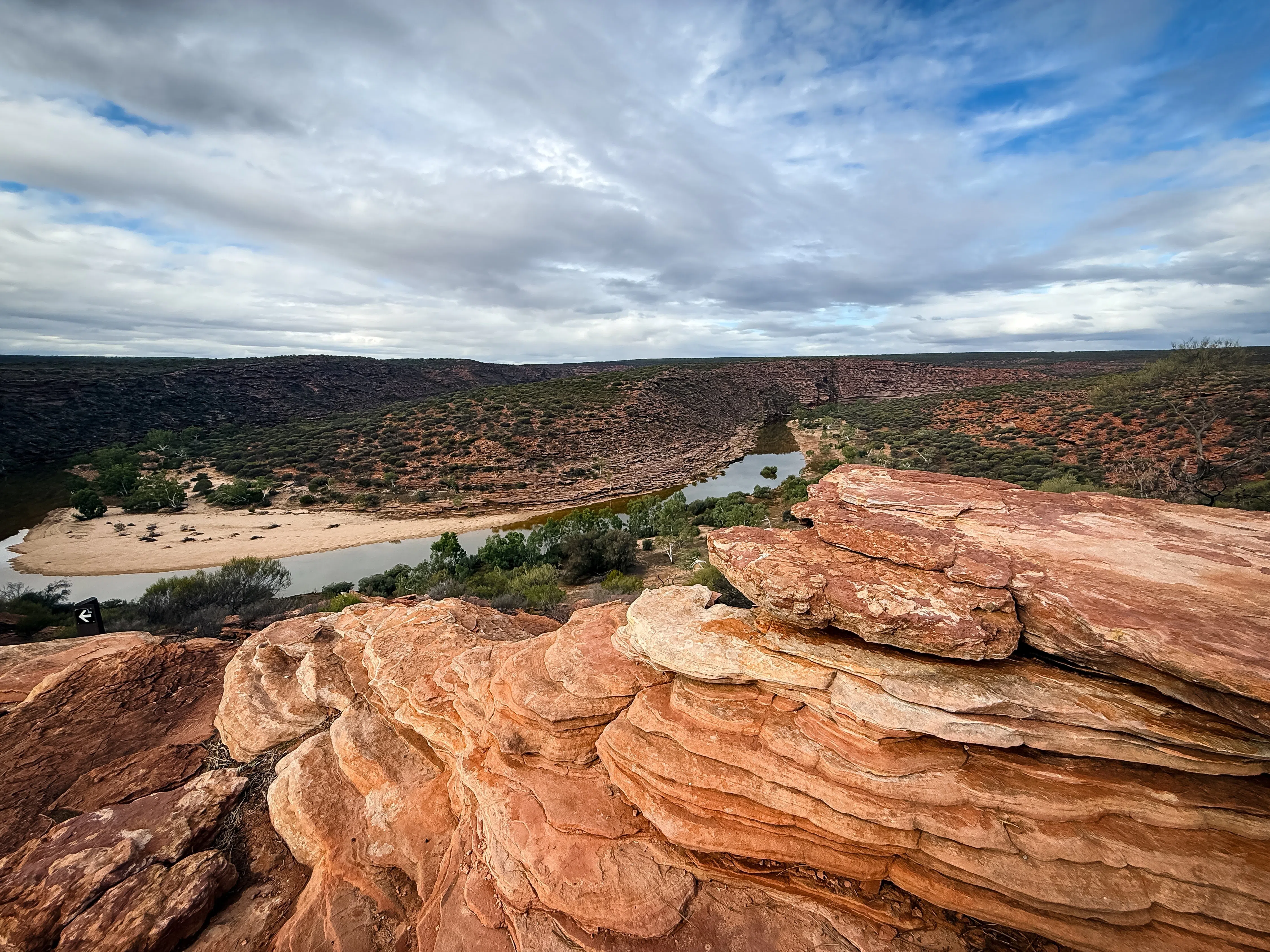
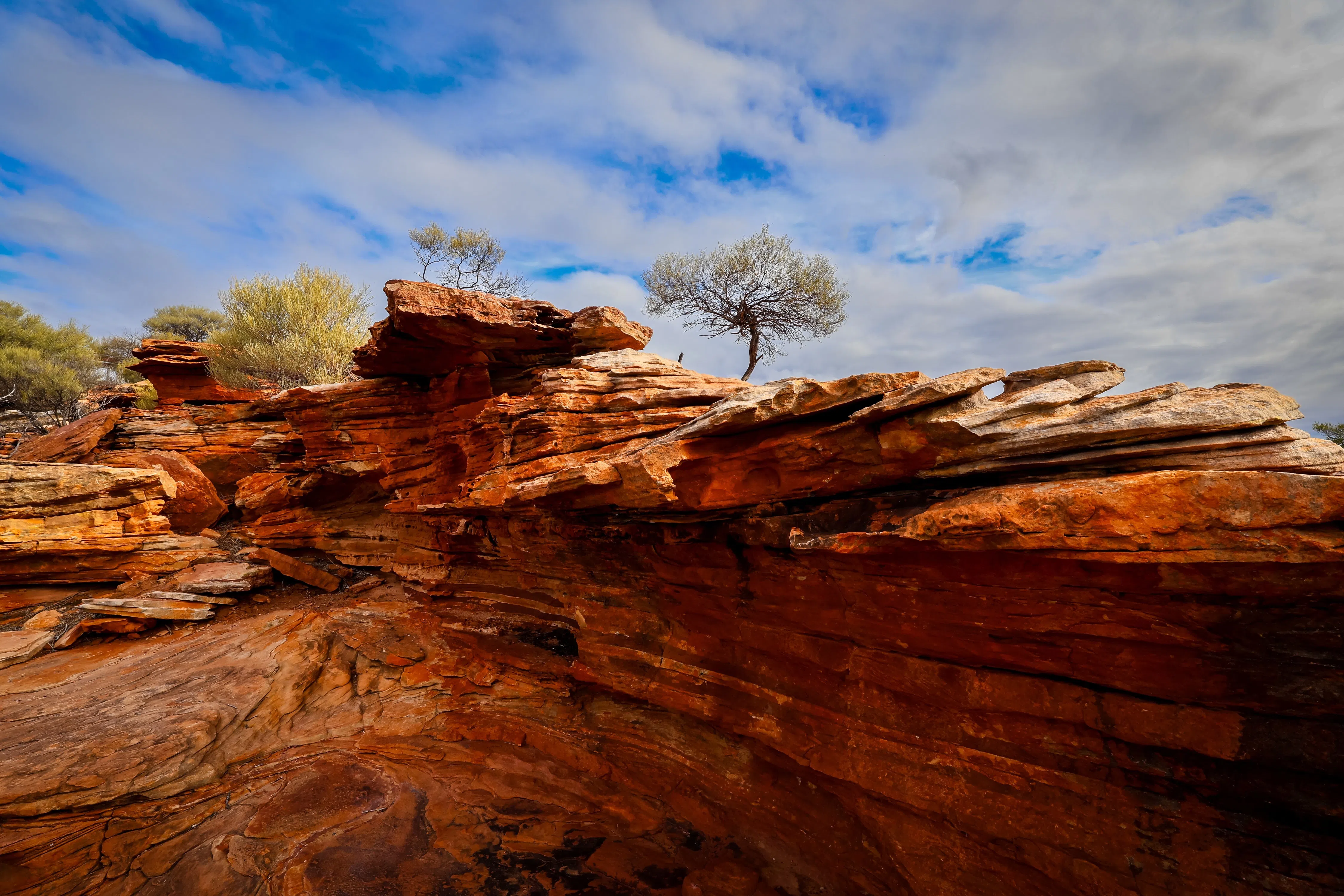
After a 500m walk, Nature’s Window finally comes into view. It resembles a layered cake lovingly baked by nature, its bands of rock stacked tightly upon one another. In the middle of this “cake”, the wind has hollowed out a huge opening, creating a natural picture frame. The scene within changes with the shifting cloud shadows and the seasons. There are not many visitors. We queue for photographs, and our turn comes quickly.
AI cannot replace being there
Western Australia’s flies are notorious, but up till that point had barely bothered us. At Nature’s Window, they seem to gather like migratory birds, swarming everywhere. Many visitors have come prepared with fly nets over their faces. Empty-handed, we can only wave our arms about comically, frantically fanning away the flies in the famous “Aussie salute”. Despite all that waving, our clothes are still covered with these uninvited, overfriendly guests. We hear that in summer, the flies are even worse. As we speed along the highway, low-flying flies strike the windscreen like raindrops, leaving streaks across the glass.
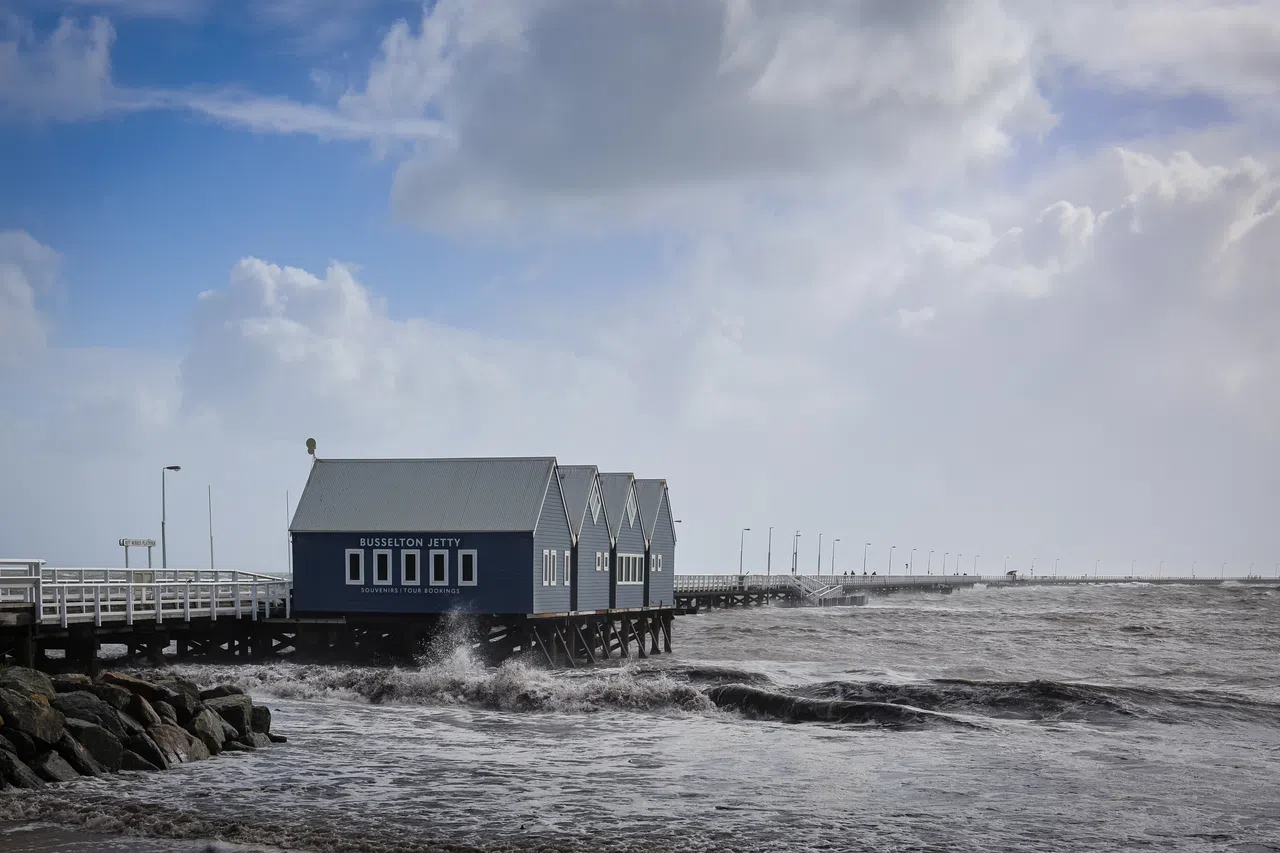
Over the next two days, the weather finally loses the good temper it has maintained for so long, unleashing heavy rain, fierce winds and everything else it can muster. On the way south to Busselton, dense storm clouds stretch across the sky like a vast black cloth, with torrential rain pouring from the thickest patches. Moments later, violent gusts tear a gap in the covering, revealing half the face of the blue sky and letting the sunshine through again. Between spells of wind and rain, a rainbow appears unexpectedly. Wind, rain and sun all at once: the heavens seem unable to make up their mind. Strong crosswinds buffet us repeatedly on the drive, putting our driving skills to the test. At Busselton, huge waves pound the shore and the wind makes it hard to stand. On the 1.8km jetty, the little train is out of service. We ask a member of staff and are told the day’s highest wind speed has exceeded 100kmh.
Artificial intelligence is making irreversible inroads into every aspect of our work and lives, especially anything that can be digitised. But it can never replace the first-hand experience of travelling. Travel is about being there. It is the joy of a successful run down Lancelin’s white dunes and the disappointment of a failed one; seeing for yourself the strange pink lake, as though a box of blusher has been tipped into the water; performing the Aussie salute while looking through the frame of Nature’s Window at the wild landscape beyond. These vivid sensory experiences are etched deep in our minds.
When we grow old, they will be chapters of our lives that we revisit, more tangible than digital photographs or videos. The world is so vast, and nature’s masterpieces await us in person.
