

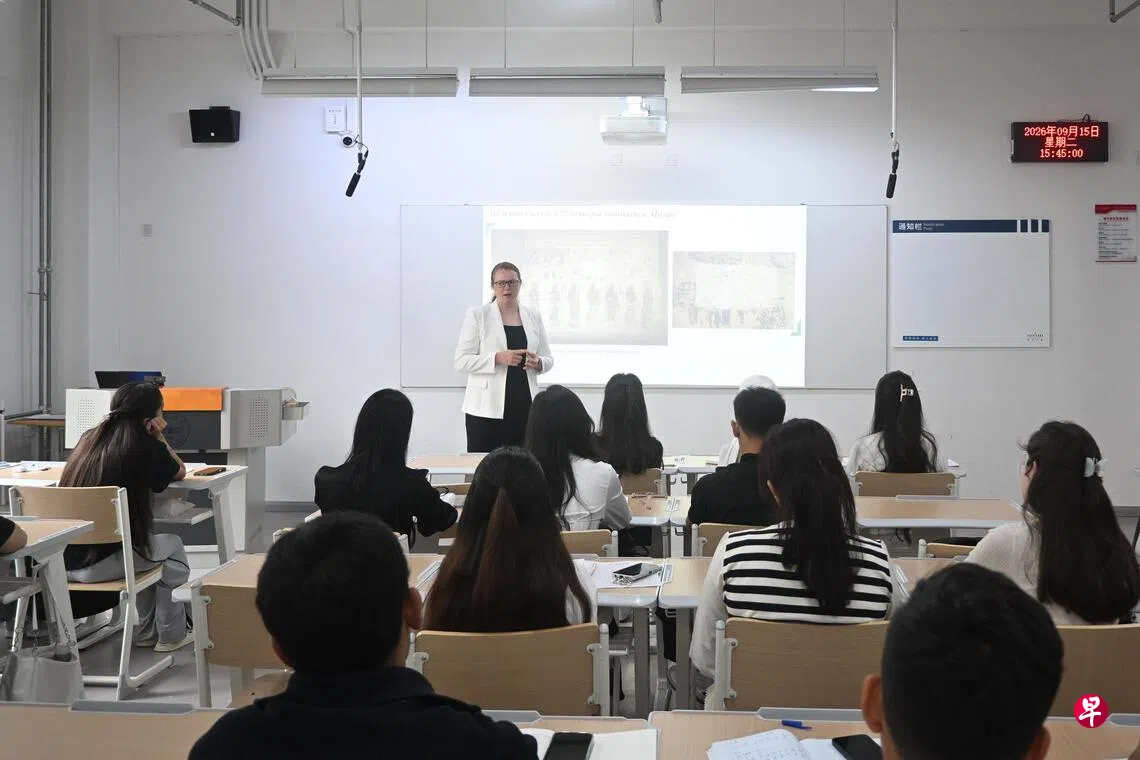
A student looking down may be scrolling on a phone or dozing off — or taking notes and looking up information. One looking towards the front of the classroom may be listening attentively — or daydreaming. When movements captured by cameras are converted into a “heads-up rate”, can a single figure really tell us whether students are paying attention?
The controversy began with a notice Nanjing University recently sent to some students. The university planned to use its smart classroom system, upgraded over the summer break, to record attendance in selected courses for a week.
A screenshot of the smart classroom system subsequently circulated online. Alongside a live view of the classroom, it displayed information including latecomers, attendance rates and heads-up rates. A lecturer also said in a class group chat that attendance would directly affect continuous assessment marks and could even result in students’ examination results for the course being invalidated.
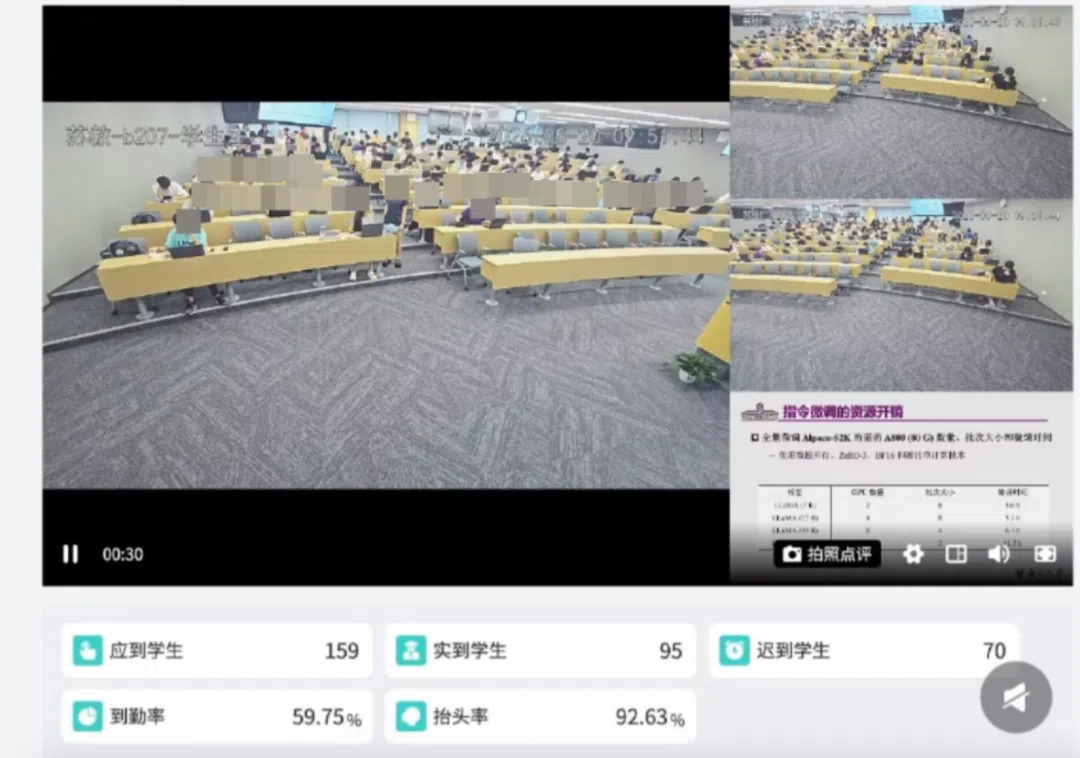
According to Cover News, a student surnamed Tian said the screenshot had been shared in a faculty group chat during a trial of the system at the Suzhou campus in May this year. Attendance checks then lasted two weeks, with student counsellors mainly responsible for taking attendance and lecturers also making rounds. He said he had not felt that the system had any practical impact on classes.
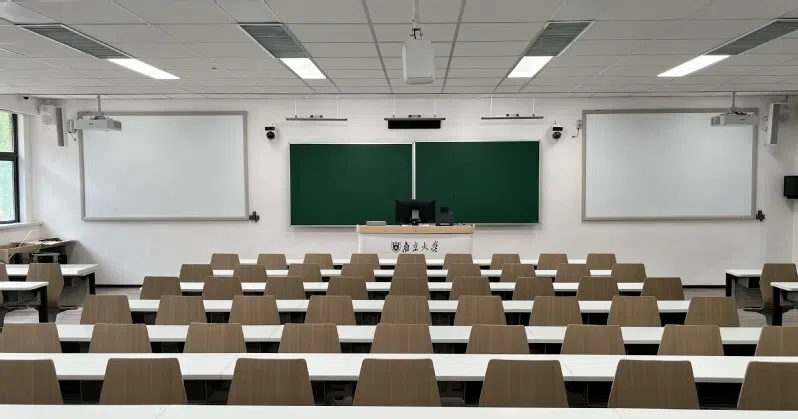
According to the contract award notice, Nanjing University’s smart classroom teaching system project covers 113 general-use classrooms at its Xianlin campus. The contract was worth more than 31.52 million RMB (S$6.03 million). Technical requirements listed in the tender documents included face detection, facial recognition, artificial intelligence (AI) headcounts and AI calculation of heads-up rates.
After the information emerged, topics such as “smart classroom privacy” and “students have no privacy” began trending on Nanjing University’s campus forum. Some students said that although they had yet to experience the system in operation, the university had not sought their consent beforehand. They worried that once facial recognition was enabled, the university and the technology company could obtain their facial data.
Others said that even if the system monitored only “heads-up rates”, the thought that their every move in class might be recorded would still put them under pressure. One student who had graduated from a strictly run private secondary school in northern Jiangsu said even his former secondary school teachers would not review classroom surveillance footage. In his view, the teaching quality of some courses already needed improvement, and using the “heads-up rate” to impose strict controls on students was inappropriate.
As “Nanjing University heads-up rate” began trending on Weibo, some internet users questioned why students at a leading university such as Nanjing University still needed to be subjected to such restrictions. Others asked whether looking down to take notes or organising key points on a computer “would be counted by the system as not paying attention”. Another internet user said their university had installed a smart classroom system five years ago, but lecturers did not normally use it to check on students, preferring to “spare students embarrassment”.
Responding to the public debate, Nanjing University’s undergraduate school and its information technology development, management and service centre issued a statement on Wednesday (4 November). They explained that the smart classroom upgrade had undergone expert assessment and an open tender, and was intended to improve classroom audio and video facilities and support livestreamed classes, interaction across campuses and playback.
The university said the attendance statistics it planned to pilot this semester were intended to inform teaching reforms and course development. Online claims that the data collection was intended to satisfy inspections by higher authorities, or that attendance rates were linked to continuous assessment marks, were untrue.
On privacy, the university said the system would not collect biometric information such as facial data or perform facial recognition during teaching without authorisation. It had stopped calculating heads-up rates. The image circulating online was a screenshot taken by an individual during online teaching supervision at the Suzhou campus in May this year.
From taking attendance to counting raised heads
Although Nanjing University says its smart classroom system no longer calculates heads-up rates, using cameras to monitor university classes is nothing new. In 2019, China Pharmaceutical University piloted facial recognition systems in two classrooms to check attendance and observe students’ attentiveness in class.
Last year, Jiangnan University introduced an “AI teaching analysis system” that could already track four classroom metrics: attendance, heads-up rates, front-row seat occupancy and interaction rates.
Why do universities want to know whether students are looking up? Writing on Friday (6 November), Chen Zhiwen, editor-in-chief of China Education Online, noted that the expansion of higher education had given more people the opportunity to attend university, but students varied in their ability and habits when it came to independent learning. Some universities had therefore adopted secondary school management practices, from strict attendance checks and requiring students to sit in the front rows to scheduling morning and evening self-study sessions. In his view, while course design and teaching standards were certainly open to scrutiny, students also had to take responsibility for their own learning.
Attendance figures can tell lecturers how many students have turned up. But moving from recording who is present to judging whether those present are listening attentively requires another layer of inference. Even if a system can tell that a student is taking notes, it is hard to know how much they have understood. Conversely, a class in which everyone is looking up does not necessarily mean students are interested in the content or that the lecturer is teaching well.
Once the “heads-up rate” becomes an assessment criterion, students will adjust their behaviour in response. Reporting last year, Southern People Weekly found that some students had been reminded to keep their heads up in class no matter what because cameras had been installed. A commentary on Caixin’s website also noted that if teachers and students were busy meeting targets, classes could easily stray from the purpose of teaching, with “the result being formalism used to counter formalism”.
How far should university rules go?
The controversy at Nanjing University has also brought another question to the fore: how much control should universities exercise over students? In fact, even without cameras, everyday rules at some universities already leave students feeling as though they are back in secondary school.
In April this year, Wanjiang University of Technology required first- and second-year students to attend group self-study sessions in designated classrooms, starting at 7.30am on weekdays, with evening self-study scheduled on five days each week. Arriving at least 10 minutes late or leaving at least 10 minutes early could be recorded as an unauthorised absence for the corresponding class hours. Anhui Polytechnic University also issued a notice last year requiring lecturers to have students place their phones in classroom phone pockets before lessons. Phones could be used only when genuinely needed for the course. Inappropriate phone use could be factored into students’ continuous assessment marks, while lecturers’ enforcement of the phone-pocket rule was also included in teaching quality assessments.
Some rules extend beyond the classroom. Under the undergraduate leave policy published by Shanghai Normal University’s College of Chemistry and Materials Science, students seeking leave because of exceptional personal or family circumstances must first obtain confirmation from their parents, followed by approval from their student counsellor.
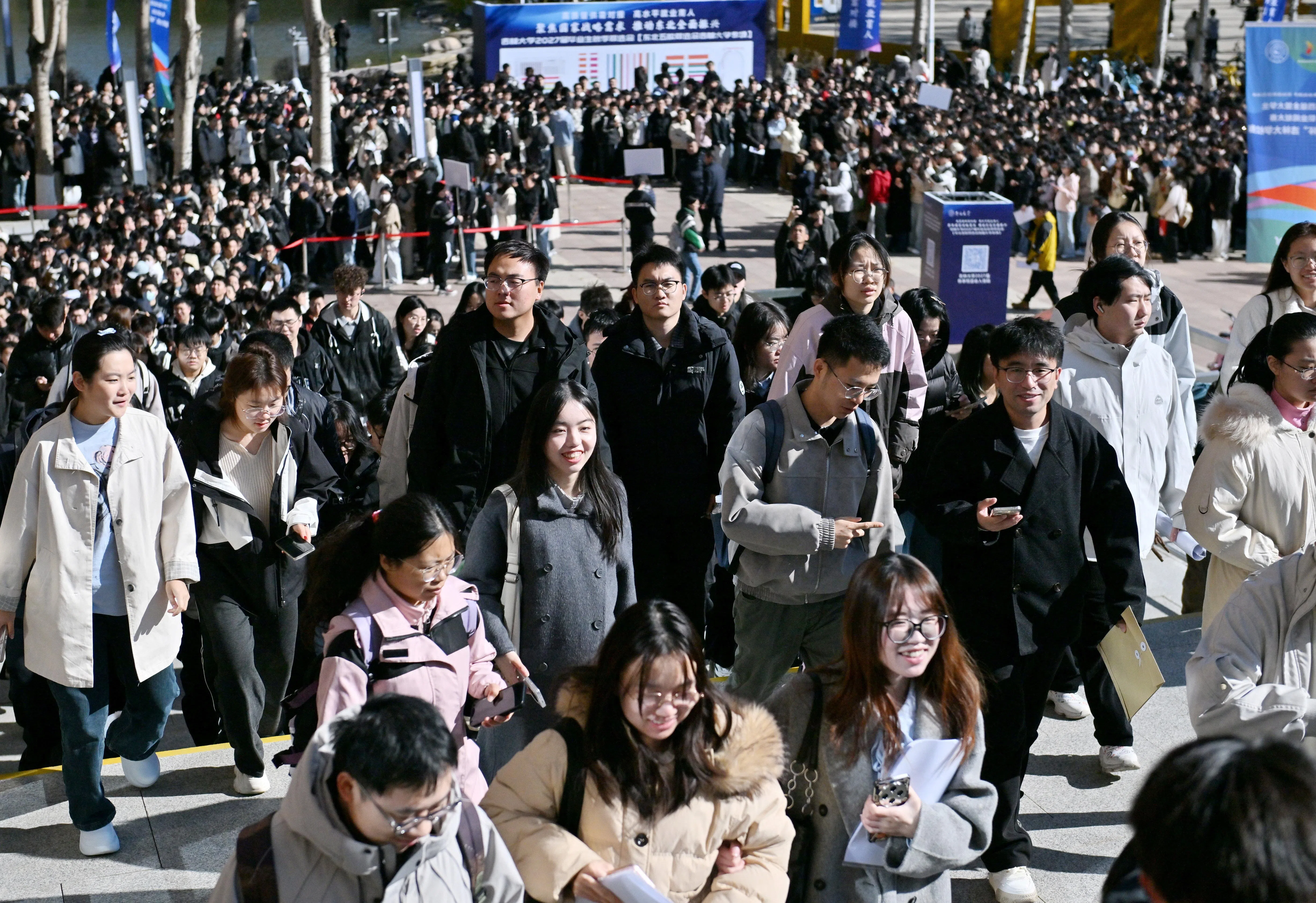
From centrally scheduled self-study sessions to parental confirmation for leave requests, some university students feel their institutions micromanage their lives, describing themselves as being “kept in captivity”. Some lecturers, however, believe certain students genuinely lack self-discipline. With parents also wanting universities to exercise more supervision, institutions end up drawing up such detailed rules.
How closely universities should regulate student life depends on what problems the rules can solve. Laboratory classes require students to be present for practical work, and group discussions depend on everyone taking part, so attendance requirements have their place. But if universities dictate even which row students sit in, when they study independently and where they look during lectures, students have less room to organise their own learning.
Cameras can record whether students are looking up, but footage alone can hardly reveal how much they have understood or whether they have formed views of their own. If universities devote too much attention to raising the “heads-up rate”, they risk overlooking something more important: once students leave the classroom, can they learn something new on their own?
