


Cooperation between the opposition Kuomintang (KMT) and Taiwan People’s Party (TPP) is a key focus of Taiwan’s nine-in-one elections this year. But their failure to agree on a joint candidate for Zhubei mayor, coupled with divisions within the KMT camp, has added uncertainty to the race in Hsinchu County. The longtime KMT stronghold could now see a change of governing party.
A Zhubei resident, Chiu, who has been a KMT member for decades and leads a grassroots party group, recently attended a joint KMT rally for Taoyuan, Hsinchu County, Hsinchu City and Miaoli. She was worried about the race in Hsinchu County, describing Democratic Progressive Party (DPP) candidate Cheng Chao-fang as “a formidable challenger”.
She told Lianhe Zaobao (LHZB) that Cheng’s performance as Zhubei mayor over the past four years had won residents’ approval. “His work on local development has earned widespread praise.”
KMT factional rivalries give DPP an opening
Taiwan will hold its nine-in-one local elections this coming Saturday (28 November). The DPP has not governed Hsinchu County for nearly 25 years, and a complex web of local factions lies behind the contest for county magistrate.
Chu Chao-hsiang, an adjunct professor at the Graduate Institute of National Development at Taiwan’s Chinese Culture University, said in an interview that Hsinchu County had long been a KMT stronghold. Former county magistrates Cheng Yung-chin and Chiu Ching-chun represent rival local power bases that have competed for years. After Chiu served two terms as magistrate, his former deputy Yang Wen-ke succeeded him, keeping the same faction in power to this day.
Cheng Chao-fang, the DPP’s candidate for Hsinchu County magistrate this time, is Cheng Yung-chin’s son. The elder Cheng served two terms as a KMT legislator and two as Hsinchu County magistrate. In 2014, he ran as an independent against Chiu, who was seeking re-election, with support from the DPP. That marked the start of the Cheng family’s cooperation with the DPP camp.
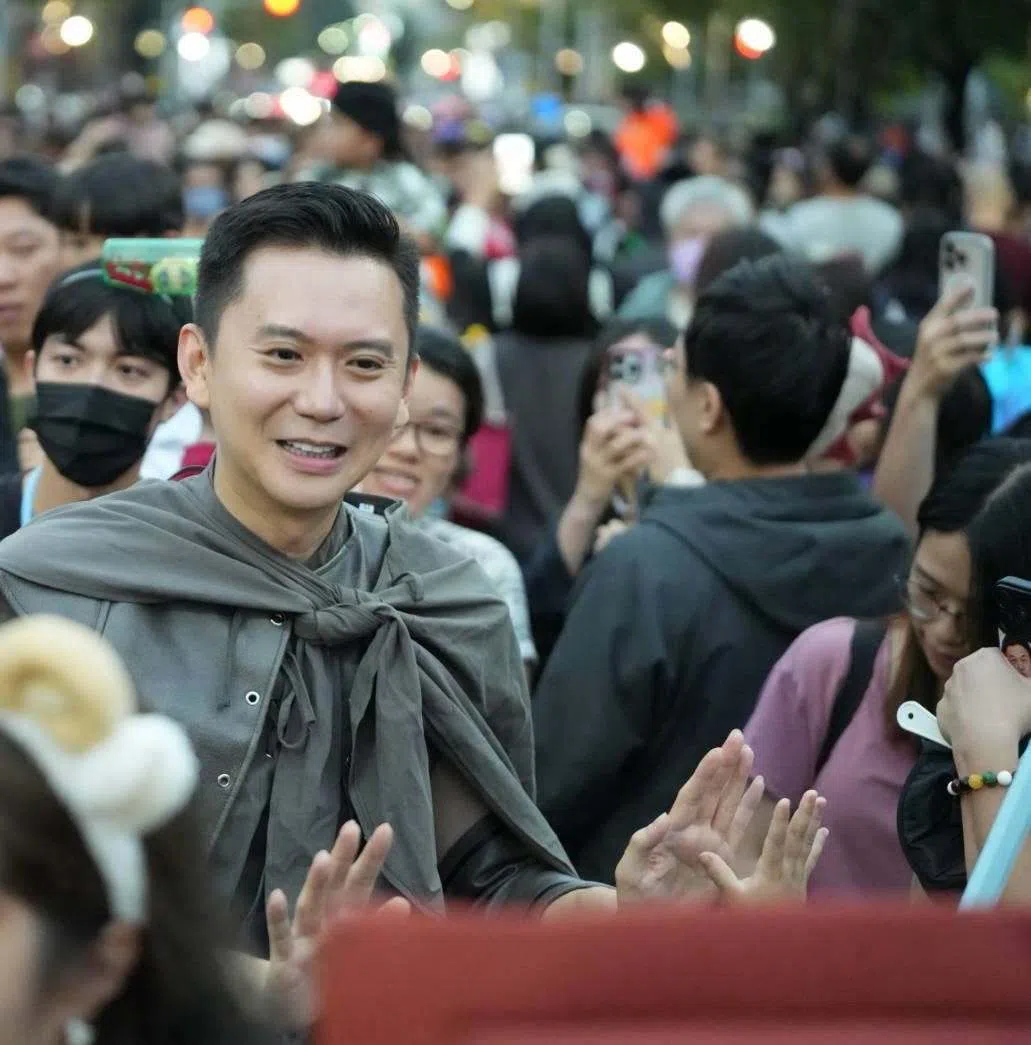
His family’s established local political base has made Cheng Chao-fang a key candidate in the DPP’s bid to take control of Hsinchu County. President Lai Ching-te, who also chairs the DPP, repeatedly urged Cheng to run for county magistrate, but he accepted the party’s nomination only in June this year.
Chu said the DPP lacked other suitable candidates with a comparable local base. “The Cheng family’s roots are fundamentally in the KMT camp.”
By contrast, KMT nominee Hsu Hsin-ying lacks support from traditional local factions. In her bid to win the party primary, Hsu repeatedly met TPP founding chairman Ko Wen-je and current chairman Huang Kuo-chang to seek their help. She eventually secured the KMT nomination by narrowly defeating Deputy County Magistrate Chen Chien-hsien, who had the backing of incumbent magistrate Yang Wen-ke’s faction.

Chen Shih-min, a professor of political science at National Taiwan University, noted that Chen Chien-hsien had long chaired the KMT’s Hsinchu County chapter, served as county council speaker and managed Yang’s 2018 campaign for county magistrate. He is familiar with local clan associations, temples and factional organisations, and commands considerable grassroots mobilisation power.
After losing the primary, Chen Chien-hsien held back from endorsing Hsu and recently went so far as to publicly back TPP Zhubei mayoral candidate Chiu Chen-yuan.
Chen Shih-min said this showed that Chen Chien-hsien had openly fallen out with Hsu and had no intention of campaigning for her, dealing a significant blow to her prospects. “It means the KMT’s organised voting blocs in Hsinchu County outside Hsu’s faction have not been brought on board, and may not even want to vote for her.”
Chu offered a different interpretation. He said Chen Chien-hsien was close to Hsinchu County Council Speaker Chang Chen-jung. By extending goodwill to Chiu Chen-yuan, Chen hoped to enlist Chiu’s help in securing support from those elected as councillors representing Zhubei for Chang’s re-election as speaker.
Chu said personal networks in local elections were complex. “Party lines are not as clear-cut as they appear on the surface.”
Ko Wen-je’s stance could sway TPP supporters’ votes
Besides uniting her own party, Hsu must also contend with the challenges arising from the collapse of KMT-TPP cooperation in Zhubei.
Zhubei borders Hsinchu Science Park and has benefited from the growth of the high-tech industry, drawing large numbers of technology professionals and young families. Its population has exceeded 220,000, making it Taiwan’s most populous county-administered city.
Chu said the TPP hoped to use the Zhubei mayoral election, together with Kao Hung-an’s political base in Hsinchu City, to establish a firmer foothold in the greater Hsinchu area. But Zhubei is also territory that the KMT’s local factions are reluctant to relinquish.
Hsu needs the TPP’s support, but cannot demand that local factions give up the KMT’s right to nominate a candidate for Zhubei mayor. “That is really beyond her political clout,” Chu said.
With talks on a joint candidate falling through, the Zhubei mayoral election has become a three-way contest, with the KMT, DPP and TPP each fielding a candidate. How TPP supporters, nicknamed “little grass”, will vote in the county magistrate election has become another source of uncertainty.
Hsu has reached out to the TPP camp. She recently attended the opening of a TPP county council candidate’s campaign headquarters, where she interacted with Ko’s mother, Ho Jui-ying, in the audience.
Chu interpreted the interaction as a sign that Ko did not oppose Hsu, though it fell short of an open endorsement. “If TPP supporters want to vote for Hsu, he can accept that.”
But Ko said the next day that his mother had merely attended at someone’s invitation and chatted with people, and that the encounter should not be read as having too much political significance.
Ko attended a TPP rally in Taipei on Saturday (21 November) evening, sharing the stage with KMT Taipei Mayor Chiang Wan-an, who is seeking re-election. By contrast, Chu noted, Ko had yet to appear at any of Hsu’s events, suggesting he still had reservations about her.
However, a week before polling day, members of Hsu’s campaign team were taken away by police and prosecutors, and computers at her office were seized. Hsu questioned whether the judicial authorities were interfering in the election and went to the Hsinchu District Prosecutors Office on Friday (20 November) to announce a hunger strike in protest.
The Hsinchu District Prosecutors Office clarified that the case arose from a complaint by DPP Zhubei mayoral candidate Tseng Sheng-kai over the online circulation of fabricated sexual images. It said police and prosecutors were investigating in accordance with the law, stressing that the searches were unrelated to any particular candidate or political activity and did not constitute judicial interference in the election.
Chu said TPP supporters were particularly hostile to what they regarded as “judicial interference in elections” because Ko was embroiled in legal cases. A judicial controversy so close to polling day could stir emotions among some of them, prompting those who had not planned to vote to turn out. Those votes would be more likely to go to Hsu. Still, he believed the overall impact on the election would be limited.
Nathan Batto, a research fellow at Academia Sinica’s Institute of Political Science, recently cautioned in an article that Ko’s 35.6% share of the presidential vote in Hsinchu County in 2024 did not mean all those voters were committed TPP supporters. Many were swing voters who had to be won over afresh at each election.
He noted that even if the DPP ultimately won Hsinchu County, the result could not be attributed entirely to the collapse of KMT-TPP cooperation. It might instead reflect Cheng Chao-fang’s greater popularity with voters.
