

Mainland China has used several channels to reaffirm its sovereignty claim over Taiwan and its commitment to reunification on the 81st anniversary of Taiwan’s retrocession. Taiwan Affairs Office director Song Tao reiterated the mainland’s confidence in defending national sovereignty and territorial integrity, while military media stressed the need to be “ready to fight at any time and able to win at any time”.
Academics interviewed said this year’s commemorations continued the mainland’s existing narrative on Taiwan, while giving prominence to anti-Japanese rhetoric and preparations for war. However, the military’s high-profile statements do not necessarily signal an escalation in action; the frequency and scale of exercises remain to be seen.
Sunday (25 October) marks the 81st anniversary of Taiwan’s retrocession. On this day in 1945, Taiwan was handed over to China after 50 years of Japanese colonial rule. Last year, the mainland’s National People’s Congress Standing Committee voted to designate 25 October as Taiwan Retrocession Day, after which the authorities held a high-level commemoration of the 80th anniversary in Beijing. Some analysts said at the time that the mainland’s narrative on Taiwan was shifting towards advancing reunification.
This year’s commemorations were smaller than last year’s high-level events that marked the milestone anniversary. A symposium marking the 81st anniversary of Taiwan’s retrocession was held in Fuzhou, Fujian province, with a speech by Song Tao, director of both the Communist Party of China Central Committee’s Taiwan Work Office and the State Council’s Taiwan Affairs Office.
According to Xinhua, Song explained how Taiwan Retrocession Day demonstrated the mainland’s firm confidence in defending national sovereignty and territorial integrity. He called for resolute opposition to separatist thinking for Taiwan independence and interference by external forces, firm support for patriotic forces in Taiwan that favour reunification, and progress towards national reunification.
The mainland’s military also weighed in. An article published in the PLA Daily on Sunday quoted the late paramount leader Deng Xiaoping’s remarks in 1978: “We need two hands for resolving the Taiwan question, and neither approach can be ruled out. We should strive to use the right hand to achieve peaceful liberation, and the right hand will probably need to exert more strength. If that really does not work, we will still have to use the left hand — military means.”
The article stressed that every effort must be made to achieve peaceful reunification, but the strategic capability to advance reunification through military force must also be strengthened, to ensure the military is “ready to fight at any time and able to win at any time”.
Jun Zhengping, a new media outlet under the PLA Daily, went further, accusing Taiwan President Lai Ching-te of “deliberately constructing a so-called ‘Japan-fawning view of history’ and ‘Taiwan independence view of history’”. It said Taiwan’s future lay in national reunification.
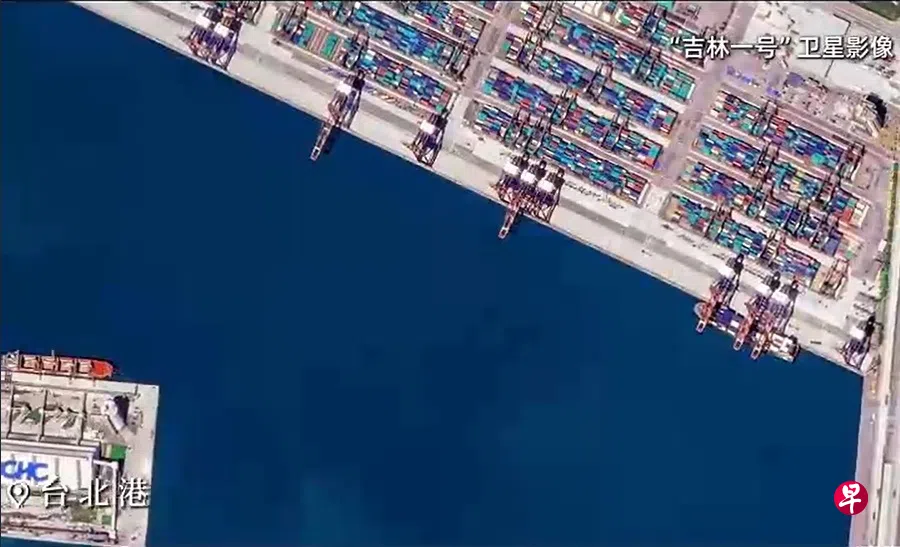
Another state media outlet, CCTV, released a video showing images of several Taiwanese landmarks taken by Jilin-1 satellites, including the Port of Taipei and the National Palace Museum.
In Taiwan, the pan-Blue and pan-Green camps take different approaches to commemorating retrocession. The ruling Democratic Progressive Party (DPP) has traditionally played it down, opposing the mainland’s use of the occasion to assert sovereignty over Taiwan. The opposition Kuomintang (KMT) places greater emphasis on it, stressing that Taiwan’s retrocession was a historic outcome of the Republic of China government’s leadership in securing victory in the war against Japan.
In a Facebook post on Sunday, KMT chairwoman Cheng Li-wun wrote that commemorating history also meant taking responsibility for shaping the future. “Taiwan’s future needs security, dignity and peace... We must be prepared to face risks, but even more importantly, we must have the determination to avoid war.”
Hung Yao-nan, director of the Centre for Cross-Strait Relations at Taiwan’s Tamkang University, told Lianhe Zaobao (LHZB) that last year, Wang Huning, chairman of the mainland’s Chinese People’s Political Consultative Conference, had stressed at the commemorative gathering that peaceful reunification was the most beneficial option. In contrast, this year’s event featured the Taiwan Affairs Office director as the main speaker, indicating that the anniversary had been downgraded and was becoming more routine.
Hung said this year’s overall messaging had shifted from peaceful reunification towards opposition to Japan and preparations for war, using accusations of “fawning over Japan” to link the DPP to Japan. The military’s language was also more explicit. He described the various departments as “coordinating civilian and military roles, using history to pave the way for force”, effectively turning the commemoration of retrocession into a pretext for legitimising military action.
However, he said the military’s high-profile statements were, to a considerable extent, more of a display of loyalty to the domestic leadership. “They do not necessarily signal an escalation in action. We need to see whether the frequency and scale of exercises change accordingly.”
Qi Dongtao, a senior research fellow at the National University of Singapore’s East Asian Institute, noted that PLA Daily had quoted Deng’s remarks to emphasise making every effort to achieve peaceful reunification. When discussing the possibility of using force, however, it mentioned only responding to major incidents involving Taiwan independence. It did not mention another circumstance set out in the Anti-Secession Law: the complete exhaustion of possibilities for peaceful reunification.
In his view, this could suggest that the mainland was placing less military emphasis on reunification by force than before, or at least that “its posture does not seem tougher than before”. Rather, peaceful reunification and reunification by force each have their own role.
