

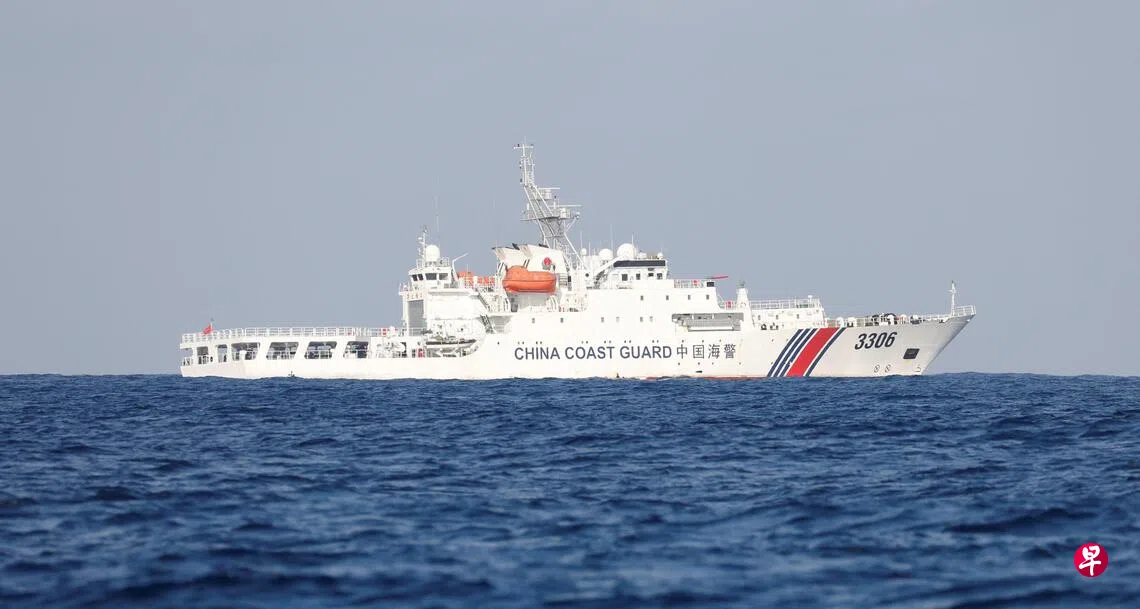
The Philippines hopes to secure a legally binding code of conduct for the South China Sea with China during its ASEAN chairmanship this year. But diplomats familiar with the talks say that despite progress in consultations between ASEAN and China, the decades-long negotiations may not be concluded this year.
Three senior Southeast Asian diplomats familiar with the negotiations said ASEAN and China concluded their final round of talks for the year last month, reaching preliminary agreement on about 80% of the provisions in the proposed South China Sea Code of Conduct (COC).
The main outstanding differences concern the geographical scope of the agreement, definitions of sensitive terms and whether the COC should be legally binding.
ASEAN and China agreed in 2002 to draft a COC for the South China Sea to prevent incidental clashes in disputed waters from escalating into a major conflict that could threaten Asia’s economy. But substantive negotiations and consultations on the core text began only around 2005, and a draft framework was not agreed until 12 years later, in 2017. Formal negotiations began in March 2018 and progress has been slow.
This year’s ASEAN summit will be held this weekend in the Philippine capital, Manila. Both the Philippines and China have said they hope to conclude the negotiations this year.
The three diplomats said that after taking over the ASEAN chairmanship this year, the Philippines initiated more meetings, at least once a month, to give negotiators more time to resolve outstanding issues. At the current pace, however, the talks will have to continue into next year, when Singapore takes over as ASEAN chair.
Manila-based geopolitical analyst Julio Amador III believes the proposed COC may not entirely prevent clashes in disputed waters in the South China Sea. But combined with other measures, such as diplomatic efforts and stronger military capabilities, it could make potential aggressors think twice before acting.
Referring to China, he said, “Restraining great powers takes a lot of effort. We cannot be a one-trick pony as a country. You need to have all the tools, whether it’s a code of conduct, whether you bring a case against China or whether you increase your military spending.”
Long regarded as a potential flashpoint in Asia, the South China Sea has become a sensitive front line in regional competition between China and the US.
The US has repeatedly said it is obliged to defend the Philippines, its oldest mutual defence treaty ally in Asia, if Philippine forces come under armed attack, including in the South China Sea. China has repeatedly warned countries outside the region, including the US, not to intervene in South China Sea sovereignty disputes, saying these should be resolved through negotiations and consultations between the countries directly involved.
