

Japan will support and lead efforts by ASEAN member states to establish a shared emergency reserve mechanism for petroleum products as early as 2027, strengthening its own economic security.
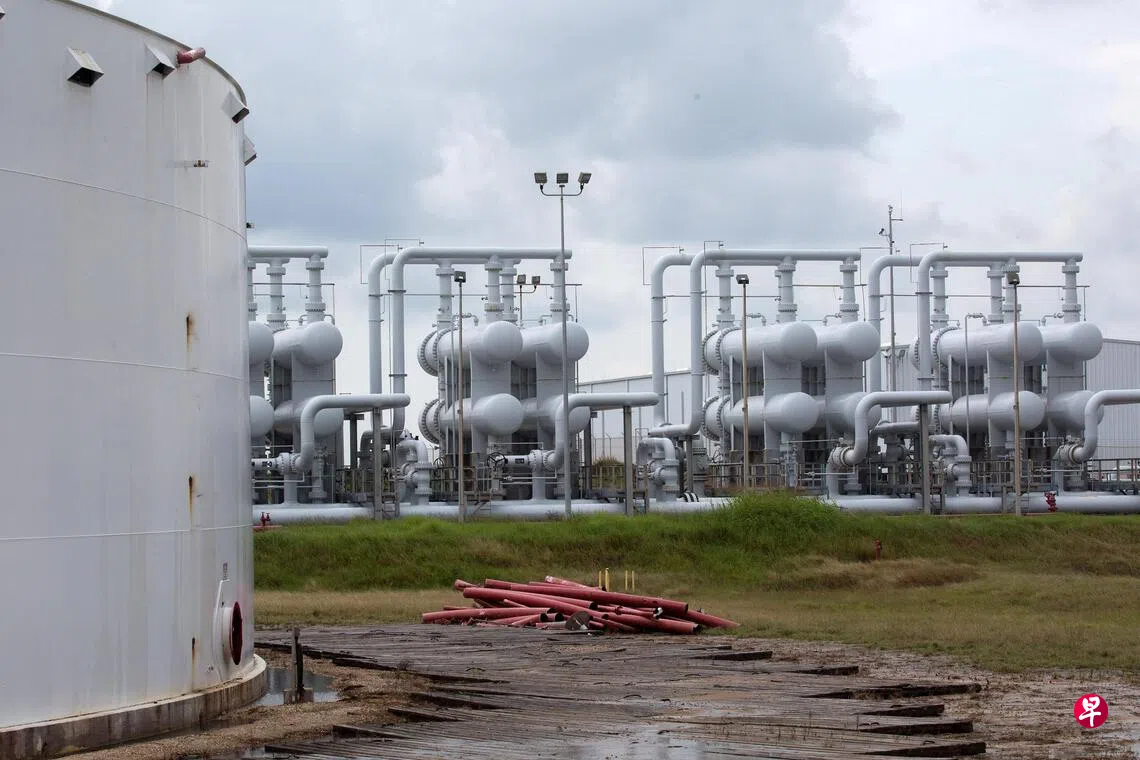
According to Nikkei Asia, the plan aims to build diesel and petrol storage facilities in Indonesia and Thailand to support ASEAN member states in emergencies. In particular, it would allow the Philippines, which relies on imports for almost all its energy needs, to buy supplies from these reserves.
A lack of oil reserves left ASEAN countries facing an energy supply crisis after war broke out in the Middle East in February this year. The Philippines, in particular, has repeatedly said it is seeking to establish oil reserves.
The report noted that Japan relies heavily on petroleum-derived products made in Southeast Asia for its supply chains and manufacturing. An ASEAN reserve system would therefore help strengthen Japan’s economic security.
The Japan-led regional oil reserve mechanism will use a certificate-based mechanism. In an emergency, countries holding certificates will have priority in buying diesel and petrol held in storage facilities in other countries.
As it requires an upfront payment, it is also known as a “ticket”-based system. Similar systems are already in use in the EU and other regions, but this would be a first for ASEAN.
Under the shared petroleum product reserve mechanism, companies that own oil storage tanks can sell the diesel and petrol they hold during normal times, the report said. In an emergency, however, countries and companies that have bought tickets will have priority in drawing predetermined quantities.
The 49th ASEAN Summit and related meetings will be held in the Philippine capital, Manila, from 15 to 18 November.
Ahead of that, a subsidiary of the Philippine National Oil Company (PNOC) will sign related letters of intent and implementation agreements with oil storage tank operators from Indonesia and Thailand at the ASEAN Business and Investment Summit on 14 November. The Philippines holds the rotating ASEAN chairmanship this year. Details such as ticket terms and prices will be determined at a later stage.
The report noted that the Economic Research Institute for ASEAN and East Asia (ERIA), an international think tank based in Indonesia and led by Japan’s Ministry of Economy, Trade and Industry, is playing a leading role in advancing the petroleum product reserve mechanism.
Laos and Timor-Leste are also reportedly considering joining. The authorities’ longer-term goal is to expand the mechanism into a shared reserve for ASEAN as a whole and extend it to other products, including crude oil.
About 80% of the crude oil and petroleum products passing through the Strait of Hormuz are bound for Asia. The Philippines is particularly reliant on the Middle East, which accounts for more than 90% of its crude oil imports.
An earlier ERIA study found that the Philippines’ oil reserves were sufficient to cover just 15 to 30 days of demand. Indonesia had even less, with reserves equivalent to 14 to 23 days of demand. This is mainly due to a lack of local storage facilities, which makes increasing oil reserves exceedingly difficult.
