

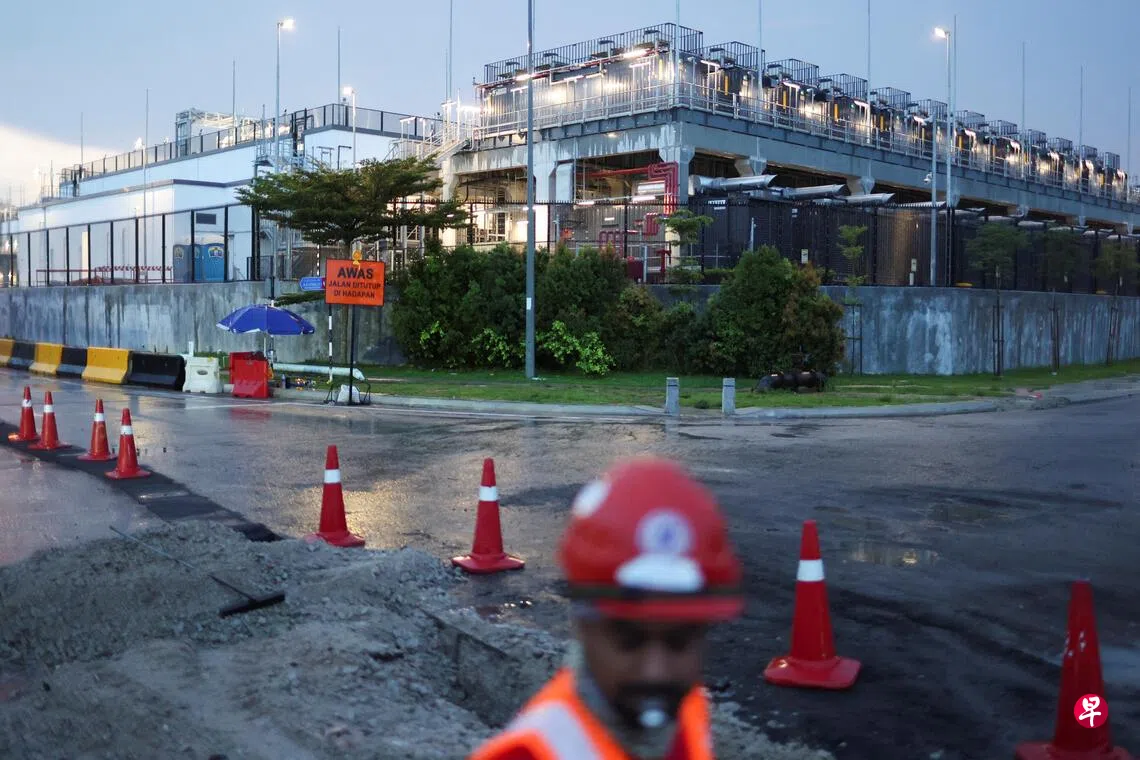
Conflict in the Middle East has heightened the risks of developing data centres there, rapidly making Malaysia, with its relatively stable political environment and power grid, a preferred destination for international technology companies expanding their data centre operations, reports say.
According to Nikkei Asia, Japan’s SoftBank Group is in talks with the Malaysian government over investing up to US$50 billion (about S$64 billion) in artificial intelligence (AI) and data centre infrastructure. The move would further expand its AI footprint in Asia following its investments in the US and Europe.
Meanwhile, Malaysian plantation giant SD Guthrie announced it will set aside a tenth of its land and tap green-energy resources to capitalise on investments related to industrial development and renewable energy assets.
Malaysian Prime Minister Anwar Ibrahim told the media on 24 October that he recently held a video conference with SoftBank Group founder and chief executive Masayoshi Son. Son confirmed plans to invest in Malaysia, with preliminary agreement on investments in Sarawak, its capital Kuching, and Peninsular Malaysia.
Anwar said this would be one of the region’s largest technology investments and would help Malaysia become an “AI nation” by 2030.
According to The Business Times, SoftBank has a US$500 billion data centre in Ohio in the US and plans to invest €75 billion (about S$107.1 billion) in France as it actively expands its AI infrastructure.
Malaysia is a regional data centre hub, having attracted RM385.7 billion in related investments from 2021 to the first half of 2026, with technology giants including Google, Microsoft and Amazon investing in the country.
Driven by this wave of investment, SD Guthrie, Malaysia’s largest landowner with more than 210,000 hectares of freehold land, plans to convert some land with lower palm oil yields to industrial use to capitalise on the data centre investment boom. The group expects industrial development to account for 30% of its total revenue by the end of 2030.
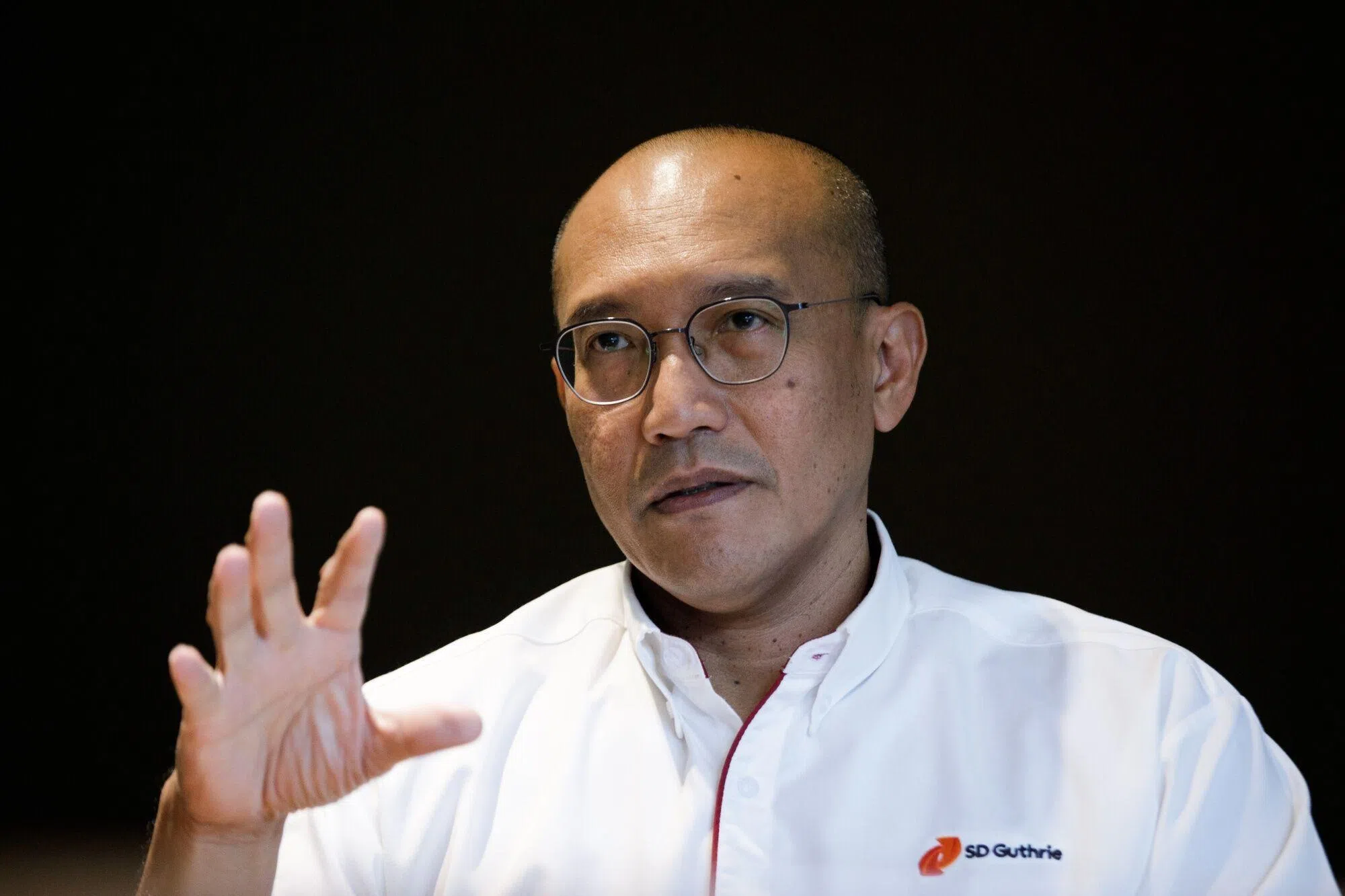
Guthrie Group president and SD Guthrie chairman Mohd Haris Mohd Arshad told Bloomberg that the Middle East had been particularly attractive for data centre investment because of its abundant energy options, but the war has heightened risks in the region, prompting investors to relook locations for their facilities.
He said Malaysia was one of Southeast Asia’s most stable countries and among the most suitable for building data centres, putting it in a strong position to attract more investment. “If you’re gonna build data centres for $10 billion, you’re not gonna put it in a place where you might be bombed,” he said.
Johor has become Malaysia’s main destination for data centre investment because of its proximity to land-scarce Singapore. However, the capacity limits of its power infrastructure have become a bottleneck for development.
According to official data, data centre operators have signed agreements with Tenaga Nasional for peak power demand totalling 8.77 gigawatts, equivalent to about 30% of Malaysia’s total installed capacity in 2025.
BMI, the research arm of Fitch Solutions, has warned that by 2031, data centres in Johor could consume 23% of Peninsular Malaysia’s energy supply.
Guthrie Group’s Mohd Haris cautioned that Malaysia must accelerate the expansion of its power generation capacity and electricity transmission and distribution networks if it wants to grow its data centre industry further and ensure that the substantial foreign investment plans are realised.
