

“If we could return to our homeland, who would choose to live abroad and homeless?”
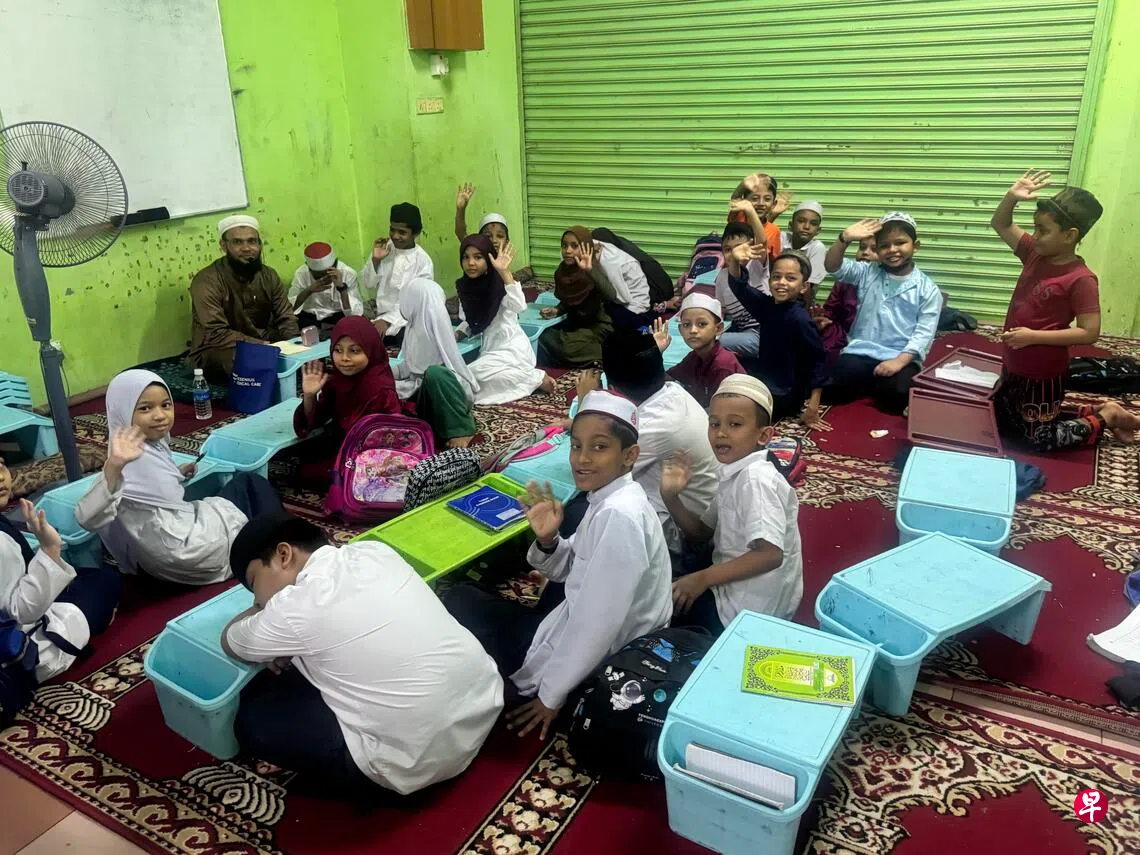
Mohd Ismail, 37, fled unrest in his native Myanmar nine years ago and sought refuge in Malaysia. In 2017, he and others from his homeland began providing education for Rohingya children. Their initiative has since grown into a small school — Rohingya Education Garden.
The school is in an industrial area in Puchong, Selangor, about 23 kilometres from Kuala Lumpur. When Lianhe Zaobao visited, the shop unit’s metal gate was locked. Only after entering through a side door did the reporter see dozens of students studying in groups.
Ismail said in an interview that the school now has 90 students aged seven to 17. Five volunteers teach them mathematics, English, Arabic, Malay and the Quran.
Asked why the entrance was locked, he said with resignation that anti-Rohingya sentiment had intensified in Malaysia in recent months, with some people even coming to the school to cause trouble.
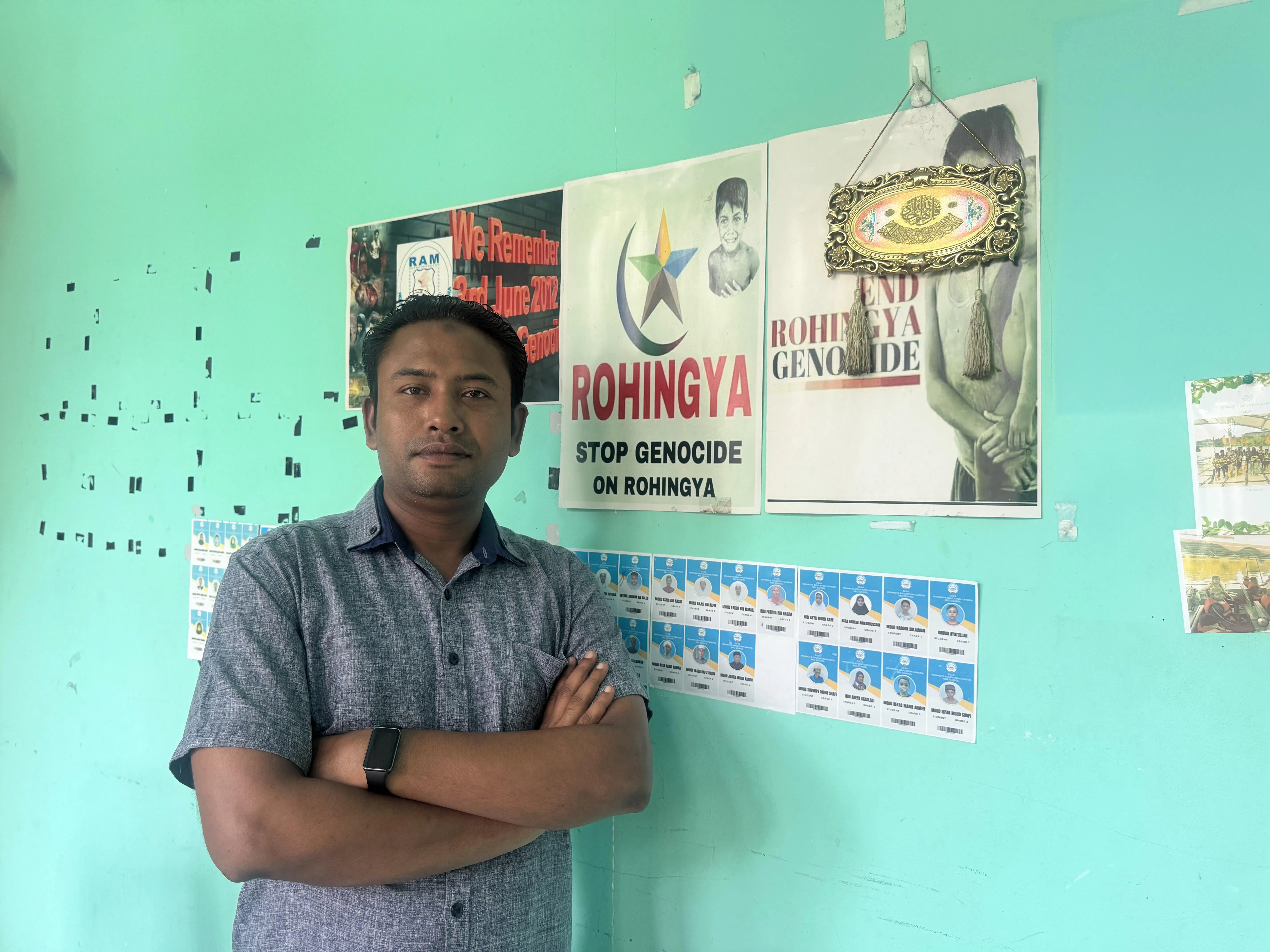
“Not long ago, a man barged into the school, livestreaming on his phone and loudly demanding to know why the Rohingya had their own school. He even demanded to inspect everyone’s refugee cards.”
Ismail stressed that the school operates legally. It receives 80% of its funding from Relief Education and Development Malaysia with the rest coming from Muslim groups and individual donors.
He appealed to the public to stop the hostility, emphasising that the authorities could and should be strict with any Rohingya who breaks the law. “If members of the public see Rohingya misbehaving, they can point it out with sensationalism or exaggeration.”
Hostility spreads from online spaces to everyday life
A recent wave of anti-Rohingya sentiment was triggered on 26 May this year during an act of cattle sacrifice in Selayang Baru, Kuala Lumpur, on Hari Raya Haji. Cattle entrails and bloodied water had been dumped into a drain, and blame quickly fell on the Rohingya community.
Allegations subsequently circulated on social media of Rohingya being involved in crime, driving without licences and damaging the environment. Hostility spread from online spaces to everyday life.
Malaysia is not a signatory to the 1951 UN Convention Relating to the Status of Refugees and lacks a formal legal framework for refugees. The Rohingya therefore have no legal right to live or work in the country.
In the past, some Malaysian businesses and employers turned a blind eye to their status and hired Rohingya for odd jobs or manual labour. Now, fewer are willing to employ them, which affects their livelihoods.
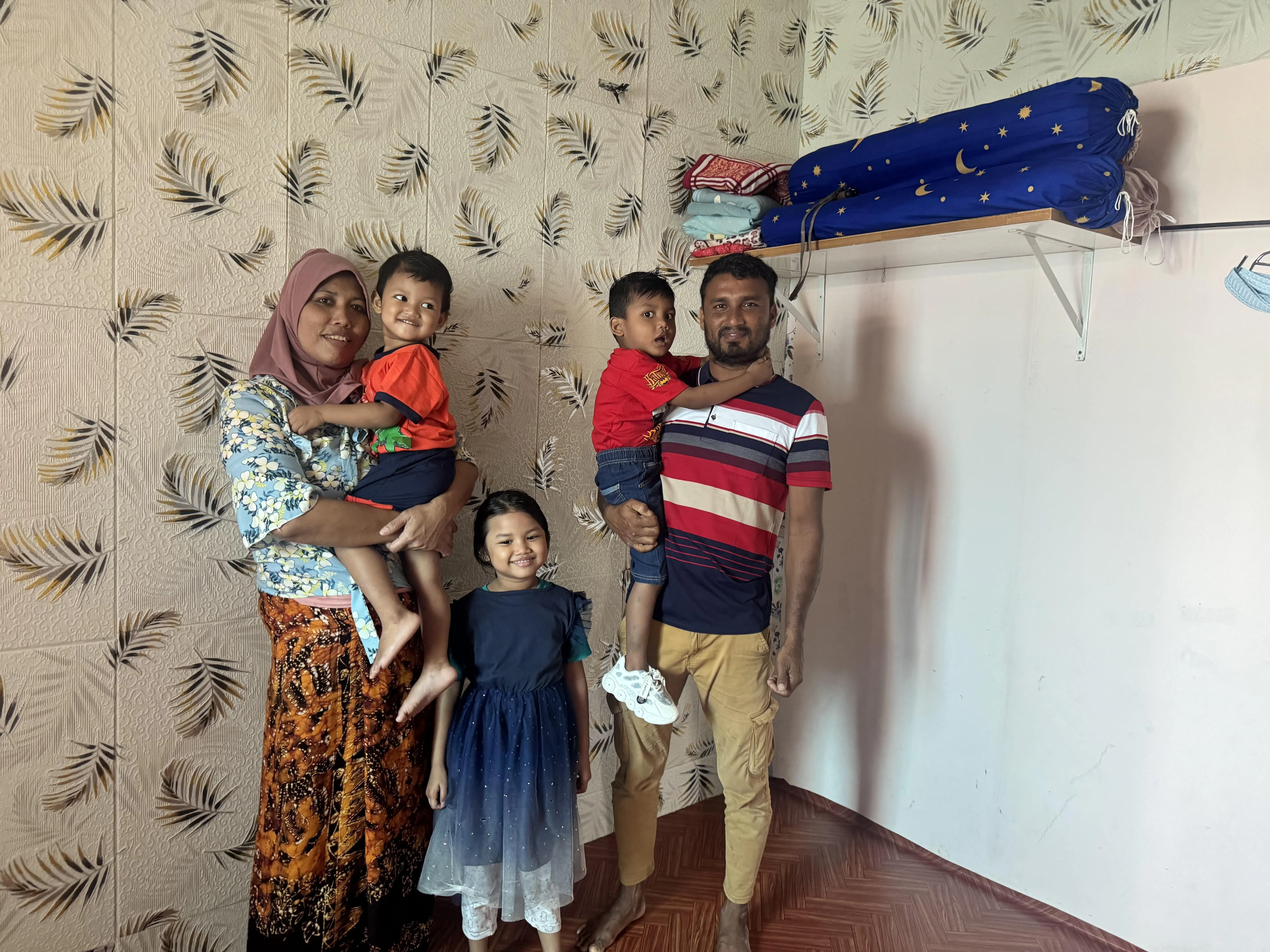
Nabi Hussain, 35, arrived in Malaysia two years ago with his wife and three children. The family rents a room in a flat in Puchong. He used to collect and sell scrap metal, barely earning enough to cover rent and living expenses. Now, he feels uneasy even leaving home. “Last month, while collecting scrap metal, I was chased away and verbally abused by people who said I was dirtying the environment. My friend was even beaten up for no reason.”
Anti-Rohingya sentiment reflects anxieties in Malaysian society
Large-scale conflict broke out in Myanmar’s Rakhine State in 2017, forcing many Rohingya to flee their homes. Some eventually sought refuge in Muslim-majority Malaysia. According to the UN High Commissioner for Refugees (UNHCR), Malaysia has about 200,000 registered refugees and asylum seekers, of whom 120,000 are Rohingya, making them the country’s largest refugee group.
In areas where Rohingya have settled and formed communities, unease among local residents has gradually surfaced.
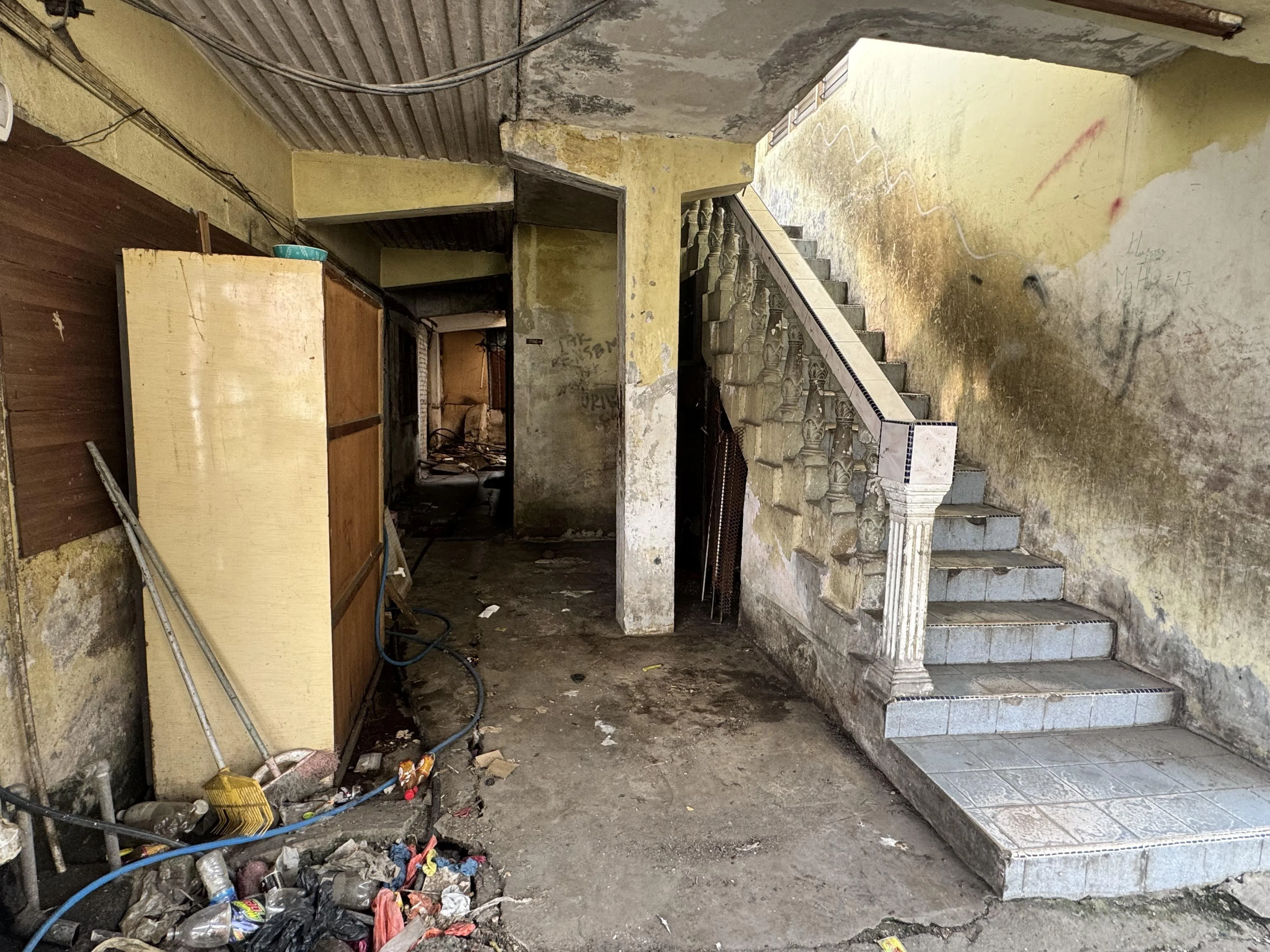
Dozens of Rohingya households live in flats and shophouses across Taman Puchong Permai. Hawker Nazrullah, 45, said in an interview that the Rohingya gathering at a nearby field every evening made him uneasy. “There are too many of them. I feel as though I’m in a foreign country.”
Sukri, 50, who owns an electronic parts shop, said Rohingya lived in shophouses just behind his shop, and that poor sanitation and noise were a nuisance to the residents. He added that the Rohingya also largely kept to themselves and rarely mixed with the locals.
Salawati Mat Basir, Professor of Law at Universiti Kebangsaan Malaysia (UKM), told Lianhe Zaobao that anti-Rohingya sentiment stemmed from a lack of public understanding of the refugees’ circumstances. There was also fear that the Rohingya would compete with Malaysians for jobs and resources such as education and healthcare.
“This economic friction is easily weaponised, turning the Rohingya into convenient scapegoats for broader cost-of-living pressures,” she said.
With Malay rights in the spotlight of some political discourse in Malaysia, some Malays have also started to direct their anxieties around the erosion of their interests at Rohingya refugees.
Humanitarian worker Teo Ann Siang who works on refugee issues said some social media influencers publish controversial content to attract views, even portraying the Rohingya as a threat to Malay land and rights by questioning why they could own homes and run grocery shops.
He said, “The resentment and suspicion that Malays previously directed at other ethnic groups are now also being directed at migrants and refugees.”
Repatriation controversy highlights Malaysia’s dilemma
Caught between humanitarian pressures and domestic anti-refugee sentiment, the Malaysian government faces a dilemma in handling the Rohingya issue.
With growing public discontent, the authorities have recently stepped up enforcement against illegal immigrants. On 29 September this year, the Malaysian government repatriated 1,476 refugees from Myanmar, with another 3,542 due to be sent back. The government said the repatriations were voluntary and conducted safely and with dignity.
On 8 October, Malaysian Prime Minister Anwar Ibrahim hosted visiting Myanmar President Min Aung Hlaing in Putrajaya. Their discussions focused mainly on the repatriation of Rohingya.
However, as Myanmar’s civil war continues unabated, and violent attacks on civilians remain widespread, the UN and Human Rights Watch have warned that repatriating refugees at this time could put their lives at risk.
Observers interviewed said the Rohingya issue was particularly difficult to address because it involved legal, socioeconomic and geopolitical factors. But leaving it unresolved over the long term would only create more social problems and could even increase the risk of crime.
Salawati said, “Balancing humanitarian obligations with local socioeconomic anxieties is one of the most complex policy challenges facing the Malaysian government.”
Malaysia ‘should work with UN and ASEAN on solutions’
Salawati suggested that the Anwar government work with UNHCR to establish a biometric registration system and integrate its data with the national security database, giving the authorities a comprehensive picture of the refugee population.
In areas with large refugee populations, local governments could set up community committees involving residents and Rohingya community leaders. These could help address sanitation issues and cultural differences together, to prevent misunderstandings from escalating into national controversies.
Malaysia’s Ministry of Home Affairs began implementing a refugee registration document scheme on New Year’s Day this year. Home Minister Saifuddin Nasution previously said the government was considering using the information collected to allow eligible illegal immigrants to work in sectors with more pressing labour needs, such as manufacturing and on plantations, thus reducing the need to bring in foreign workers.
Improving refugees’ health and education was a long-term way to prevent related social problems, Salawati added; to ease the burden on the public sector, the government should allow clinics and learning centres for refugees to be established with funding from non-governmental organisations and private donors.
She also stressed that Malaysia could not resolve the refugee crisis alone. “Asean must collectively pressure the Myanmar junta, establish regional burden-sharing frameworks, and secure increased resettlement quotas from third-party Western nations.”
Teo said Malaysia’s education system and communities provided little education about refugees, leaving the public with a limited understanding of them. He urged the government to strengthen civic education so that society could better understand the circumstances of refugees and stateless people, tackling the root causes of misunderstanding and hostility.
