

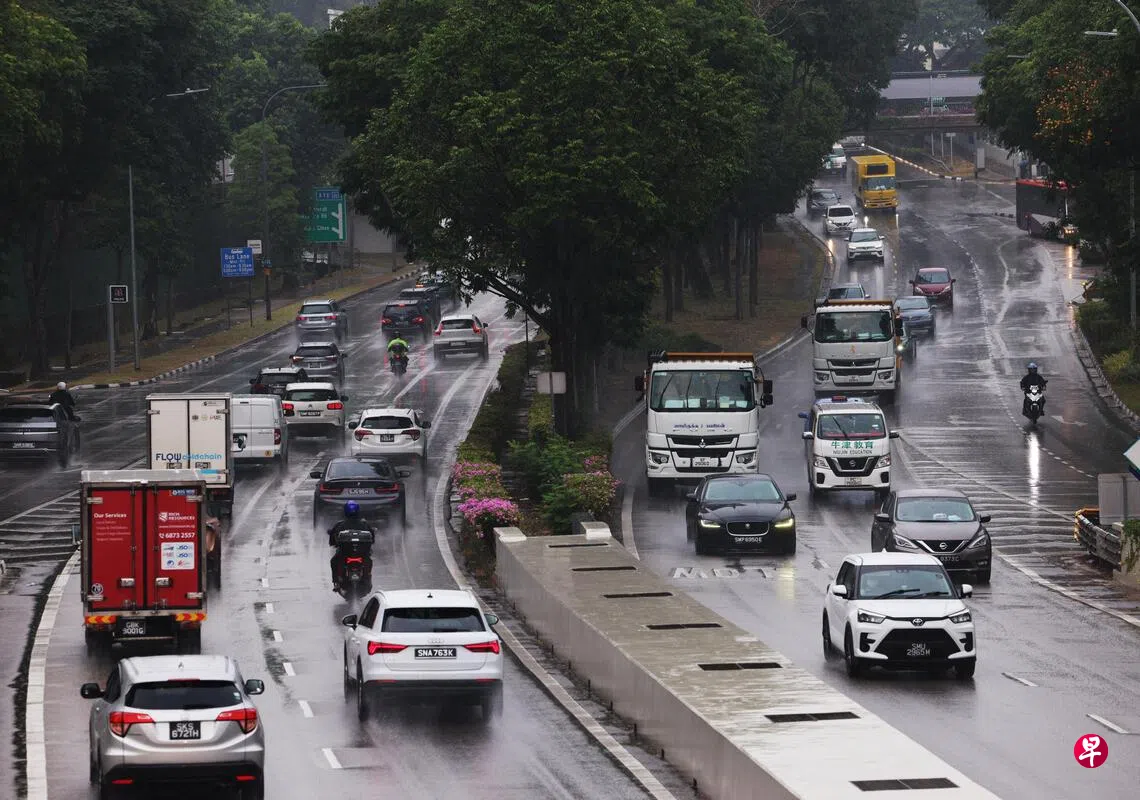
The quota of Certificates of Entitlement (COEs) available for bidding over the next three months will rise marginally by 1.12% to 19,298. The quota for the popular small- and medium-sized car category (Category A) will remain unchanged from the current quarter at 7,134, still the lowest since May last year.
Car dealers interviewed expect demand to remain strong in the short term, with only a limited increase in supply and many consumers rushing to buy before electric vehicle incentives are adjusted at year-end. They see little prospect of a significant fall in COE premiums.
The Land Transport Authority (LTA) announced the COE quota for November 2026 to January 2027 on Monday (26 October). The new quota is just 213 higher than the 19,085 available from August to October.
Of the total number, 1,092 COEs come from additional quota injected by LTA and quota brought forward from vehicle deregistrations expected over the next few years. Of these, 61 will go to goods vehicles and buses in Category C, with the remaining 1,031 allocated to motorcycles in Category D.
LTA said the COE quota for the next three months is unaffected by the ongoing review of car COE categories.
Category A, which caters to the mass market, will have 7,134 COEs over the next three months, unchanged from the current quarter. Its quota had previously fallen for three consecutive quarters.
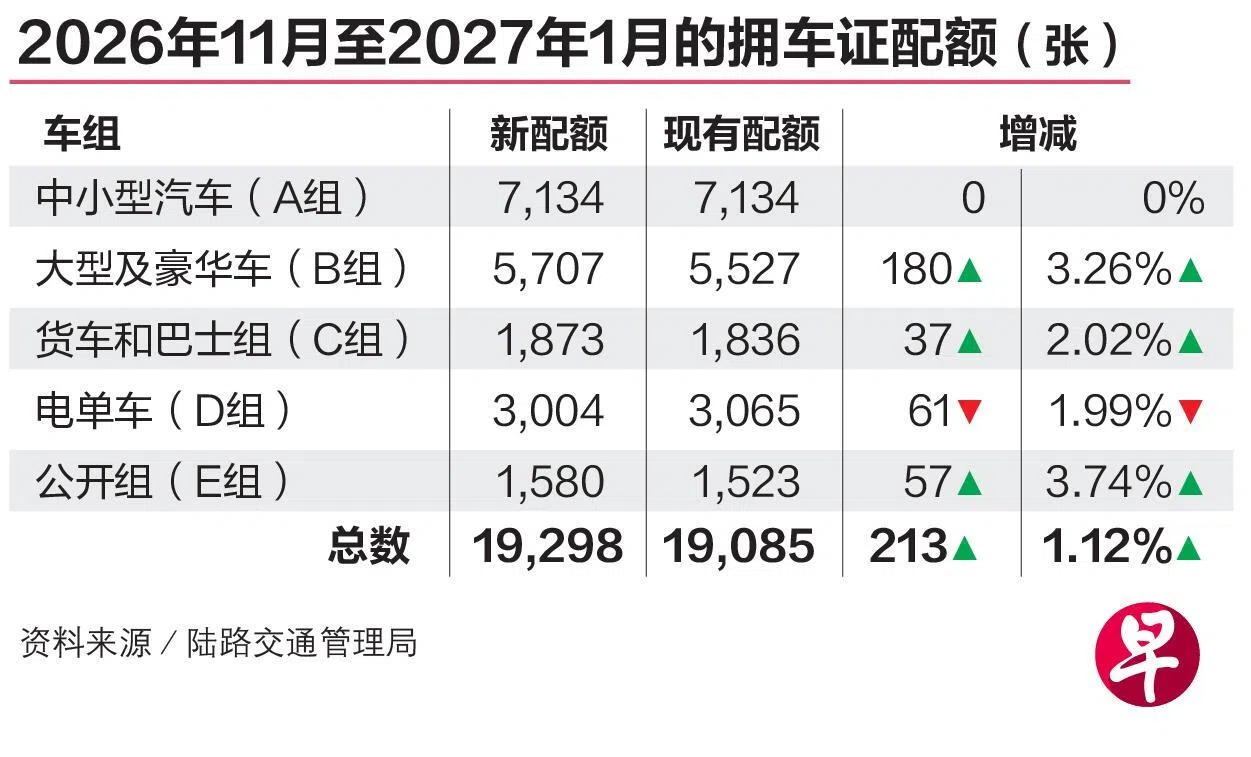
The quota for large and luxury cars (Category B) will continue to grow, rising by 180 (3.26%) from the past three months to 5,707. The open category (Category E), generally used to register Category B cars, will also increase by 57 (3.74%) to 1,580.
The Category C quota will rise by 37 (2.02%) to 1,873. Category D is the only category with a smaller quota, falling by 61 (1.99%) to 3,004.
Year-end demand likely to remain strong
Chen Liqun, managing director of BYD's authorised distributor Vantage Automotive, does not anticipate a significant fall in COE premiums, given the small increase in the quota for the coming quarter.
She noted that the car sales event held last weekend brought in substantial orders for most dealers, and competition in the next few COE bidding exercises is expected to be intense. In addition, the EV Early Adoption Incentive will end this year, while rebates under the Vehicular Emissions Scheme will be adjusted from next year.
Following the changes to the two schemes, the combined incentives available to electric vehicle buyers will fall by $10,000 next year. This may drive up demand before the year-end. Chen said, “Short-term demand will still be very strong, and this may push up COE premiums for the next few rounds.”
Ron Lim, general manager of Nissan distributor Tan Chong Motor Sales, said the changes to the quota for the coming quarter were broadly in line with expectations. “The Cat A quota is believed to have already peaked while Cat B continues to grow. So the market may continue to see Cat A premiums trending close to, if not even higher than, Cat B premiums.”
So far this year, Category A COE premiums have exceeded Category B premiums by four times. Lim believes this trend will not change without policy intervention, and that merging Categories A and B is the only way to reshape the current market.
To address the increasingly blurred distinction between mass-market and luxury car categories, LTA has proposed merging Categories A and B, with tiers based on the median Open Market Value determining the applicable rebates or surcharges. Under its proposal, rebates and surcharges would each be capped at $15,000. The details will be finalised after public consultation ends.
On whether the proposed review of COE categories has affected demand for cars, Lim observed two different mindsets among consumers. Some buyers are taking a wait-and-see approach, hoping for greater clarity on the new categorisation before deciding; others worry that COE premiums in the new category could be higher after the categories are merged. “They feel they would be better off buying a car now rather than waiting.”
