

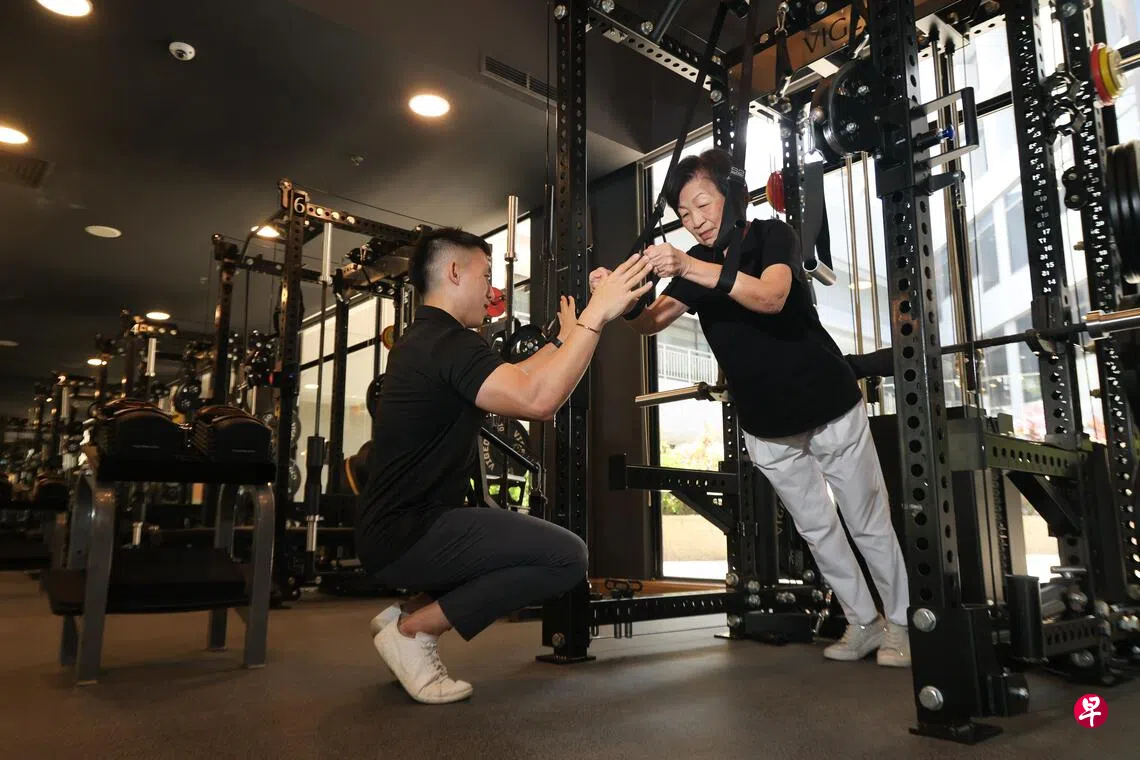
Doreen Mok only took up fitness training at 80 and now works out twice a week. For Mok, age is just a number, not a barrier to pursuing a healthy lifestyle.
After 10 months of exercise, she noticed improvements in her posture, energy levels and physical stamina, reinforcing her belief that strength training could help her continue living independently.
Mok told Lianhe Zaobao that seeing many seniors rely on wheelchairs, mobility scooters and walking sticks had made her realise the importance of staying active. She hopes to remain healthy and mobile for as long as possible, without becoming a burden on her family.
Her posture has improved noticeably since she started exercising. Her previously curved spine has straightened somewhat, and she has gained three centimetres in height. She also feels more energetic and mentally alert, and tires less easily.
As health awareness grows, more seniors in Singapore are taking up fitness training to build strength, improve their balance and maintain their quality of life in later years.
Benson Poh, 36, who heads Vigeo Personal Training and coaches seniors such as Mok, has worked in the industry for 19 years. He said enquiries from seniors about fitness training had risen noticeably over the past five or six years.
More than a decade ago, he said, seniors accounted for about 10% of enquiries and were generally in their 50s to early 60s. Today, they account for 80% to 90%, with ages ranging from the 60s to 80.
Seniors take up exercise for different reasons. Poh said some enrol at their children’s encouragement or ask their children to make enquiries for them. Others want to improve their daily lives: to keep up with their grandchildren, carry everyday items or travel to hospital independently.
He has observed that many seniors want to remain independent and avoid becoming overly reliant on their children or spouses. Rather than simply living longer, they want the energy to travel, spend time with family and friends, and pursue activities they enjoy in old age.
As Mok put it: “My goal is not just to live longer, but to live better.”
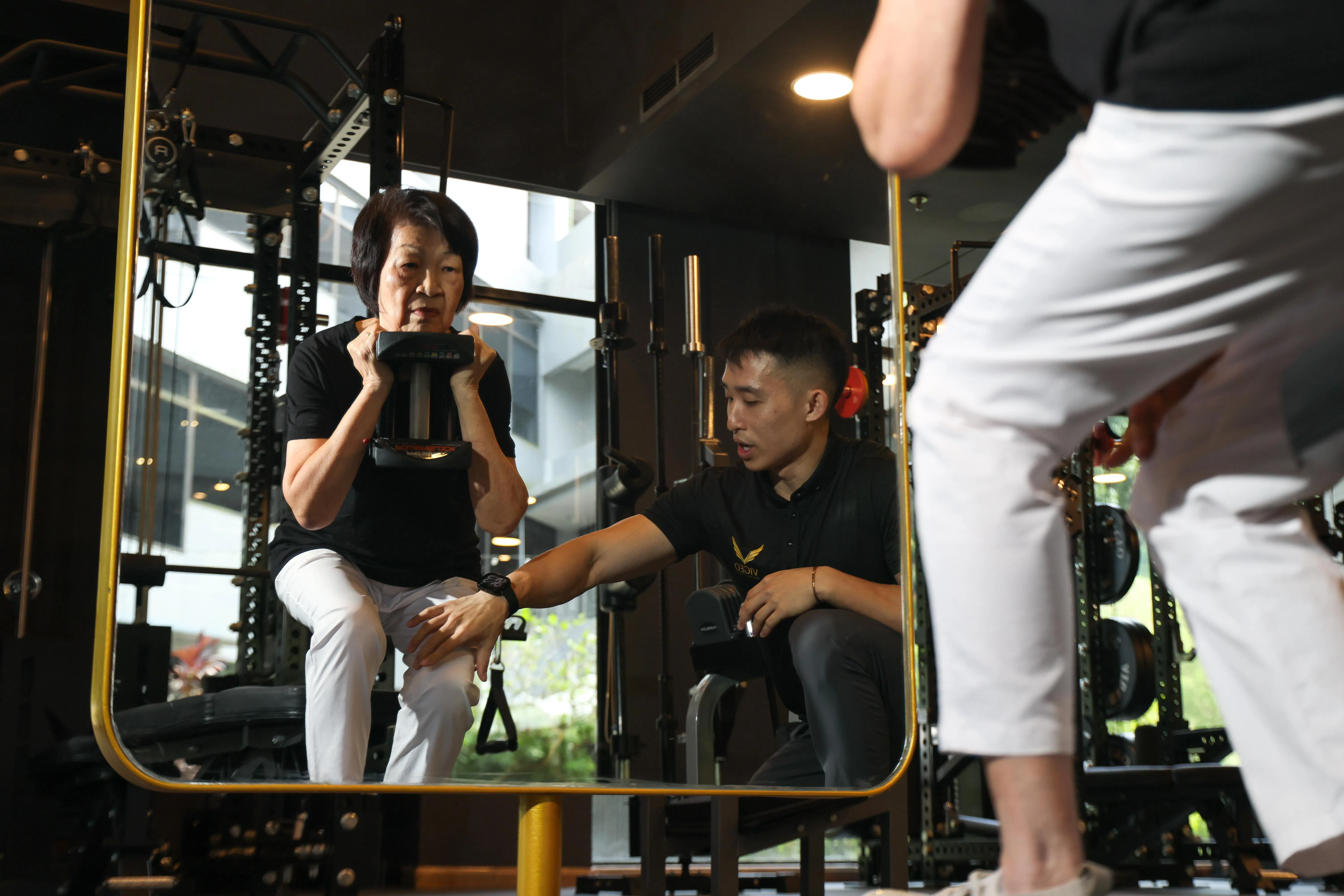
Gym Tonic, a fitness programme for seniors initiated by the Lien Foundation, expanded into the community in 2017. The foundation’s programme director, Gabriel Lim, said strength training was unfamiliar to many people then, and most participants were signed up by their children. Today, seniors are more aware of the importance of staying active and managing their health. Some are referred by doctors or physiotherapists to build strength and slow age-related muscle loss.
He said younger seniors, those under 70, generally sign up on their own initiative, while those over 75 are more often encouraged to join by their children.
Social connections help seniors stay active
Many fitness venues now also serve as important places for seniors to build social connections. ASPIRE55 founder and Ageing Asia founder and managing director Janice Chia said that, besides tailoring exercise to seniors’ needs, it was equally important to create an environment where they felt welcome and had a sense of belonging.
Established 12 years ago, ASPIRE55 had 90 senior members last year. As of August this year, membership had risen to 130. Describing itself as a “social and wellness club”, the centre aims to help seniors stay active through exercise while building relationships.
Chia said some seniors do not initially intend to make friends when they join. But with small groups, usually of six to eight people, they soon get to know one another. A nod and a smile gradually turn into meals together, and social connections form naturally.
“Seniors attend classes and use gym equipment together, and chat before and after sessions. Over time, they have opportunities to make friends. Some even reconnect with classmates or schoolmates they have not seen for years.”
These connections and a sense of belonging help seniors keep exercising. Knowing that others are expecting them gives them a reason to turn up even on days when they do not feel like leaving home. Gradually, it becomes a habit.
Staff also remember every senior’s name and greet them when they arrive, making them feel noticed and cared for.
Before training, coaches have seniors take their blood pressure and record the readings. If anything unusual is detected, exercise is put on hold and medical advice sought. Where necessary, seniors are advised to consult their family doctor.
However, seniors must be willing to take part. Some children see weight training and similar activities on social media and believe these would benefit their parents, but their parents may be frightened by the intensity of the workouts.
Tailoring training to each senior’s physical condition
Poh said seniors’ physical conditions vary greatly, and age alone cannot determine how they should train. A 70-year-old may be fitter than a 50-year-old, so training must be tailored to each person’s health, strength, balance and coordination.
Some seniors have had knee or hip replacements. Others have arthritis, scoliosis or muscle-control difficulties following a stroke. Coaches must understand these conditions to adapt exercises and training intensity.
Gym Tonic trainer Looi Yuan Hui said training must fit around seniors’ lives and family responsibilities, such as regular medical appointments and caring for a spouse or grandchildren. Those taking up training should choose a coach with experience in strength training and working with people over 55, to ensure that sessions are safe and effective.
Gym Tonic coaches assess each senior’s fitness, strength and physical function before the programme, then adjust the training intensity to suit individual abilities.
Beyond exercise, Mok has also used her SkillsFuture Credit to learn artificial intelligence, Excel and other digital skills to keep pace with technology.
She said: “We cannot stop time, but we can choose how we grow old.”
Mok believes that with determination, regular exercise, lifelong learning and a positive attitude, people can continue to enjoy life even in old age.
SportSG’s Frailty Prevention Programme reaches close to 5,000 seniors
In recent years, the government and relevant agencies have been expanding community fitness facilities and programmes. Sport Singapore (SportSG) and the Agency for Integrated Care (AIC) jointly launched the Frailty Prevention Programme (FPP) in September 2024 to encourage seniors to exercise, stay active and adopt healthier lifestyles.
Combat Age-Related Loss of Muscles (CALM) is one of the programmes offered under the FPP.
Seniors aged 60 and above can take part in Active Health’s CALM programme. The eight-week programme combines physical assessments, nutrition and recovery education, and guided strength training to help seniors build and maintain muscle.
In response to queries from Lianhe Zaobao, SportSG said the programme had been implemented at 154 Active Ageing Centres (AACs), reaching close to 5,000 seniors. It expects that number to rise to 5,500 by the end of this year.
Improvement in at least one measure of functional performance
According to SportSG, over 99% of participants showed improved functional performance in at least one measure, including muscle mass, the five-times sit-to-stand test, handgrip strength, functional reach and gait speed. Close to 70% improved or maintained their body composition.
Beyond strength training, the FPP also encourages seniors to try different sports by providing suitable equipment.
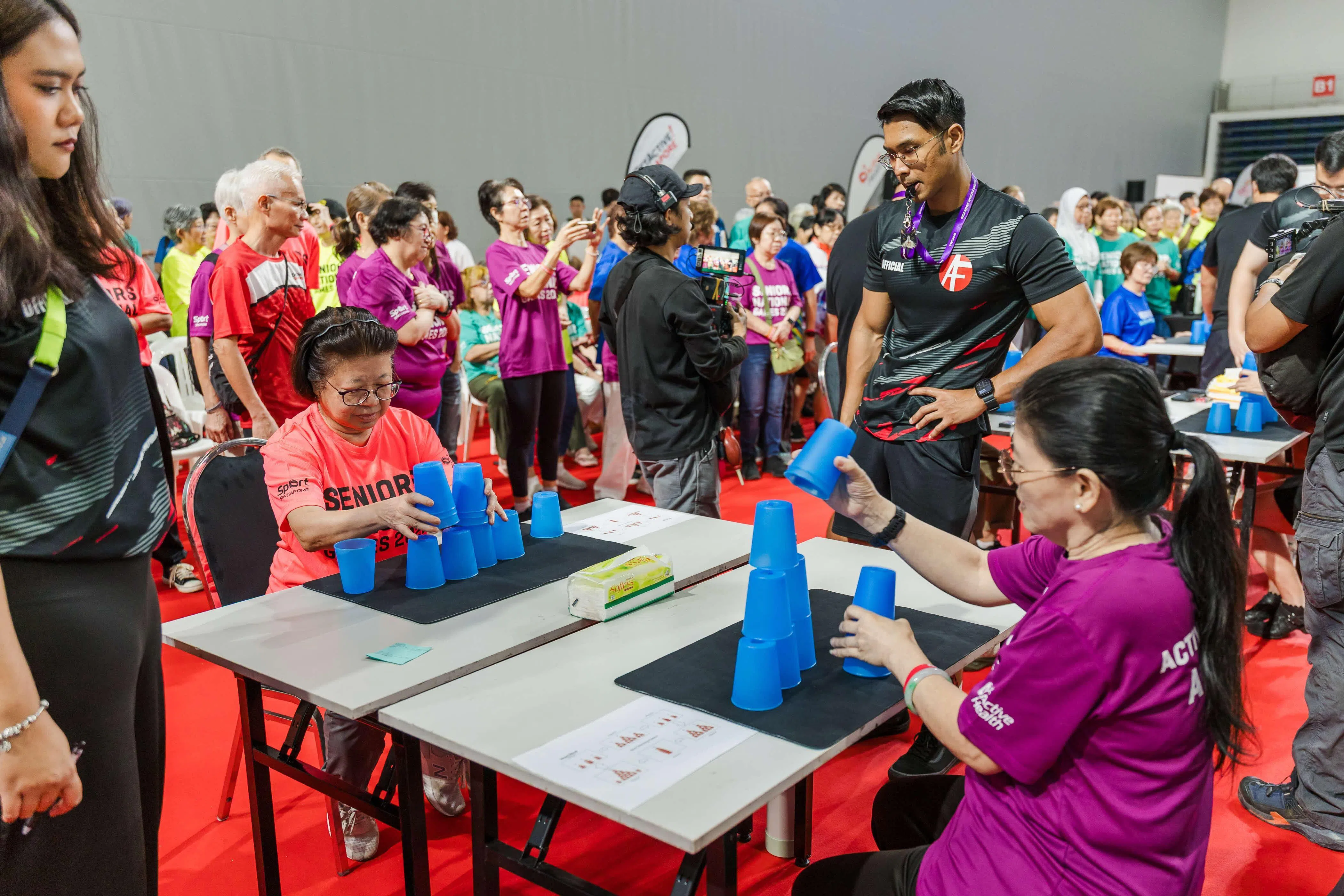
As of October this year, SportSG had equipped close to 220 AACs with adaptive sports toolkits for sport stacking, ladder toss, boccia, seated floorball and disc golf.
Staff at the centres are also trained to independently organise activities using this equipment. SportSG expects to equip all AACs by the end of this year.
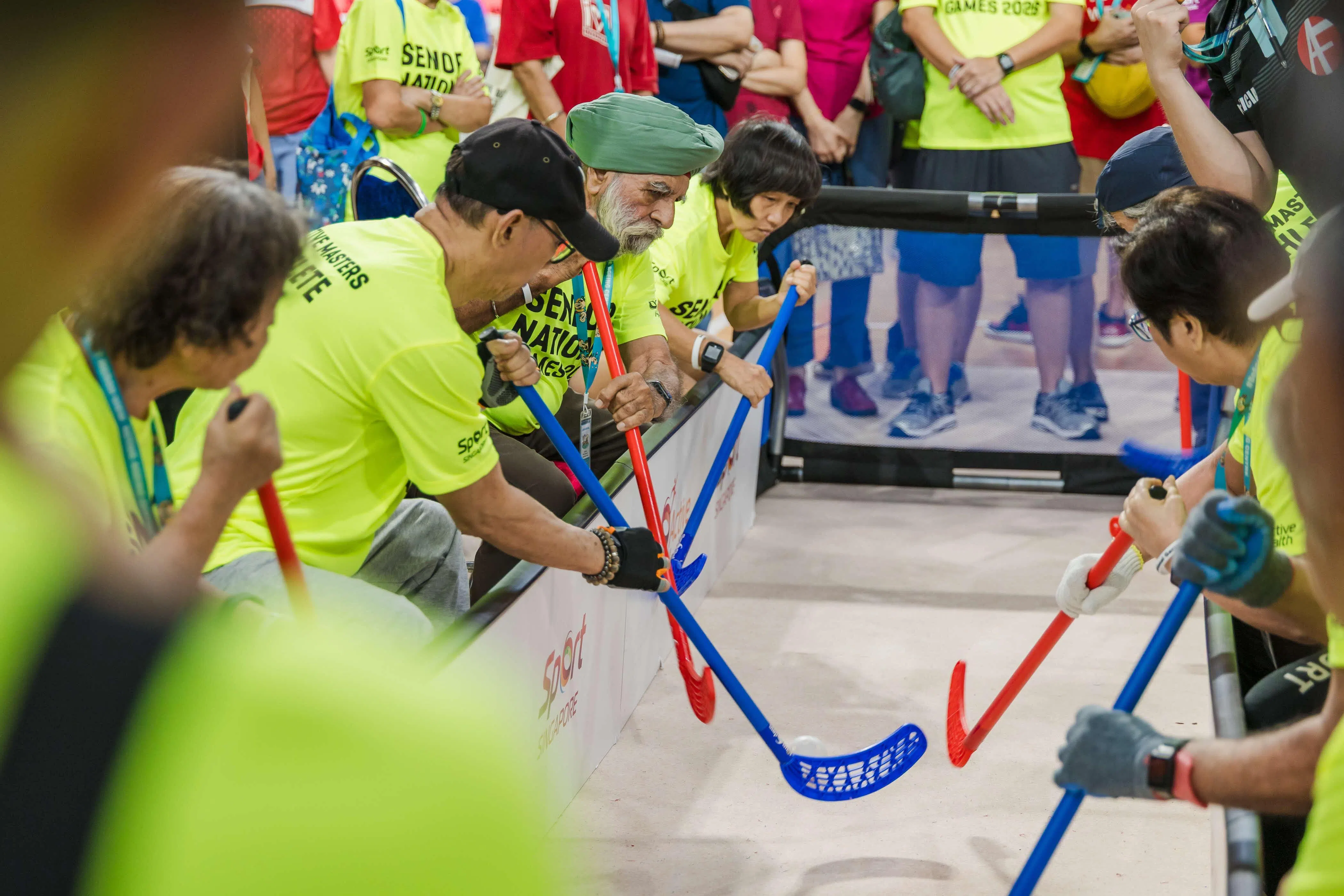
The Frailty Prevention Programme has gradually expanded beyond AACs. SportSG launched a pilot with two Residents’ Committees in Bukit Gombak in May this year and plans to work with more committees to encourage more seniors to take muscle-loss prevention seriously.
The Seniors National Games was introduced last year to give seniors more opportunities to participate in sport. This year’s Games featured five adaptive sports and attracted more than 6,000 participants from 118 AACs and 11 grassroots organisations — an increase of more than 30% from the inaugural edition.
Octogenarians build strength and lasting friendships
Lim Whye Geok, 89, and his younger brother Lim Lam Geok, 88, exercise twice a week at social and wellness club ASPIRE55. Regular training helps them maintain their stamina while giving them opportunities to socialise and share their lives with other seniors.
Lim Whye Geok took up fitness training about eight years ago. He said: “After a few months of training, I felt stronger, and the strength in my legs and arms improved too.”
He previously suffered from lower back pain and even underwent a positron emission tomography (PET) scan. Regular exercise brought considerable relief, and he now experiences almost no discomfort.
He later brought Lim Lam Geok along to exercise. His younger brother said: “My fitness has improved. On a recent overseas trip, I walked more than 10,000 steps a day.”
Lim Whye Geok and Lim Lam Geok are sons of Lim Bo Seng, Singapore’s wartime anti-Japanese resistance hero. Through exercising together, the brothers have forged a close friendship with fellow gym-goer Daniel Teo (83, chairman and managing director of Hong How Group). Teo has been working out for more than a decade and says exercise has improved his agility, strength and energy levels.
Having undergone knee surgery, Teo pays particular attention to leg training. His coach tailors sessions to his physical condition so he can exercise according to his needs.
Besides the physical benefits, the friendships they have formed are another reason they keep attending training.
Lim Whye Geok said it was harder to keep exercising alone. Working out, joking and sharing stories with others give them all more reason to look forward to each session. “Sometimes we come to the gym to see our friends too. We notice who has or has not turned up.”
After a heart attack, senior regains strength and finds housework easier
Soo Gian Moey Florence, 76, has always exercised regularly, practising tai chi every morning and joining community walks. After suffering a heart attack last year, she joined CALM to build her muscle strength.
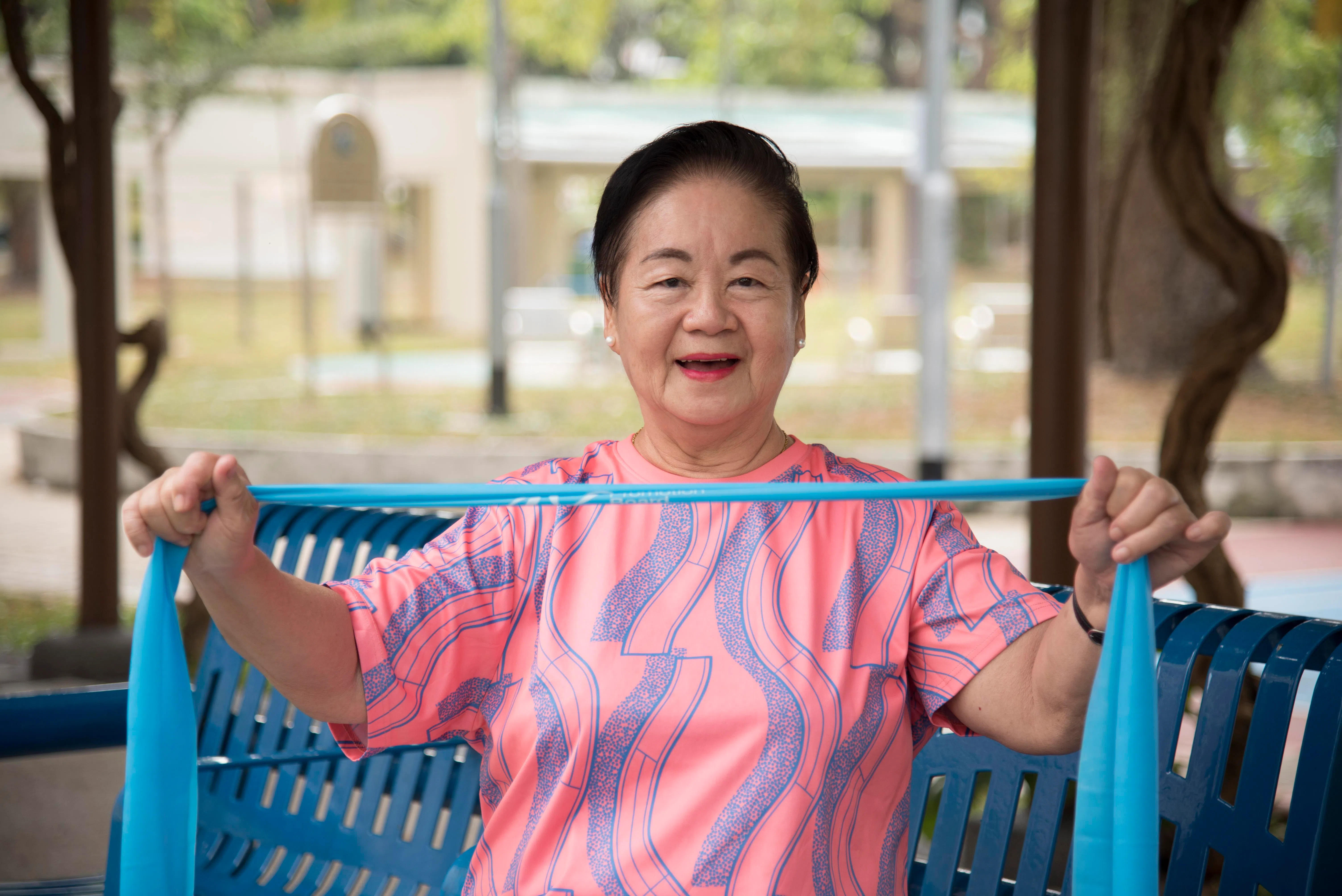
Encouraged by staff at Thye Hua Kwan’s Active Ageing Centre in Bedok, she joined and completed CALM’s strength-training programme, improving several physical measures. Her skeletal muscle index rose from 6.7kg to 7kg per square metre, her handgrip strength increased from 21.4kg to 22.3kg, and her functional reach extended from 31.5cm to 32.75cm.
Soo said the improvements went beyond the figures: she felt noticeably stronger and more flexible, and could move more easily. “Carrying the laundry basket, mopping the floor and hanging out clothes at home all feel a little easier now. I feel stronger.”
After completing the muscle-building programme, she went on to join the Muscle and Mind programme.
She said Muscle and Mind was slightly more demanding than the previous programme and placed greater emphasis on building muscle strength. Her main reason for joining was concern about muscle loss as she aged, which she hoped to counter through training.
She particularly enjoyed the interactive games, variety of exercises and workouts set to music. The coach’s guidance also made exercising more enjoyable. After completing both programmes, she continued practising at home.
“When I have time, I continue doing the exercises from the programmes at home, about once a week — things like lifting dumbbells and using resistance bands.”
Soo also took part in this year’s Seniors National Games, representing Thye Hua Kwan’s Active Ageing Centre in Bedok in seated floorball, a sport she enjoys greatly.
“Seated floorball requires both physical stamina and skill. I perform quite well in the team.”
Her team played only two matches before being eliminated. But she and her teammates understood that the point was to get moving together; winning a prize was secondary.
