

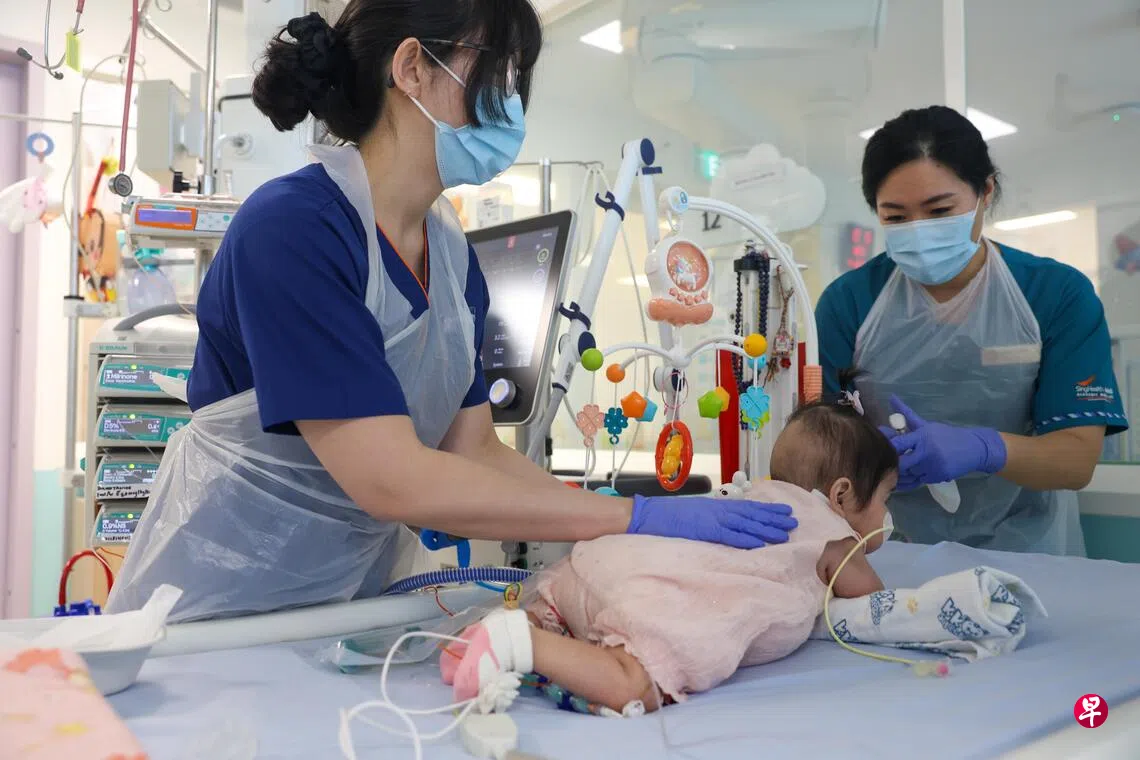
Now just eight months old, Michelle Valerie Ng underwent heart surgery when she was just over a month old. She has remained in the Children’s Intensive Care Unit (ICU) since the operation, connected to numerous tubes and monitoring wires.
Michelle was diagnosed after birth with an anomalous left coronary artery from the pulmonary artery (ALPACA), a relatively rare heart condition. Her father, Richard Ng, a 35-year-old software engineer, said she was cold to the touch and pale immediately after surgery.
At one point, she needed extracorporeal membrane oxygenation (ECMO), commonly known as an artificial heart-lung machine, to keep her alive. Surgery and infection affected her development, causing her weight to fall significantly.
Michelle has been cooperative during treatment, hardly crying or fussing, but watching her has been painful for her parents. Ng said, “It is both comforting and heartbreaking… Because she has a tube in her throat, we have not heard her cry for months.”
A rehabilitation programme introduced by the intensive care team at KK Women’s and Children’s Hospital (KKH) has brought some comfort to Ng and his wife.
With help from physiotherapists and medical staff, Michelle was able to start regular activities early, including sitting up, lifting her head while lying on her tummy, and making other small movements, rather than remaining in bed all the time.
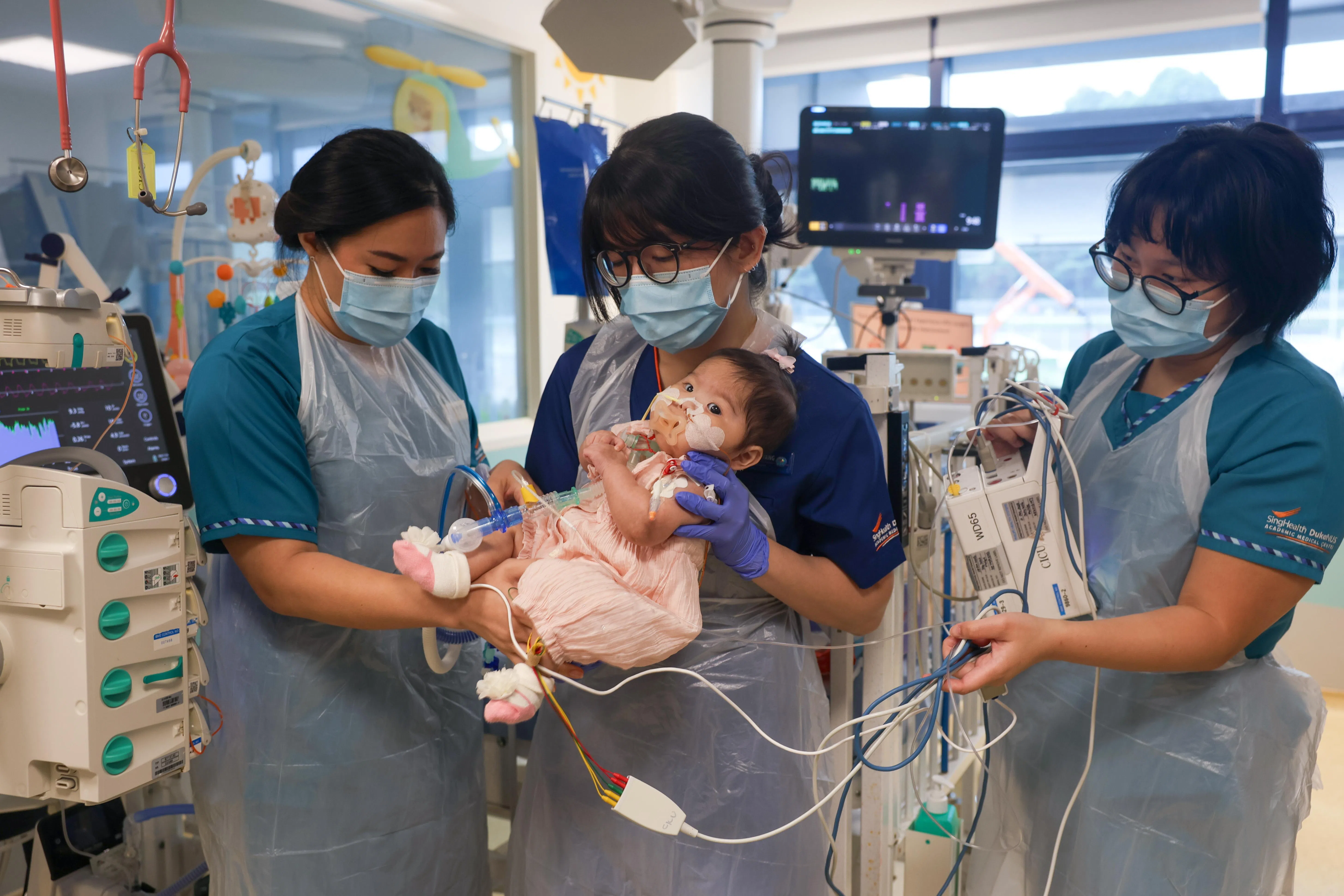
Michelle’s development is now no longer lagging behind. With guidance from the medical team, her parents can stay by her side throughout her daily activities, watching her gradually grow stronger and learn to grasp objects, lift her head and sit up.
About 600 to 700 critically ill children admitted each year
The Children’s ICU at KKH admits about 600 to 700 patients a year, ranging from newborns to teenagers aged 18. Some children stay for as long as a year.
Conventional treatment tends to keep critically ill children sedated and confined to bed, with rehabilitation beginning only after they move to a general ward.
However, this can lead to severe muscle wasting and weakness, prolonging recovery. Some children are highly prone to falls after discharge because they cannot stand. It also increases the risk of complications such as delirium and infections.
To address this, the hospital’s ICU introduced a rehabilitation programme in 2021, departing from conventional practice by encouraging children to start moving as early as safely possible. This not only reduces reliance on sedatives but also strengthens muscles and improves lung function, shortening hospital stays.
Dr Joel Lim, head and senior consultant at the KKH Children’s ICU, said children can begin gradual activity according to their physical condition an average of about 1.5 days after admission. Some whose conditions are stable can start within hours of admission.
The medical team tailors the intensity of activities to each child’s condition and recovery, progressing from simple exercises in bed to sitting up, standing and eventually walking.
Family members who previously hesitated to touch their sick children now take a full part in their care under the guidance of medical staff. This gives the children more care and affection while easing their parents’ helplessness and anxiety.
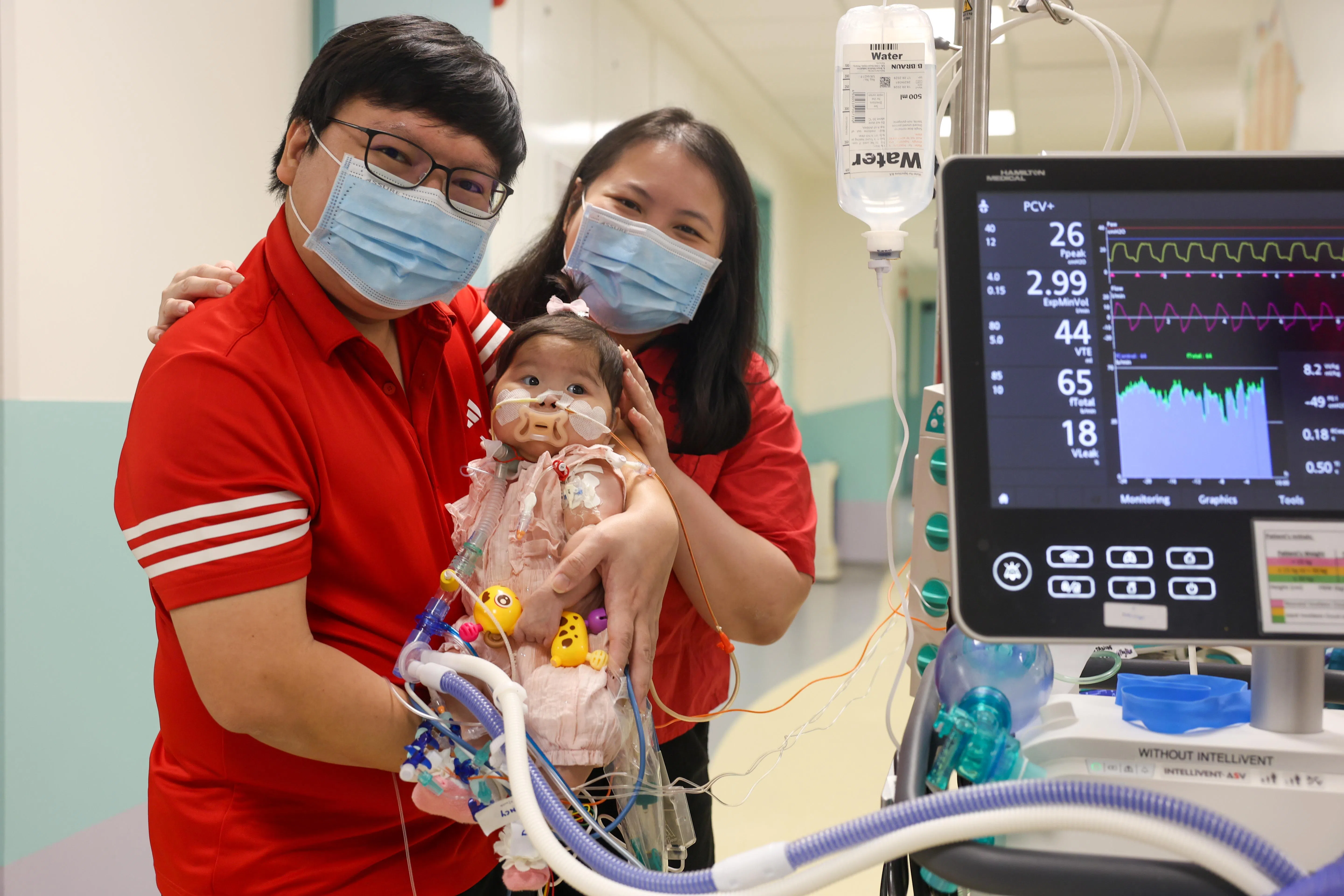
From 2021 to 2024, the proportion of children receiving respiratory support who were able to start moving early rose from 44% to 60%. The proportion whose families helped them with these activities also increased, from less than half to about 80%.
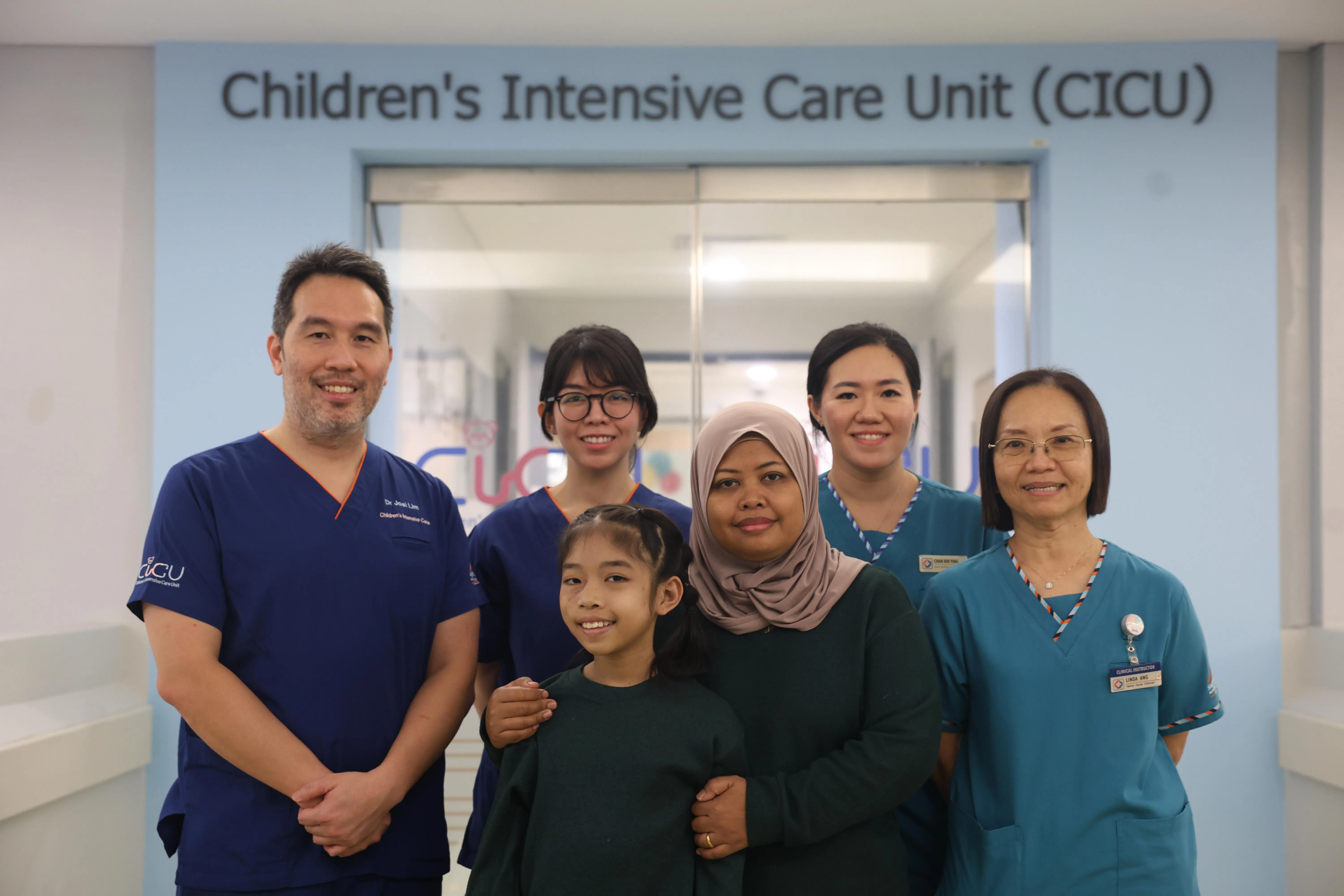
Once reliant on an artificial heart-lung machine, 12-year-old practises standing and walking in ward
Michelle Poh, 12, has thalassaemia and underwent a bone marrow transplant two years ago. In January this year, she was admitted to the ICU with severe acute respiratory distress syndrome and needed an artificial heart-lung machine to keep her alive for a month.
Even while she was on the artificial heart-lung machine, the medical team helped her stretch in bed and gradually supported her to sit on the edge of the bed for activities. After she came off the machine, staff helped her practise standing by her bed before slowly progressing to taking steps around the ward.
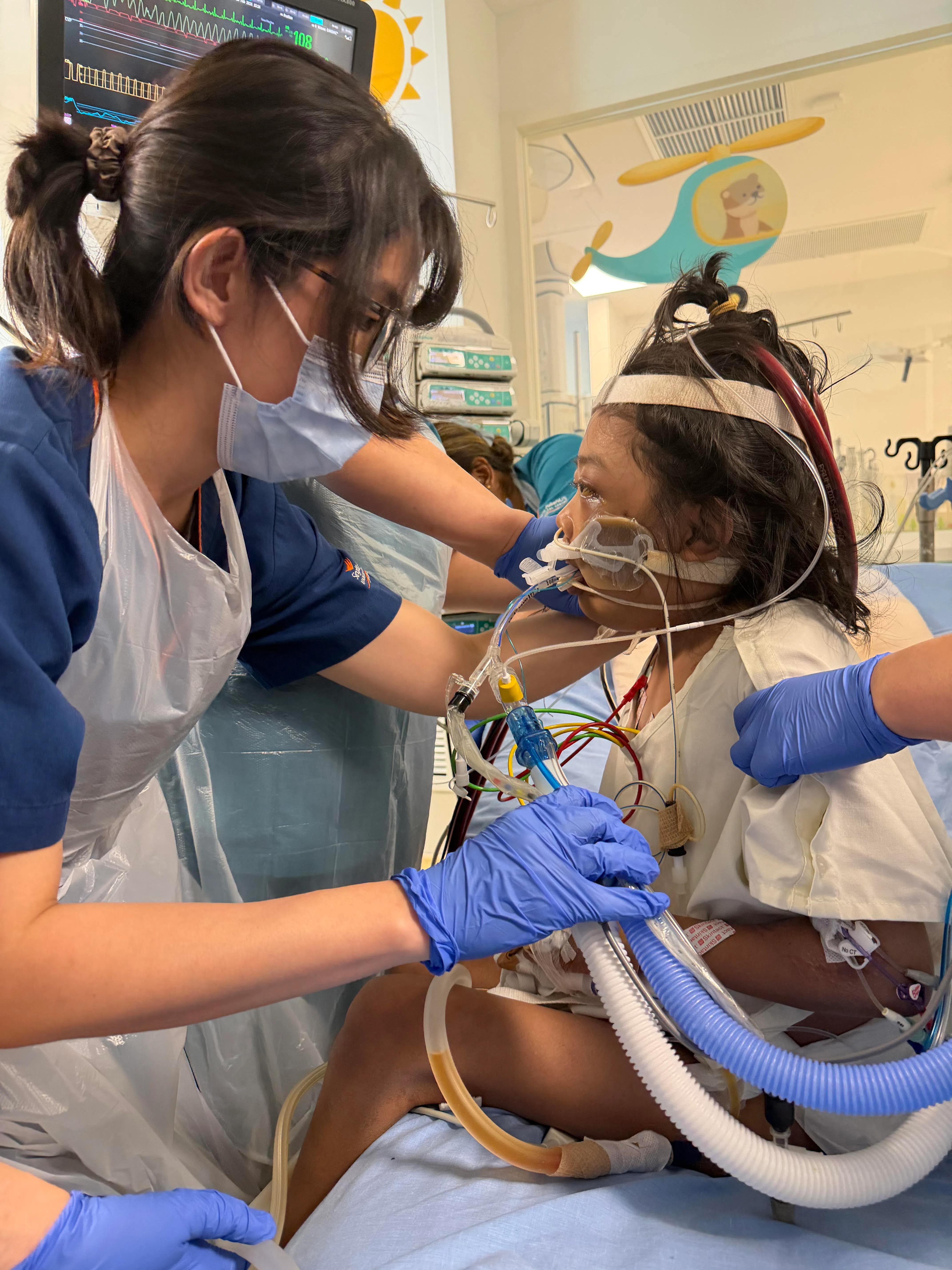
Michelle Poh has since regained her strength and returned to normal life. Looking back on her time in bed, she remembers most vividly how medical staff guided her through exercises. “The nurses played music and taught me to dance. They danced with me too.”
Helping children start moving early not only restores their strength but also reduces the risk of delirium, helping to prevent long-term effects such as cognitive impairment, depression, anxiety and post-traumatic stress.
In the ICU, 60% of children have experienced symptoms of delirium. As young children are often unable to describe their discomfort accurately, the condition can easily be overlooked. Nurses in the children’s ward therefore screen patients every eight hours.
