

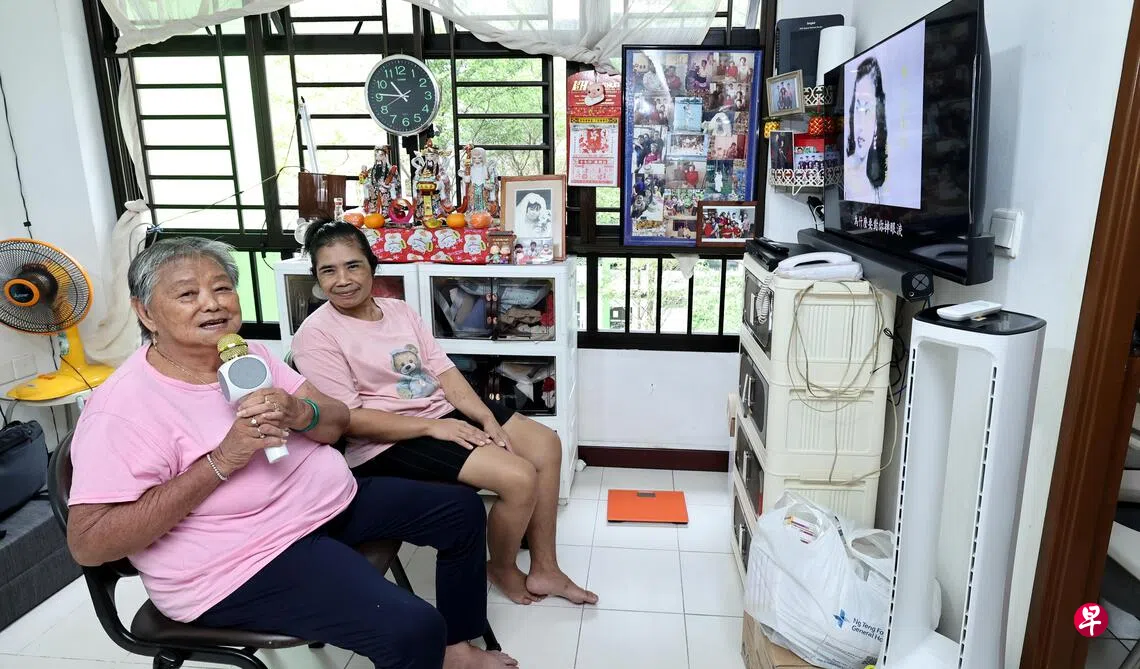
Since her husband died of cancer this year, 80-year-old Li Xiuying has been living alone in a studio apartment for seniors. With limited mobility and not wanting to burden her children and grandchildren, she had suggested moving into a nursing home.
“When my children and grandchildren heard that, they all burst into tears. They held on to me and said absolutely not — they were determined to keep me close. Seeing them cry so hard, how could I bear to leave?”
Her grandson offered to pay for a domestic helper and applied for the Home Caregiving Grant (HCG) on her behalf.
Since April this year, the monthly cash grant has increased from S$400 to S$600, providing more help to families who need financial support to hire a caregiver or domestic helper.
Having a helper by her side has significantly improved Li’s quality of life. The Thye Hua Kwan (THK) Active Ageing Centre (Taman Jurong), beneath her HDB flat, has become her “second home”.
Every Monday to Friday, her helper accompanies her downstairs in her motorised wheelchair to “report for duty” at the centre. There, she chats with neighbours, plays Rummikub and takes part in various activities, returning home only when the centre closes in the evening.
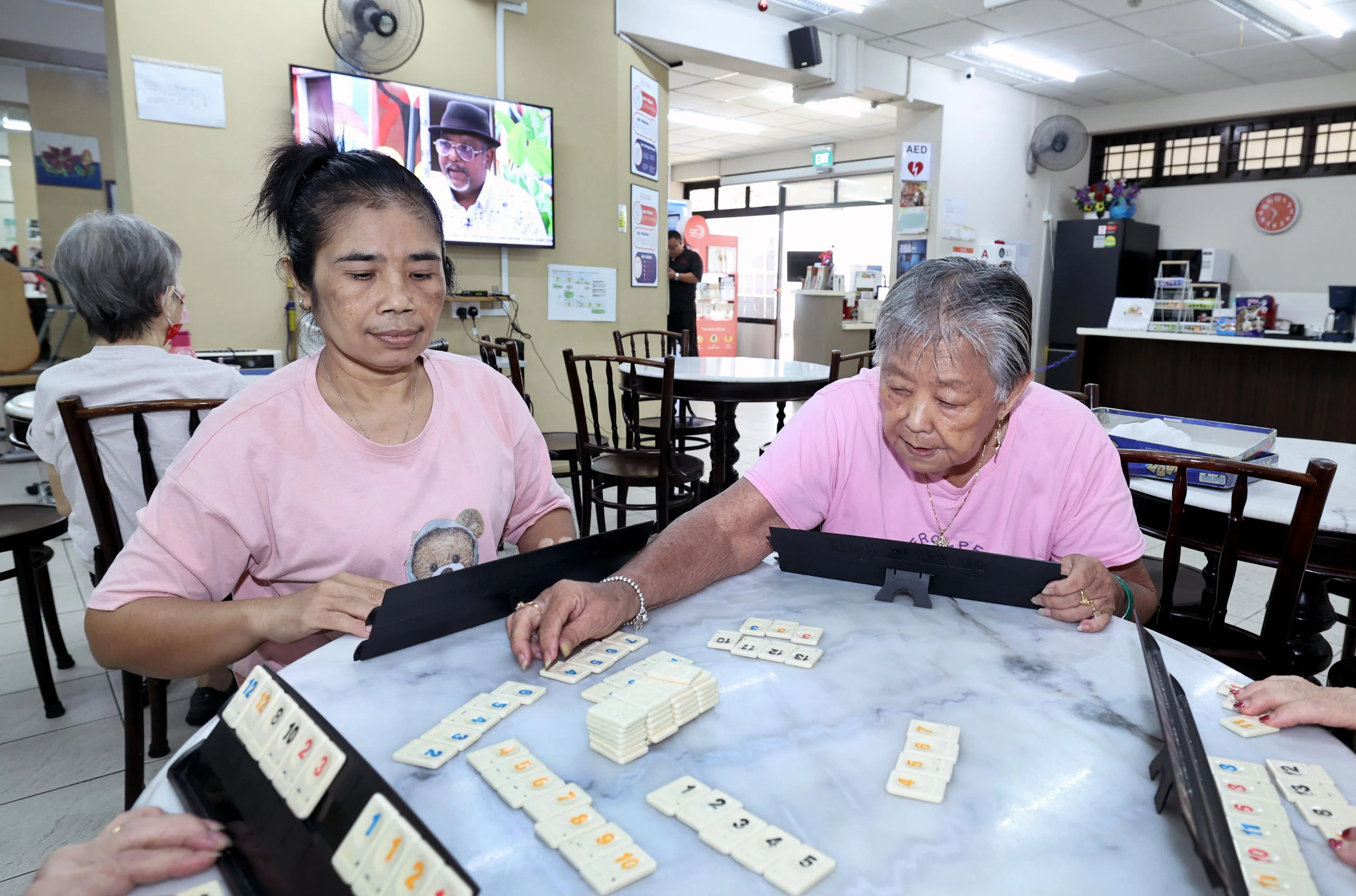
Li said: “My current living arrangements mean I don’t have to move into a nursing home, where there are more restrictions. I can live out my days freely in familiar surroundings. More importantly, I no longer have to worry about becoming an extra burden on my family.”
Responding recently to queries from Lianhe Zaobao (LHZB), Kelvin Lim, chief of the Agency for Integrated Care’s Grants Division, said HCG, introduced by the Ministry of Health and the Agency for Integrated Care, had more than 33,000 beneficiaries in 2021. By 2025, that number had nearly doubled.
Besides HCG, the authorities also provide long-term care subsidies and the Seniors’ Mobility and Enabling Fund (SMF) to help more seniors spend their later years in familiar surroundings.
Lim said these financial assistance schemes aim to ease seniors’ long-term care expenses. They complement the wider community care ecosystem, supporting seniors’ physical care, financial and social needs so they can age in place.
This year, the monthly per capita household income ceiling for all three schemes was raised to S$4,800, allowing more seniors to benefit.
Long-term care subsidies help offset the cost of eldercare services, including day care and rehabilitation services, as well as home personal care and therapy services.
Higher long-term care subsidies to benefit at least 80,000 seniors
From July this year, subsidy rates for nursing homes, day centres and home-based long-term care services also increased by up to 15 percentage points. These enhancements to long-term care schemes are expected to benefit at least 80,000 seniors.
SMF subsidises mobility aids such as wheelchairs and walking frames, as well as healthcare supplies needed for care at home. These help seniors manage daily activities independently and remain mobile in the community.
The number of SMF beneficiaries has also grown over the years, from nearly 20,000 in 2021 to almost twice that number in 2025.
Zhu Naichang, 87, is one of the fund’s beneficiaries.
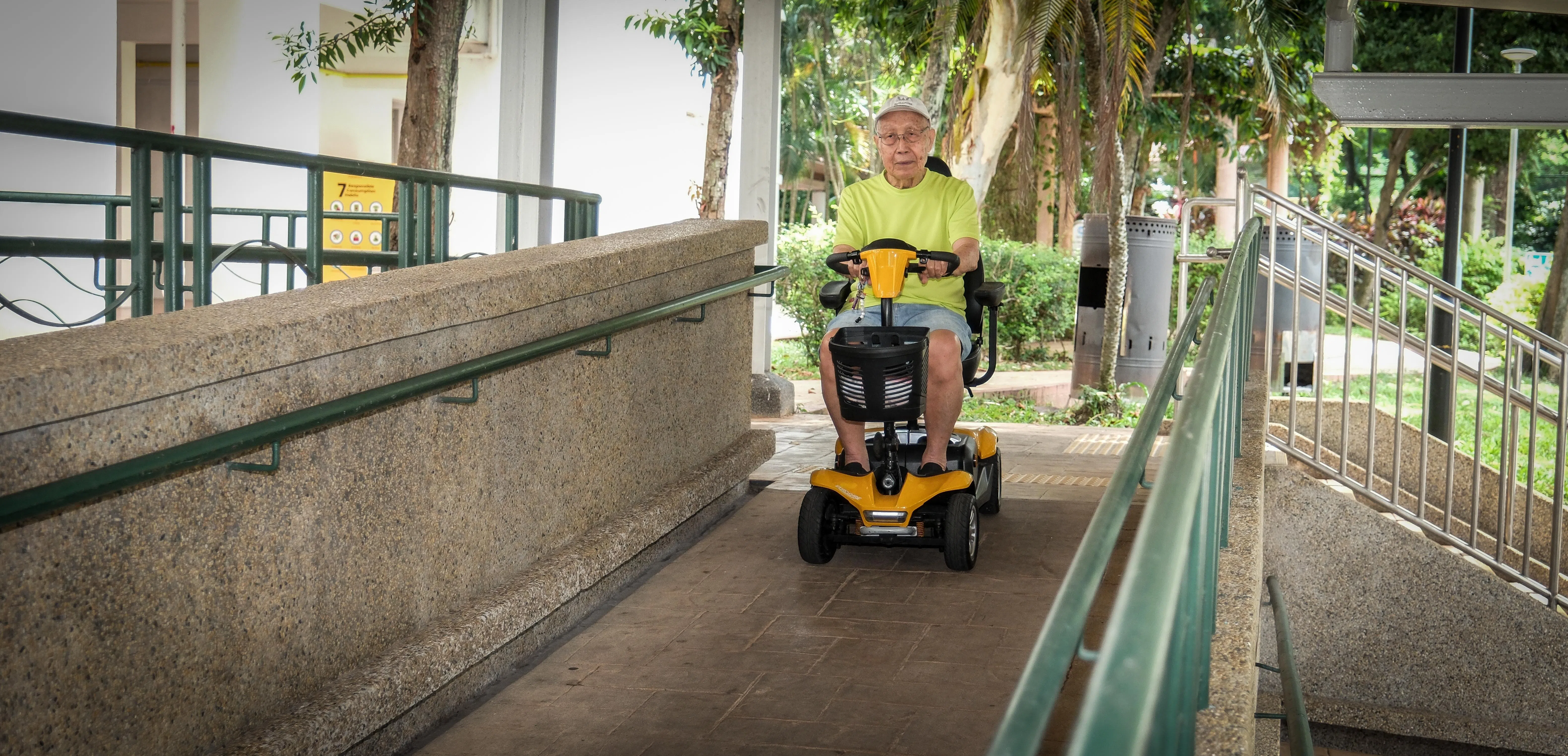
Zhu, who lives alone, has developed a curved spine as it gradually deteriorated with age. After a fall a few years ago left him with a fracture in his arm, he has been unable to stand for long or carry heavy items.
Before he began using a personal mobility device, even going to the market for a meal or to shop was a challenge. “Most people can walk there in under five minutes. I have to sit down and rest after walking a short distance, so the return trip takes me more than 10 minutes.”
Two years ago, Zhu bought a mobility scooter through SMF. It cost more than S$2,000, but he paid only about S$590. “Without the subsidy, I would have had to ask my children to help pay for it. With the subsidy, I don’t have to add to their financial burden.”
The scooter has transformed Zhu’s quality of life, restoring his freedom to get around.
“It’s so much more convenient now. I can ride my scooter to Bukit Merah Market to buy groceries and get there in two minutes. There’s a basket at the front for my things, so I don’t have to carry them. I don’t have to rely on anyone else. I can go wherever I want.”
He now rides his scooter downstairs every morning to exercise. In the afternoons, he visits the THK Active Ageing Centre (Bukit Merah View), where he joins his neighbours in activities such as handicrafts and video games. Besides looking after himself, he also volunteers to help other seniors in the community.
