

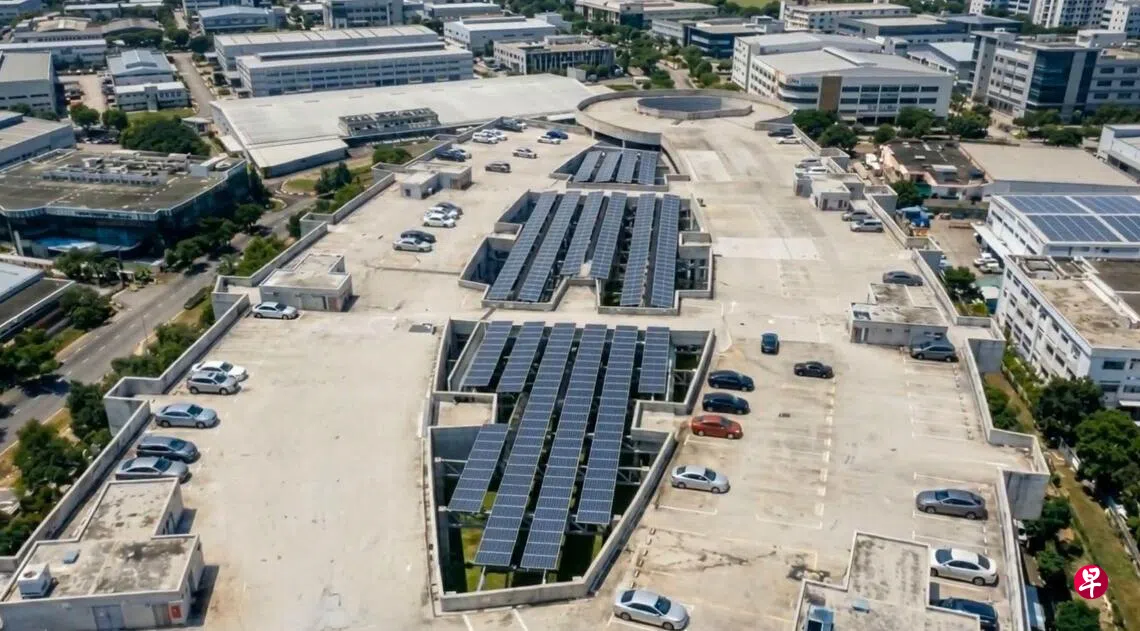
JTC Corporation will launch Singapore’s first pilot project for overhang solar panels in the Woodlands industrial area.
The project will have an installed capacity of at least 250 kilowatt-peak across an estimated 4,300 sq m, generating enough electricity each year to power about 60 four-room HDB flats and reduce carbon emissions by about 100 tonnes.
Minister of State for Foreign Affairs and Trade and Industry Gan Siow Huang announced JTC Corporation’s new pilot project in a speech at the 13th Asia Clean Energy Summit on Tuesday (27 October).
Singapore’s first overhang solar project will be launched in the Woodlands East industrial area, with renewable energy company EDP APAC installing solar panels above unused spaces between buildings.
Work on the project begins this month. EDP APAC must complete the design, construction, operation and testing of the overhang solar panels within 15 months. Once operational, the panels will supply electricity to the national grid for 10 years.
Gan said the project would turn an unused space larger than half a football pitch into a new source of electricity. “If successful, the pilot could unlock similar unused spaces between more buildings for solar deployment.”
She also announced that JTC Corporation would call for proposals for two projects to address practical challenges in deploying solar power. Development and testing of the selected solutions will be funded by JTC Corporation.
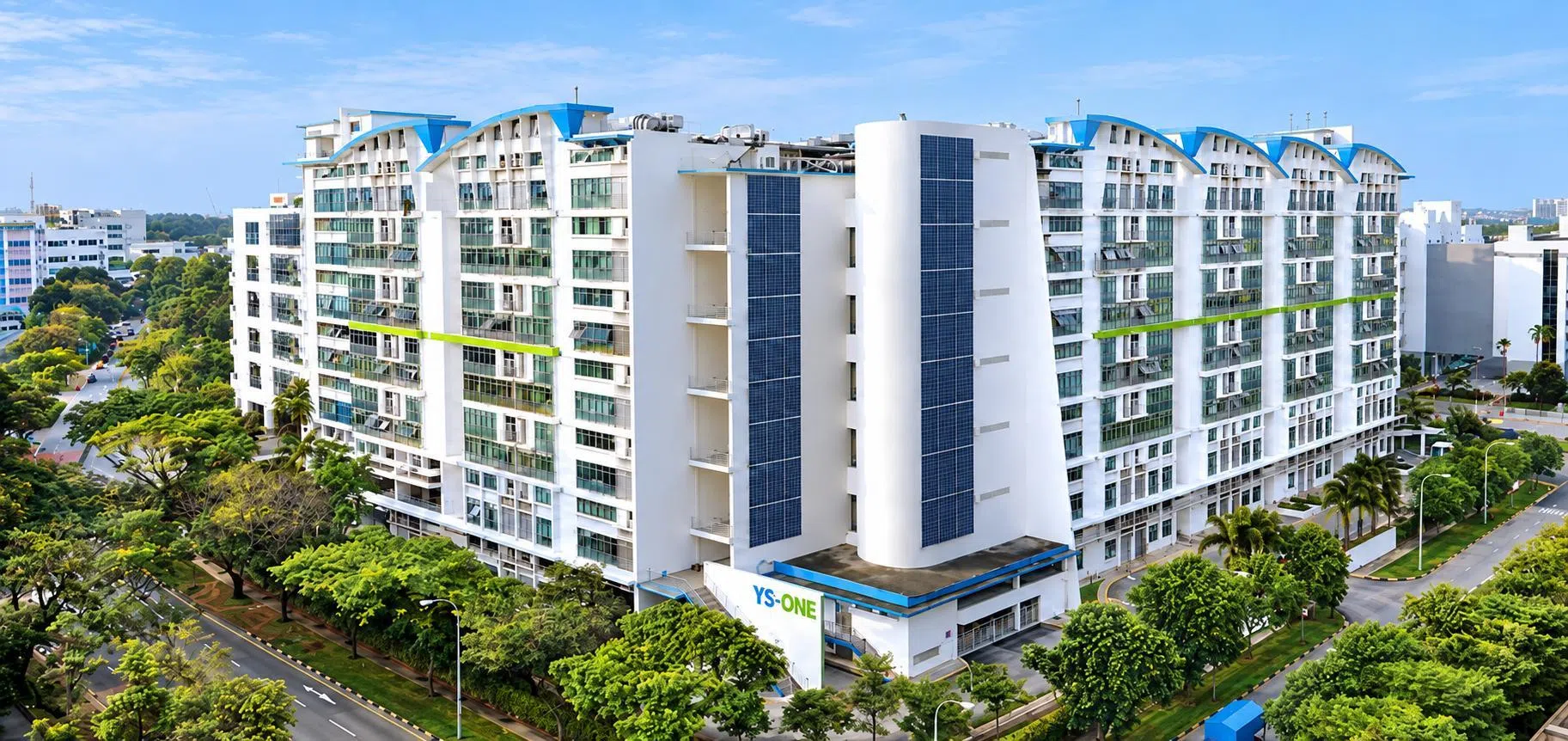
Call for proposals to install solar panels on at least 200 sq m of Yishun industrial building’s facade
One of the calls for proposals will seek solutions to install solar panels across at least 200 sq m of the facade of the YS-ONE industrial building in Yishun, for a 12-month trial.
JTC Corporation said in a statement that industrial buildings have extensive facades that have yet to be fitted with solar panels. However, installing panels on facades differs from rooftop deployment in terms of design, orientation and load-bearing capacity.
The proposed solutions must therefore ensure that the panels are light enough to be installed without extensive reinforcement work and can be integrated seamlessly with the building’s existing electrical system.
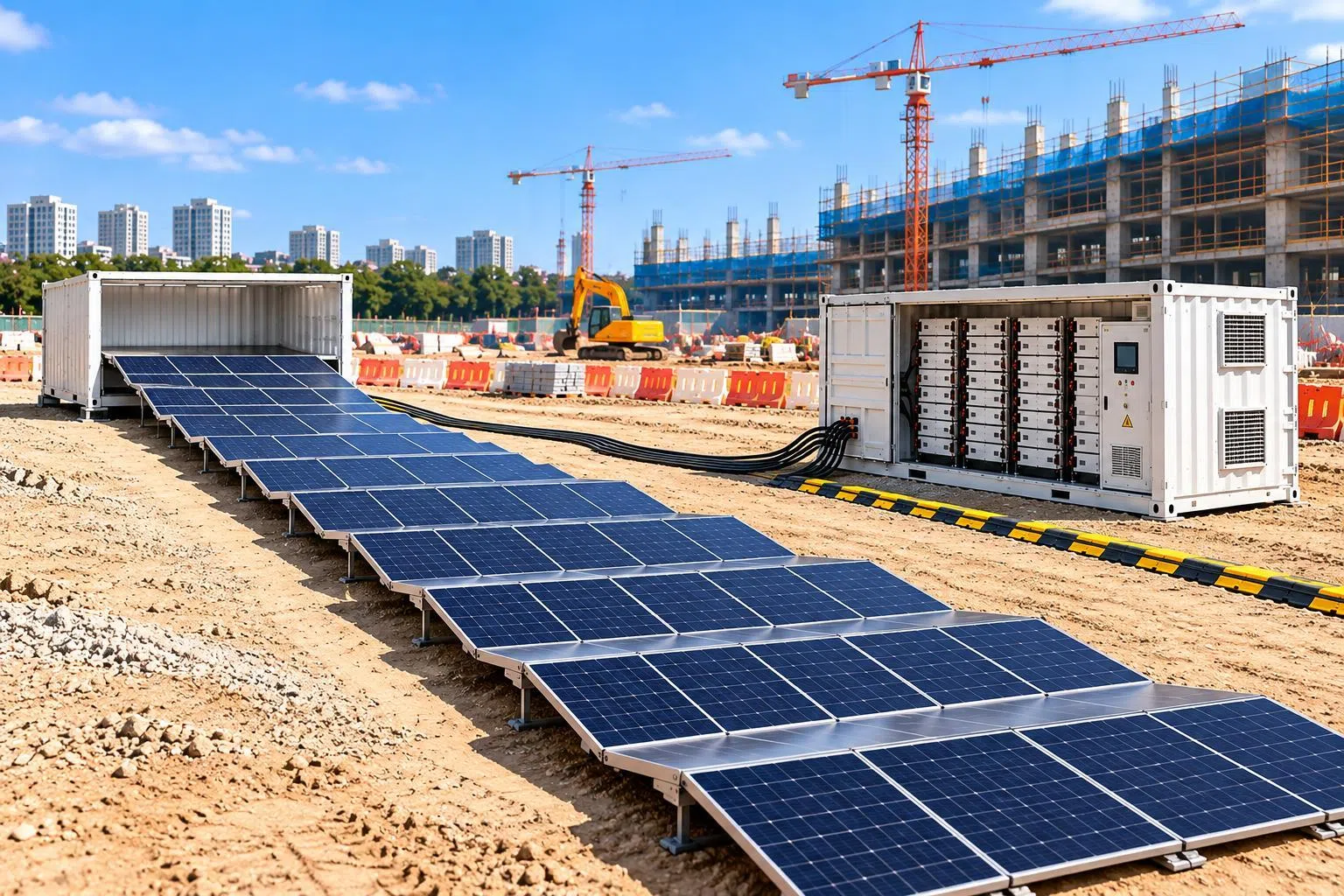
The other call for proposals concerns off-grid, portable solar systems, with the aim of combining containerised solar panels with mobile battery energy storage systems.
JTC Corporation noted that many temporary construction sites and remote locations have little or no access to the national grid and still rely heavily on diesel generators.
The new systems must therefore be ready for use within days and be redeployed to different worksites as needed, supplying power to site offices, electric construction equipment and electric vehicle charging, among other uses.
During a nine-month trial, JTC Corporation will assess how much time, cost and carbon emissions the selected solutions can save compared with diesel generators.
JTC Corporation’s chief sustainability officer Finn Tay said in the statement: “Every surface is a potential power source. By testing solar in the spaces between, on and beyond our buildings, we are finding new ways to grow Singapore’s solar capacity.”
As early as 2017, JTC Corporation launched the SolarRoof programme to install solar panels on industrial rooftops. The following year, it launched the SolarLand programme to deploy solar panels on temporarily vacant industrial land.
The two programmes now have a combined installed solar capacity of 1,051 megawatt-peak, accounting for 45% of Singapore’s total installed capacity of 2,339 megawatt-peak. Their annual electricity output can power 245,000 four-room HDB flats and reduce carbon emissions by 450,000 tonnes.
Separately, multinational renewable energy developer Equator Renewables Asia and Aster Power, part of energy and chemicals company Aster, signed a memorandum of understanding on Tuesday to explore deploying containerised modular solar systems on Pulau Bukom and Jurong Island.
The system they plan to use, SolarBox, can be delivered to a site in a 40-foot container and installed within two hours, forming an array of solar panels about 120 metres long. Each system has an installed capacity of up to 250 kilowatt-peak.
