

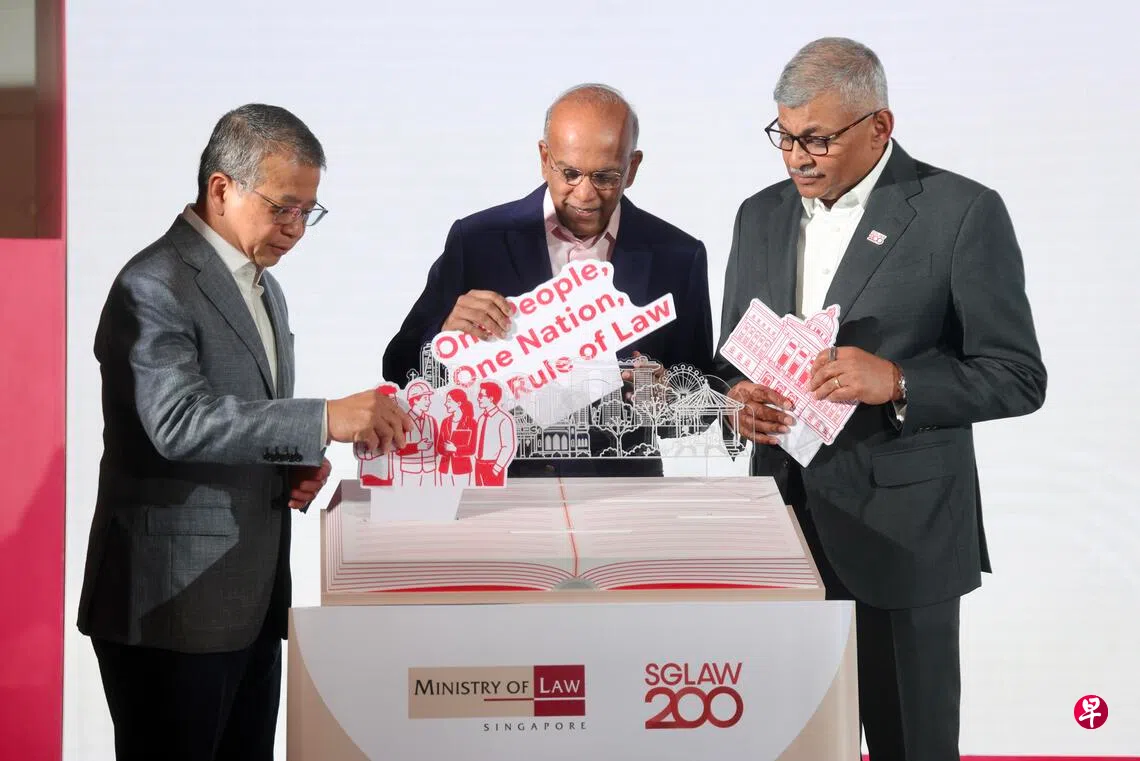
The rule of law has played an important role in Singapore’s nation-building and social development over the past 200 years. The Ministry of Law has launched a commemorative publication tracing how it has driven Singapore’s development over two centuries and exploring its significance in people’s daily lives.
Senior Minister and Coordinating Minister for National Security and Minister for Home Affairs K. Shanmugam, Chief Justice Sundaresh Menon and Minister for Law and Second Minister for Home Affairs Edwin Tong jointly launched the commemorative publication One People, One Nation, One Rule of Law (《一民、一国、一法治》) at a reception marking 200 years of the rule of law in Singapore at The Fullerton Bay Hotel on Friday (27 November).
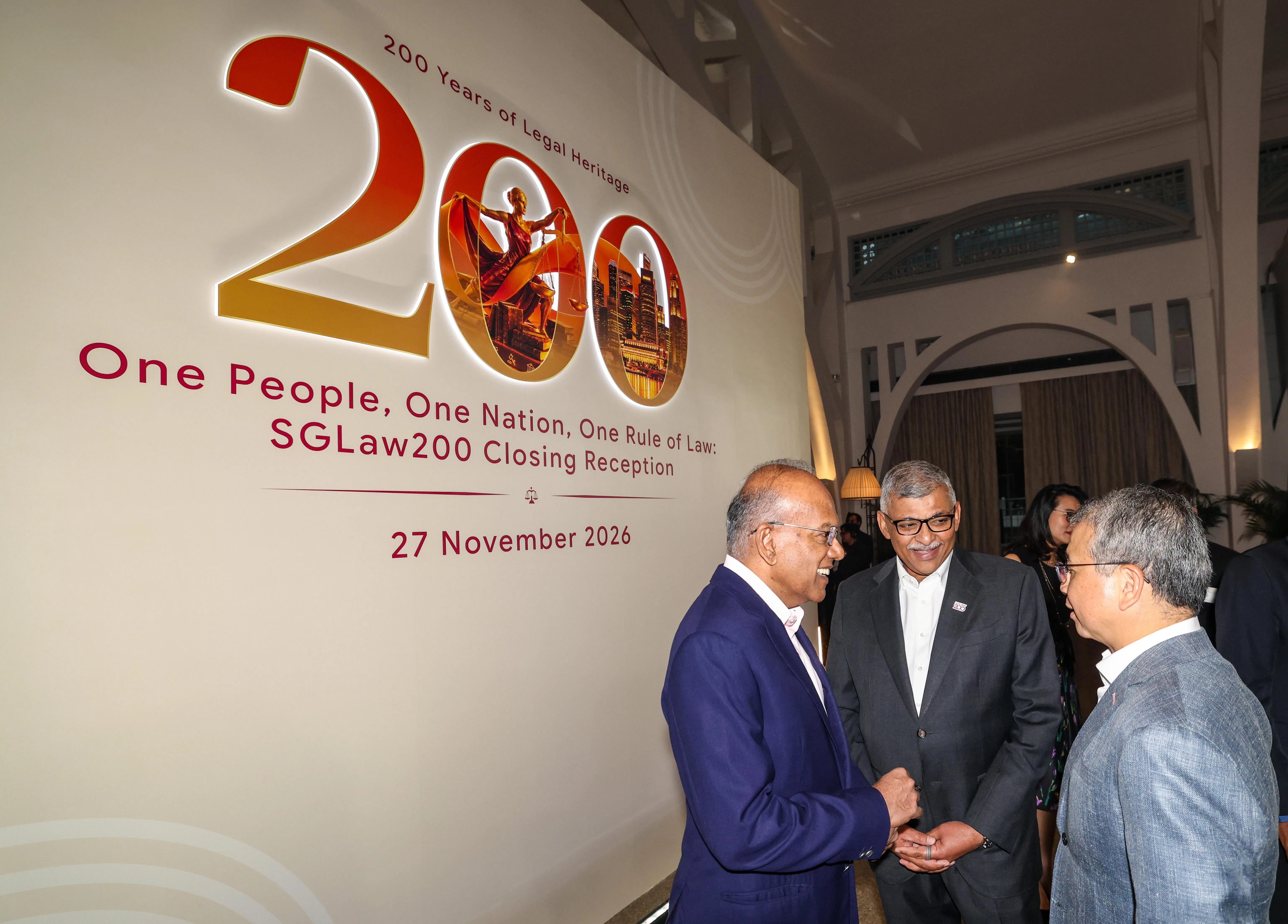
In his speech, Tong said the publication brought together perspectives on the rule of law from members of the legal profession, industry practitioners, law students and young lawyers, among others, making it a worthwhile read. The rule of law is not an abstract concept but is closely connected to everyone in Singapore, profoundly shaping the country’s economic development, interactions between people and the multilateral cooperation in which Singapore participates.
On 27 November 1826, the British Crown issued the Second Charter of Justice, introducing English common law to the Straits Settlements, including Singapore, and laying a crucial foundation for Singapore’s modern legal system.
Through historical accounts, contemporary case studies, interviews, archival photographs and infographics, the publication explains the role of the rule of law in economic development, social progress, racial and religious harmony, access to justice and international relations. It also explores how the law responds to emerging challenges such as artificial intelligence.

A short film screened at the launch showed how the rule of law has influenced different aspects of Singapore’s development. Participants and partners involved in the commemorative activities also shared their reflections.
Speaking about the rights that the rule of law gives people, Pro Bono SG Chief Executive Officer Tanguy Lim, who attended the reception, said having legal rights did not mean people knew how to exercise them or where to seek help. For vulnerable groups, financial circumstances, limited awareness of their legal rights, language barriers and complex legal procedures could all be obstacles to seeking legal assistance.
Future of Privacy Forum Managing Director for Asia-Pacific Josh Lee said the fundamental principle of the Personal Data Protection Act was to strike a balance between individuals’ right to the protection of their personal data and allowing organisations to collect and use personal data for reasonable and lawful purposes. He also stressed that adopting new technologies did not change organisations’ existing responsibilities and accountability obligations.
More than 20 SGLaw200 events were held throughout the year, reaching over 260,000 Singaporeans, with broadcast and digital platforms broadening public participation. Activities included youth forums, the National Day Parade, documentaries, legal heritage tours and travelling exhibitions. Friday’s reception was a key concluding event in the year-long commemoration.
