

The statutory retirement and re-employment ages for local workers will rise a year earlier than planned, to 65 and 70 respectively, from 1 January 2029.
The government also plans to introduce a new programme to encourage employers to offer more flexi-load arrangements, helping older workers who wish to continue working or return to the workforce better balance their personal and work needs.
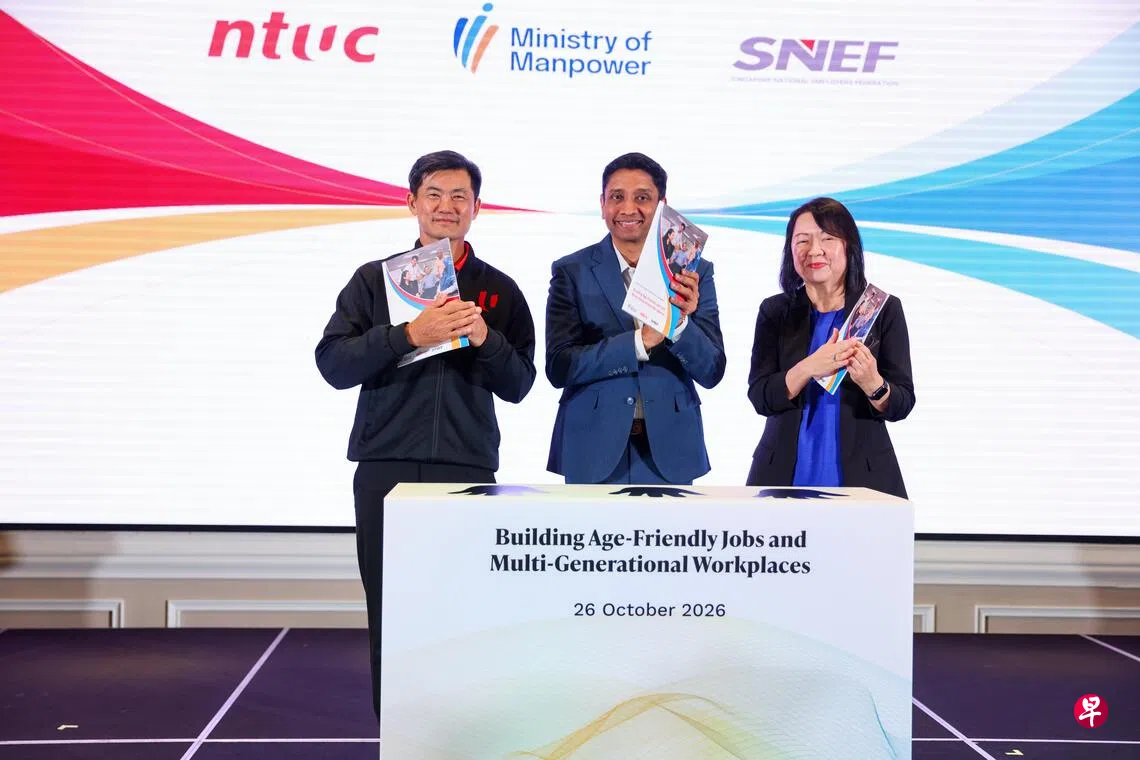
Dinesh Vasu Dash, Minister of State for Manpower and for Culture, Community and Youth, released the report, Building Age-Friendly Jobs and Multi-Generational Workplaces, on behalf of the Tripartite Workgroup on Senior Employment on Monday (26 October). The government has accepted all of the workgroup’s recommendations.
Since its formation in July last year, the workgroup has consulted more than 1,000 employers, industry and union representatives, human resources experts and academics to develop six recommendations. These will provide older workers who wish to continue working with more options, while helping employers retain and leverage their strengths, improve competitiveness and ease manpower constraints.
Dinesh said in his speech: “Our goal is therefore to build age-friendly jobs and multi-generational workplaces, where experience is valued and people can continue contributing in ways that work for them, and in turn benefit businesses.”
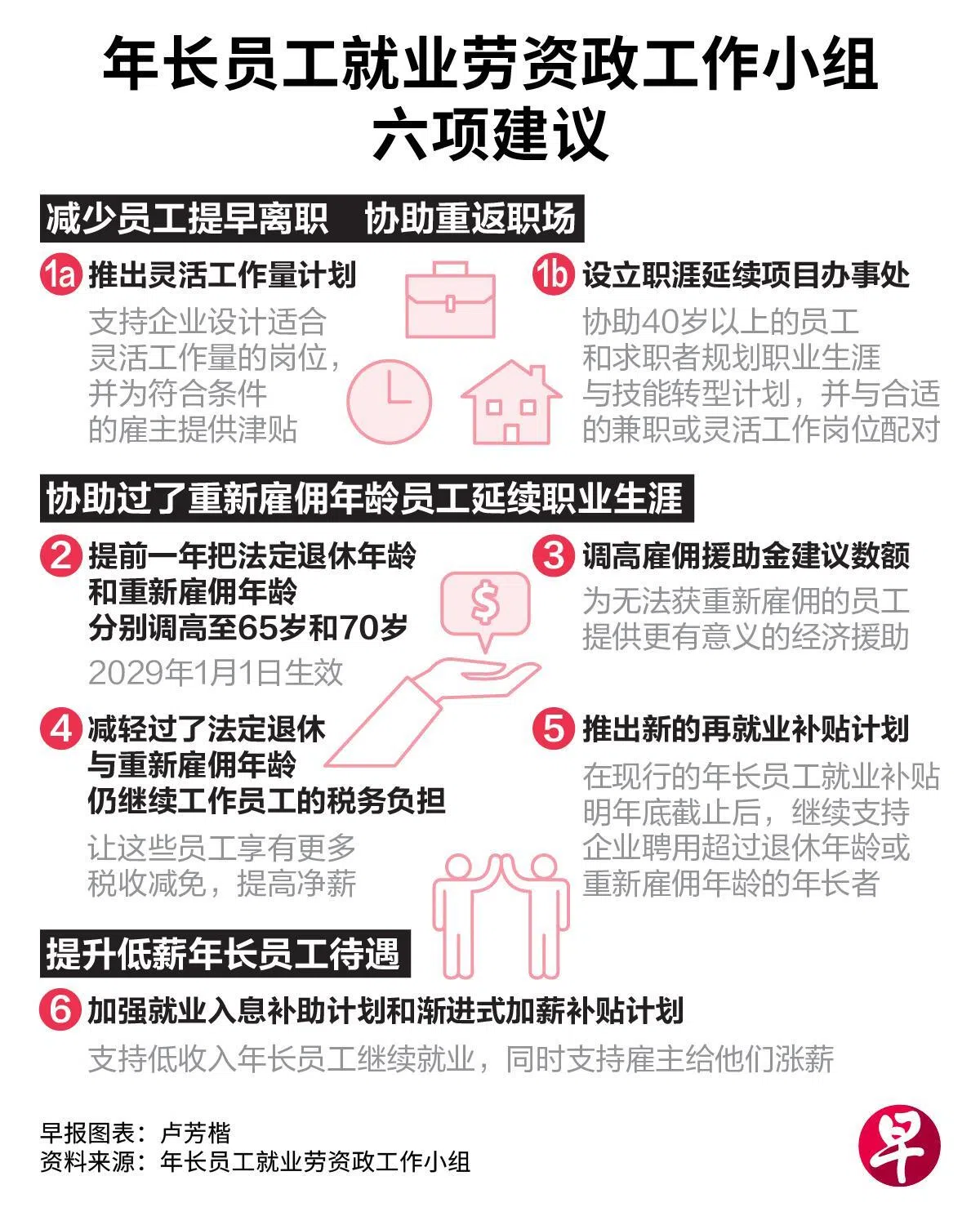
As Singapore’s population ages and life expectancy rises, more seniors are expected to continue working beyond the statutory retirement age. The workgroup therefore recommended raising both the statutory retirement and re-employment ages by one year from 1 January 2029, a year ahead of schedule, to give older workers greater protection.
At the National Day Rally in 2019, then Prime Minister Lee Hsien Loong announced that the statutory retirement age would be raised progressively from 62 to 65, and the re-employment age ceiling from 67 to 70, by 2030.
To encourage more seniors to remain in the workforce, the workgroup recommended increasing Earned Income Relief for workers who reach the statutory retirement and re-employment ages. It also proposed introducing a re-employment credit scheme in 2028 to replace the existing Senior Employment Credit.
For workers who are not offered re-employment, the workgroup recommended raising the Employment Assistance Payment to provide greater financial support while they look for another job.
Grants for employers offering older workers flexible workloads
The workgroup also recommended two complementary measures to scale up flexible roles and provide career guidance for seniors who need flexibility at work.
These include introducing a Flexi-Load Programme to replace the Part-Time Re-employment Grant (PTRG), which ends at the end of next year, to help employers defray the transitional costs of implementing flexi-load arrangements.
Flexi-load arrangements allow employees to work part-time or share a job, with pay adjusted accordingly. The associated transitional costs include the resources needed to redesign jobs, operating systems and policies.
PTRG has so far provided wage subsidies for 68,500 workers aged 60 and above across 7,800 employers. The new programme will lower the minimum eligibility age to 50, allowing more workers to qualify.
The workgroup also recommended that the Skills and Workforce Development Agency, the National Trades Union Congress (NTUC) and the Singapore National Employers Federation (SNEF) jointly run a career longevity programme office. It would help workers and jobseekers aged over 40 plan their careers and skills transitions, and match them with suitable part-time or flexi-load roles.
Strengthen support for lower-wage workers
Workers aged 50 and above accounted for only 40% of the resident labour force last year, but made up 60% of local lower-wage workers.
The workgroup recommended enhancing the Workfare Income Supplement and updating the Progressive Wage Credit Scheme to give employers greater support to raise the wages of lower-wage senior workers.
The government has accepted the workgroup’s recommendations and will continue working closely with NTUC, SNEF and industry stakeholders. Details of the recommendations will be announced during next year’s Committee of Supply debate.
